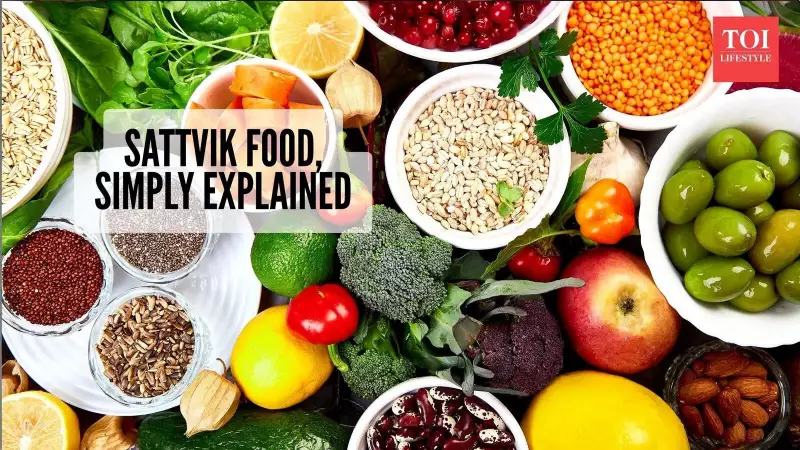
In a clear departure from popular belief, renowned holistic health guru Dr Mickey Mehta has explained to The Times of India that labelling a meal as vegetarian does not automatically make it sattvik. This widespread idea, while comforting, is fundamentally incorrect. According to Dr Mehta, the essence of sattvik food lies less in dietary labels and more in the principles of purity, simplicity, and how the food interacts with the body and mind after consumption.
The True Essence of Sattva in Our Diet
Dr Mehta elaborates that sattva fundamentally represents balance, purity, and harmony. When applied to food, it means consuming ingredients that remain close to their original, natural state. The taste is natural, the minerals are intact, and the food's structure is not distorted by heavy processing, excessive mixing, or artificial additives. A simple, classic combination like dal and rice retains its sattvic quality. However, when numerous elements are layered on top through complex recipes, the sattva begins to diminish.
He provides a stark contrast: a cheese-loaded burger or pizza may be vegetarian, but it lacks the qualities of sattva. Genuine sattvik food operates quietly within the system. It nourishes without overstimulating, satisfies without creating a sense of heaviness, and supports mental clarity instead of fuelling cravings.

Why Vegetarian and Sattvik Are Not Synonyms
This is where most confusion originates. Dr Mehta points out that vegetarian food can still be heavy, overstimulating, or challenging to digest. Dishes rich in cheese, burgers made with refined flour, creamy pasta, and overloaded pizzas can disturb digestion and dull mental awareness. On the other hand, simple meals like jowar roti with a basic sabzi, dahi with khichdi, or plain dal-rice actively support the sattva guna. The critical difference, therefore, lies in the complexity of preparation and ingredients, not merely the cuisine type.
He emphasises that digestion is a more decisive factor for purity than taste alone. Sattvik foods are gentle on the digestive system, not demanding excessive effort from the body. When digestion remains calm and efficient, the mind naturally follows suit. Such foods are linked with enhanced clarity, compassion, foresight, and emotional steadiness. Dr Mehta explains that food which positively influences creativity, empathy, and inner balance truly qualifies as sattvik. Conversely, anything consumed purely out of greed, for excessive taste, or indulgence gradually moves away from that harmonious state.
Fasting, Nature, and the Healing Power of Simplicity
The holistic guru also connected sattvik living to the traditional practice of upvasa, or fasting. He clarified that this is not about punishment or denial but about consciously stepping away from vasana, or craving. When food is eaten only to fulfil genuine need, the grip of desire loosens. This is why sattvik eating strongly encourages moderation, focusing on awareness and correction rather than an unattainable perfection.
Nature plays a pivotal role in bestowing sattvik qualities. Crops that grow by drawing nourishment directly from the earth, absorbing minerals, pure water, sunlight, and space carry what Dr Mehta calls the "intelligence of nature." This natural process gives food its quiet strength. Eating food in its closest-to-nature form fosters a deeper sense of completeness. A freshly plucked apple from a farm, for instance, does more than feed the body; it supports emotional balance, mental clarity, and a feeling of wholeness that processed food cannot replicate.
This nature-based approach also holds significant healing potential. Under proper dietary supervision, raw and minimally processed foods have supported recovery in individuals dealing with serious illnesses. The simplicity allows the body to focus its energy on repair rather than on arduous digestion. Dr Mehta cautions that this does not mean a raw food diet suits everyone at all times, but it highlights how closely healing is tied to dietary purity and mindful, individualised choices.

Disclaimer: This article is intended for general awareness and educational purposes only. It is not a substitute for professional medical advice, diagnosis, or treatment. Dietary choices should always be made based on individual health conditions and under the guidance of qualified health professionals.