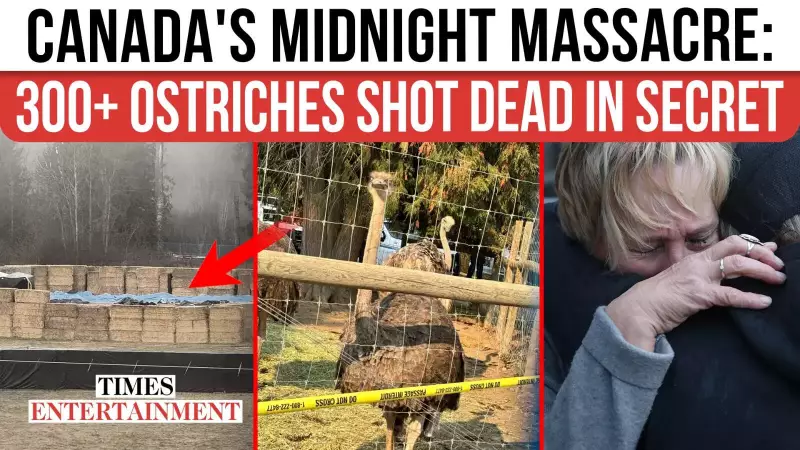
In a devastating nighttime operation that has sparked international concern, more than 300 ostriches were systematically killed at Universal Ostrich Farms in Edgewood, British Columbia. The mass culling, conducted by the Canadian Food Inspection Agency (CFIA), came after the detection of a dangerous avian flu outbreak at the facility.
The Night of Chaos and Gunfire
Eyewitnesses described a scene of profound distress as the culling operation unfolded through the night of November 8, 2025. The air filled with continuous gunfire as officials carried out their grim task, while farm workers and animal rights activists gathered in prayer and mourning. The operation proceeded despite last-minute interventions from prominent American figures.
US Health Secretary Robert F. Kennedy Jr. had personally appealed to Canadian authorities to spare the valuable flock, arguing the birds could provide crucial scientific research opportunities in understanding avian flu transmission. His plea found support from New York billionaire John Catsimatidis, who joined the effort to persuade Ottawa to reconsider the drastic measure.

Legal Battle and Supreme Court Decision
As the clock ticked toward the scheduled culling, legal representatives for the farm owners made a desperate appeal to the Supreme Court of Canada. They sought an emergency injunction to halt the operation, presenting arguments about the scientific value of the birds and alternative containment methods.
However, in a crushing blow to the farm's hopes, the highest court in Canada refused to block the CFIA's planned operation. This legal clearance gave the green light for what would become a night described by witnesses as filled with heartbreak and sorrow.
The Canadian Food Inspection Agency maintained throughout the crisis that the culling was necessary to prevent the potential spread of the avian flu outbreak to other farms and wildlife populations. Such decisive action, they argued, aligned with established protocols for containing dangerous animal diseases.
Aftermath and Unanswered Questions
In the wake of the massive culling operation, serious questions are being raised about disease management protocols and the balance between scientific research opportunities and public health protection. The incident has highlighted the often heartbreaking decisions that must be made during animal disease outbreaks.
The Universal Ostrich Farms in Edgewood now stands as a site of tragedy, with the loss of over 300 birds representing not just an economic blow but also the destruction of what some scientists called a potential research gold mine for understanding avian influenza strains.
As the farming community and animal rights groups process the events of that fateful night, many wonder what scientific secrets might have died with the birds and whether alternative solutions could have been explored more thoroughly before resorting to such widespread slaughter.