

Ahmedabad Grapples with Unseasonal Heat and Health Woes
Residents of Ahmedabad are currently facing a perplexing climatic conundrum as the city experiences an uncharacteristic early onset of summer-like conditions. With daytime temperatures unexpectedly soaring, many Amdavadis find themselves debating whether to crank up their fans or schedule urgent air-conditioner servicing. This unusual weather pattern is not just a matter of comfort but is triggering a significant public health concern across the city.
Temperature Extremes and Daily Fluctuations
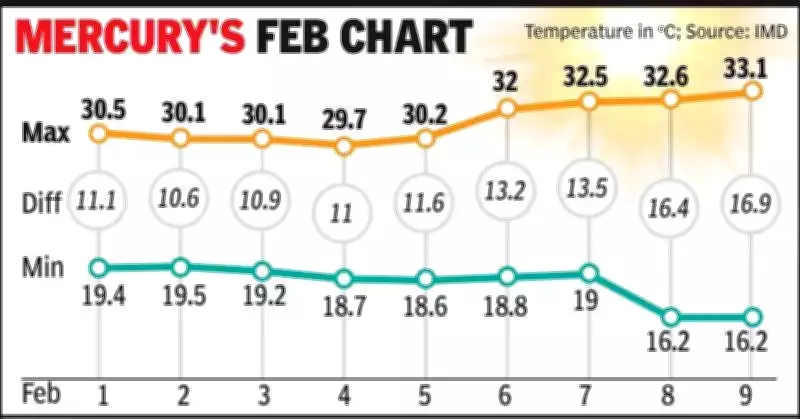
The mercury has already climbed to a sweltering 33°C in mid-February, a temperature typically associated with the peak of summer. On Monday, the city recorded a maximum temperature of 33.1°C, which is 3.4 degrees above the normal range for this time of year. In stark contrast, night temperatures remain relatively cool, hovering around 16°C, which is 3 degrees above normal. This creates a dramatic temperature gap of nearly 17 degrees between day and night, marking the widest differential observed in the first nine days of February.
Over the past week, daily temperature fluctuations have consistently ranged between 3°C and 5°C, according to meteorological data. The India Meteorological Department (IMD) forecasts that the minimum temperature on Tuesday will likely remain around 16°C, with no major changes expected across Gujarat over the next seven days. The state is currently under the influence of a Western Disturbance, accompanied by cyclonic circulation over north India and an induced cyclonic circulation over south-west Rajasthan.

Rising Health Issues and Medical Insights
This extreme weather variability is directly impacting public health, leading to a noticeable increase in illness among residents. Physicians in Ahmedabad report a surge in cases of bronchitis, mild fever, body aches, and sore throats. Dr. Pravin Garg highlighted that patients are primarily complaining about sore throat, dry cough, and fever accompanied by body ache. "In several cases, symptoms persist beyond two weeks. The sharp variation between day and night temperatures is a major factor, along with poor air quality on certain days. Most cases require symptomatic treatment," he explained.
Dr. Pragnesh Vachcharajani added that the ongoing wedding season may be exacerbating the situation. "Crowded gatherings, consumption of outside food, and the erratic weather together are aggravating symptoms. February and March are typically transitional periods, but this year the fluctuations appear slightly earlier than usual. People with a history of allergies should take extra precautions," he advised.
Resident Struggles and Broader Implications
The dual-season effect forces citizens to adapt rapidly, using thin blankets during the cool early morning hours while battling daytime heat. This constant adjustment is causing many to fall ill, disrupting daily life and increasing medical consultations. The health crisis underscores the broader challenges posed by climate variability, even in urban settings like Ahmedabad.
So far this February, minimum temperatures in the city have largely remained above normal, contributing to the ongoing discomfort and health risks. As residents navigate this unpredictable weather, the importance of preventive healthcare and awareness becomes increasingly critical.






