

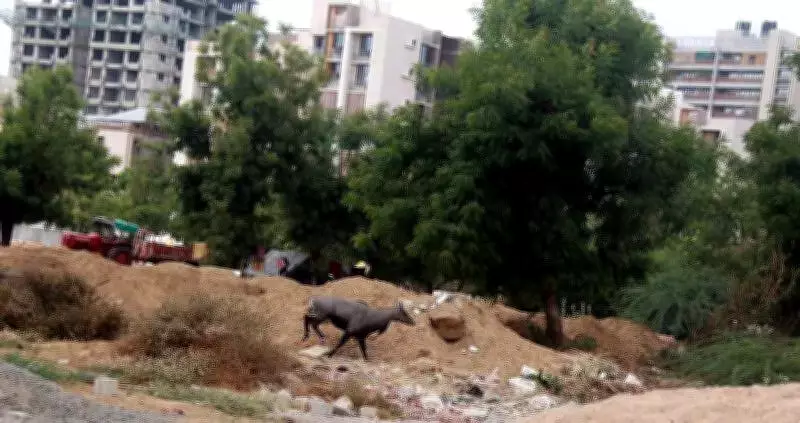
Ahmedabad Teen Declared Brain-Dead After Nilgai Attack, Highlighting Urban-Wildlife Conflict
In a tragic incident in Ahmedabad, a 17-year-old youth from the Science City area was struck by a nilgai, also known as a blue bull, on March 28. The wild animal was reportedly startled by the honking of a heavy vehicle on the opposite side of the road, leading to the collision. The injuries sustained by the teenager were severe, particularly to his face, and after two days of intensive medical treatment, doctors declared him brain-dead.
Escalating Human-Animal Conflict in Expanding Urban Areas
This accident has brought the issue of human-animal conflict into sharp focus as Ahmedabad's urban footprint continues to expand beyond the SP Ring Road. The habitat of nilgais increasingly overlaps with areas undergoing rapid development, creating dangerous encounters. According to data from the forest department, the city periphery, including a spot near Dehgam in Gandhinagar, has recorded the deaths of five nilgais since January 25 this year. In almost all cases, these deaths resulted from road accidents, with one injured animal rescued and later released after recovery.
Residents in the Science City area and nearby localities have reported numerous injuries from nilgai encounters. Savita Patel, a 73-year-old resident, shared her experience of being injured in a similar accident three years ago. "The animal was running, and it hit me, resulting in my falling on the roadside," she said. "It took me some time to recover and lead a normal life."

Community Responses and Calls for Action
In response to repeated incidents, local communities have taken measures to mitigate risks. Darshan Patel, chairman of Lotus Residency, explained that their society has cleared several acres of land that previously served as habitat for nilgais. "Nilgais are active during dusk and dawn hours and are difficult to spot due to their dark coat," he noted, highlighting the challenges in preventing such encounters.
Social worker Rohit Patel has advocated for more formal interventions, writing to the Ahmedabad Municipal Corporation (AMC) and the forest department to request the relocation of nilgais or the implementation of preventive measures. "However, the AMC has said that since the animal is protected under the Wildlife Protection Act, the forest department should handle the matter," he stated. "There needs to be coordinated action."
Understanding the Nilgai and Legal Protections
The nilgai (Boselaphus tragocamelus), or blue bull, is the largest Asian antelope and is native to the Indian subcontinent. Although it is listed as 'Least Concern' on the IUCN Red List, it is protected under Schedule III of the Wildlife Protection Act, 1972. This legal status complicates management efforts, as authorities must balance wildlife conservation with public safety in rapidly urbanizing environments.
This incident underscores the urgent need for integrated strategies to address human-animal conflicts as cities like Ahmedabad grow. With urban expansion encroaching on natural habitats, proactive measures and inter-departmental coordination are essential to prevent future tragedies and ensure the safety of both residents and wildlife.






