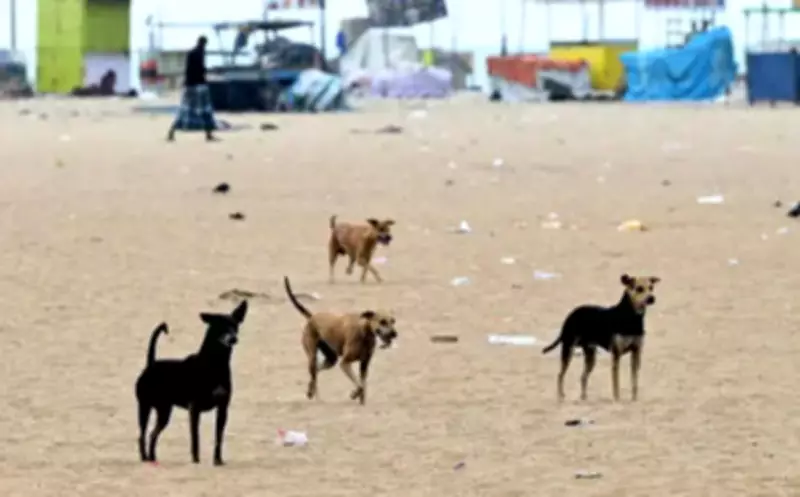
Bhubaneswar Municipal Corporation Initiates Comprehensive Rabies Vaccine Efficacy Study for Stray Dogs
The Bhubaneswar Municipal Corporation (BMC) has launched a significant scientific initiative to evaluate the effectiveness of its ongoing anti-rabies vaccination campaign for the city's stray dog population. In a strategic move, the civic body has decided to send blood samples from vaccinated stray dogs to the prestigious Veterinary College in Bengaluru for detailed sero surveillance analysis.
Mass Vaccination Drive Progress and Scientific Validation
The ambitious mass vaccination program commenced on March 30, with impressive early results. As of recent reports, 4,855 dogs have already received vaccinations through this current drive. This builds upon previous efforts where approximately 5,000 dogs were vaccinated over the past eight years, primarily those that underwent sterilization under the BMC's Animal Birth Control (ABC) program.
Debi Prasad Kund, the officer in charge of the ABC program, explained the scientific rationale behind sending samples to Bengaluru. "We will send selected samples of vaccinated dogs to the Bengaluru institute because their antibody testing outcomes demonstrate superior accuracy and reliability," Kund stated. "The quality of antibodies present in the dogs serves as a crucial marker indicating whether the vaccination is producing the desired immunological response."

Scientific research has established that antibodies against rabies typically develop in dogs approximately 21 days after vaccine administration. The sero surveillance study aims to verify this immune response and assess the potency of the antibodies generated.
Innovative Vaccination Techniques and Community Impact
An unexpected finding from the vaccination drive has revealed remarkable progress in human-animal relations within the city. BMC officials discovered that approximately one-third of street dogs demonstrated sufficient familiarity and comfort with civic teams that they could be handled without nets.
"In practical terms, out of every 100 dogs encountered daily, between 30 and 35 can be caught simply by hand," Kund elaborated. "Our teams include expert handlers who safely capture the dogs, administer the vaccine, and release them after marking their ears for identification purposes."
Each vaccinated dog receives a distinctive tag using non-toxic biological markers, creating a visible identification system that prevents repetitive capture and vaccination. "This tagging system ensures efficient tracking and helps us avoid vaccinating the same animals multiple times," Kund added.
Comprehensive Vaccination Strategy and Future Goals
The BMC established a formal framework for this initiative through a tripartite agreement signed in January with the College of Veterinary Science and Animal Husbandry, Worldwide Veterinary Service, and Mission Rabies India. This collaboration aims to vaccinate approximately 40,000 stray dogs throughout Bhubaneswar.
The vaccination campaign has been expanded to include at least 5,000 additional puppies born after last October's comprehensive dog census. Puppies born in November and December have now reached three months of age, making them eligible for vaccination despite not being included in the original census count of 47,000 dogs.
"Considering the total estimated dog population of 52,000, including these new puppies, we are targeting vaccination of 40,000 animals," Kund explained. "This aligns with global standards recommending vaccination coverage of 70-75% of the total population to achieve effective herd immunity."
The BMC has established an ambitious timeline for completing this comprehensive drive. "We are committed to finishing the vaccination program within 90 days to move decisively toward our goal of establishing Bhubaneswar as a rabies-free city," Kund affirmed.
This multi-faceted approach combining scientific validation through laboratory testing, innovative field techniques, and strategic partnerships represents a model for urban animal health management that could potentially be replicated in other cities facing similar challenges with stray animal populations and rabies prevention.