International Team Discovers New Blind Aquifer Fish in Assam Well
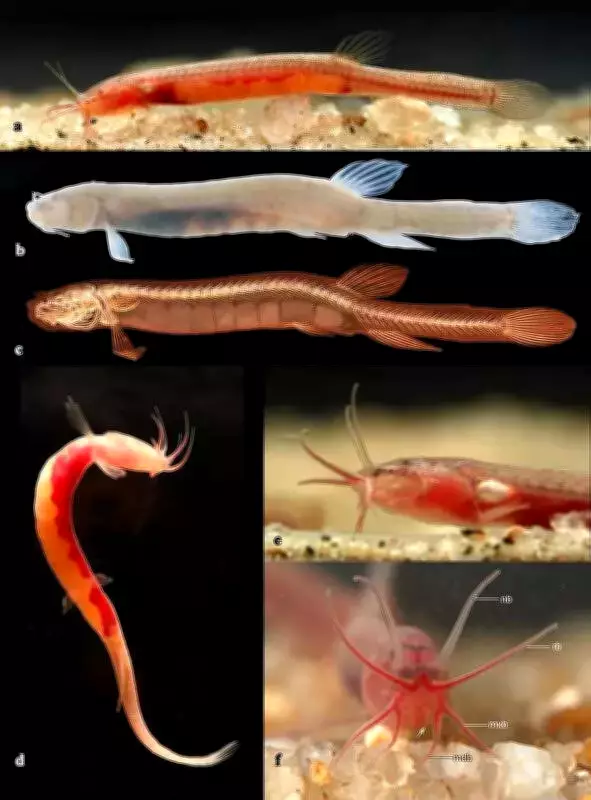
An international team of fish taxonomists from Germany, India, and Switzerland has made a groundbreaking discovery by scientifically describing a new genus and species of blind, aquifer-dwelling fish. The remarkable find was made in a dug-out well in a village in Assam, representing the first record of an aquifer-dwelling fish species from anywhere in Northeast India and the entire eastern Himalayan landscape.
Scientific Publication and Naming of the Species
The discovery was recently published in Scientific Reports, a prestigious nature portfolio journal. The newly identified species has been named Gitchak nakana. This name derives from the Garo word 'Gitchak', meaning red, which alludes to the fish's striking red life color. The terms 'na-tok' and 'kana' refer to a fish that is blind, highlighting the complete absence of eyes in this unique creature.
This species belongs to a newly established genus within the family Cobitidae. Researchers noted that Gitchak nakana was found only in a single well and in very low numbers. Due to its extremely limited distribution and potential vulnerability, the precise locality from where the species was collected has not been disclosed to protect it from potential threats.

Significance of the Discovery
As the first groundwater-dwelling fish species described from Northeast India, the discovery of Gitchak nakana provides clear evidence that this globally significant landscape harbors a highly specialized subterranean phreatobitic fauna. Previously, such fauna was only known from aquifers in the lateritic lowlands of the Western Ghats in southern India.
This finding underscores the rich biodiversity of Northeast India and highlights the importance of continued exploration and conservation efforts in the region's unique ecosystems.
Conservation Concerns and Research Team
Rajeev Raghavan, assistant professor at Kerala University of Fisheries and Ocean Studies (Kufos) and the South Asia chair of IUCN SSC Freshwater Fish Specialist Group, who was part of the international team, emphasized the need for conservation. He pointed out that the cave mahseer from Meghalaya, Neolissochilus pnar, was recently available in the international aquarium pet trade, despite lacking comprehensive data on its population size, wider distribution, and habitat threats.
"Such information would be essential to plan conservation prioritization and action for a subterranean fish with such a restricted distribution," said Raghavan, stressing the urgency of protecting these rare species.
The scientific team comprised Ralf Britz and Amanda Pinion from the Senckenberg Museum in Dresden, Germany; Rajeev Raghavan from Kufos; Wimarithy Marak and Kangjam Velentina from Assam Don Bosco University in Guwahati; Yumnam Lokeshwor from Dhanamanjuri University in Manipur; and Lukas Rüber from the Natural History Museum in Bern, Switzerland.
Expert Commentary on Subterranean Fish Research
Kufos vice-chancellor A Biju Kumar praised the subterranean fish research group led by Rajeev Raghavan, crediting them with some of the most interesting discoveries of groundwater-dwelling fishes on the Indian subcontinent. This includes Neolissochilus pnar, recognized as the world's largest cavefish.
The group has also described four subterranean fish species and one blind subterranean shrimp from various parts of Kerala. Kumar noted that "subterranean fishes are one of the most enigmatic and evolutionarily distinct groups of fishes worldwide," highlighting their scientific importance and the need for ongoing research and protection.