

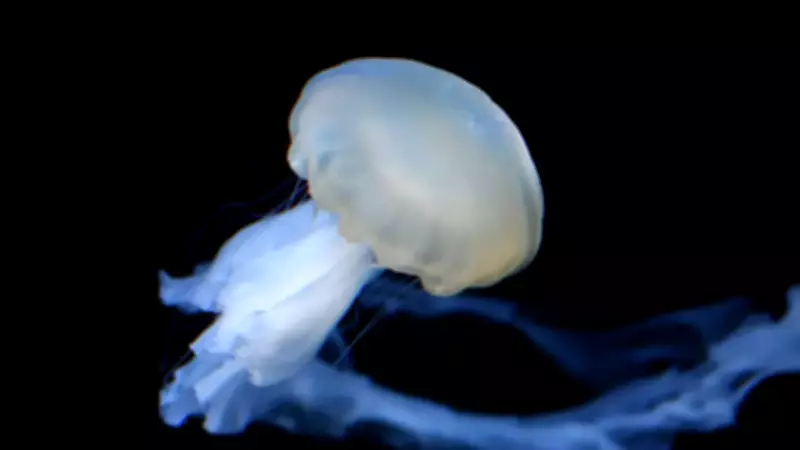
Brainless Marine Creatures Exhibit Sleep, Rewriting Evolutionary History
Groundbreaking research has uncovered that sleep-like states exist in animals without centralized brains, pushing back the evolutionary origins of sleep far earlier than scientists previously believed. A comprehensive study examining two simple marine species—the upside-down jellyfish Cassiopea andromeda and the sea anemone Nematostella vectensis—reveals that both exhibit clear behavioral patterns meeting established criteria for sleep.
Defining Sleep Without Brains
Researchers observed distinct periods where these brainless creatures showed significantly reduced movement, lowered responsiveness to environmental stimuli, and compensatory rest following sleep deprivation. Despite lacking any centralized nervous system, both species spend approximately one-third of their day in this sleep state, suggesting the fundamental need for rest predates the development of complex brains.
The study titled "DNA damage modulates sleep drive in basal cnidarians with divergent chronotypes" explains that these animals possess only a simple nerve net distributed throughout their soft tissues, with no central control mechanism. Yet they demonstrate unmistakable sleep behaviors: movements slow dramatically, responses to light or touch become delayed, and when their rest is disrupted, they experience deeper, extended recovery sleep later.

Different Patterns, Same Need
Interestingly, the two species follow different daily activity rhythms while maintaining similar total sleep durations. Cassiopea jellyfish exhibit light-driven sleep patterns, with activity dropping at night, rising during daytime, and showing a brief midday dip. Their sleep appears primarily regulated by environmental light rather than strong internal clocks.
In contrast, Nematostella sea anemones display circadian-controlled sleep, being most active around dusk and dawn. When researchers genetically disrupted their internal clocks, the timing of sleep became disorganized while the total amount remained consistent. This demonstrates that despite different regulatory mechanisms, both species allocate roughly eight hours daily to restorative rest.
Cellular Repair Connection
The most significant finding emerged from cellular analysis of neurons in these primitive animals. Scientists discovered that DNA damage accumulates during wakeful periods and decreases during sleep in both species. When sleep was artificially prevented, DNA damage increased substantially, and when normal sleep patterns resumed, damage markers declined.
Environmental stressors like ultraviolet radiation and chemical mutagens dramatically increased DNA damage, which in turn elevated sleep pressure—the animals slept more following exposure. Even externally administered melatonin induced sleep and reduced genomic stress markers regardless of normal activity timing.
Evolutionary Implications
This research fundamentally changes our understanding of sleep's purpose and evolution. Rather than being a luxury or primarily serving cognitive functions like memory consolidation, sleep appears to serve as essential cellular maintenance. The daily pause allows neurons—fragile and irreplaceable cells—to repair molecular damage accumulated during wakefulness.
For animals exposed to environmental stressors like sunlight, oxidative damage, and mutagens over hundreds of millions of years, this restorative pause may have been evolutionarily essential. The discovery that sleep exists in creatures without brains suggests it emerged before complex nervous systems developed, representing a fundamental biological process rather than a neurological byproduct.
These findings open new avenues for understanding sleep disorders and the fundamental biological requirements for rest across the animal kingdom, suggesting that the drive for sleep may be more ancient and cellular than previously imagined.






