

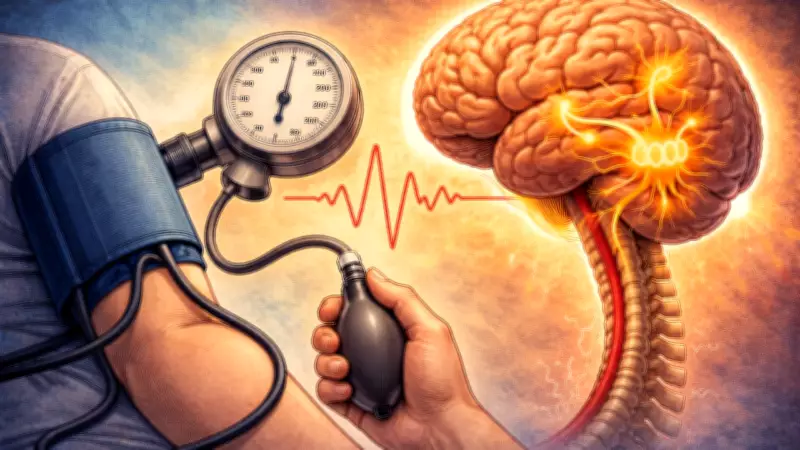
Brain's Breathing Neurons Found to Control Blood Pressure, Offering New Hope for Hypertension
In a surprising discovery, researchers have uncovered that a tiny cluster of neurons in the brain responsible for controlling breathing also plays a crucial role in regulating blood pressure. When these neurons malfunction, they can trigger dangerous high blood pressure that is resistant to conventional treatments, potentially revolutionizing how doctors manage this condition.
Study Details and Publication
The findings stem from a collaborative study conducted by a team from the University of São Paulo in Brazil and the University of Auckland in New Zealand. Published in the esteemed journal Circulation Research, this research could pave the way for new approaches to treating millions of individuals with medication-resistant hypertension.
The Challenge of Treatment-Resistant Hypertension
High blood pressure remains a significant health issue, with approximately 40% of patients on medication still experiencing elevated levels despite adhering to pills and dietary recommendations. This condition, known as treatment-resistant hypertension, is one of the most persistent challenges in modern medicine. The research team, including scientists from Brazil, New Zealand, and other institutions, sought to investigate whether a specific brain region might be driving excessive sympathetic nervous system activity linked to this problem.

Focus on the Lateral Parafacial Region
Researchers concentrated on an area of the brainstem called the lateral parafacial region, traditionally associated with breathing control. Suspecting a connection to blood pressure regulation, they conducted experiments using rats with high blood pressure. Employing advanced techniques such as optogenetics to activate neurons with light and pharmacogenetics to suppress them with drugs, they could precisely manipulate neuronal activity and observe the effects.
Key Findings from the Experiments
The results were striking: activating the lateral parafacial neurons led to increased active expiration and a simultaneous rise in blood pressure. More importantly, these breathing neurons were found to send direct signals to other brain areas controlling the sympathetic nervous system, prompting heightened sympathetic activity. In hypertensive rats, these neurons were hyperactive, with stronger connections to blood pressure control neurons than normal.
When researchers used pharmacogenetics to quiet these neurons in hypertensive rats, the excessive sympathetic activity ceased, blood pressure normalized, and expiration-related blood pressure surges disappeared. This indicates that simply reducing the activity of these breathing neurons can address issues that medications previously could not.
Broader Implications and Future Directions
The implications of this discovery are profound. If scientists can develop methods to target these specific neurons in humans—through new drugs or other therapies—it could offer relief to millions with treatment-resistant hypertension. This research underscores the interconnected nature of the brain, revealing how systems evolved for breathing are directly linked to circulatory control, with malfunctions in one affecting the other.
This study highlights the ongoing exploration in neuroscience, emphasizing how understanding brain connectivity can lead to breakthroughs in medical treatment. As researchers continue to investigate, this finding may transform hypertension management, providing hope for improved patient outcomes worldwide.






