

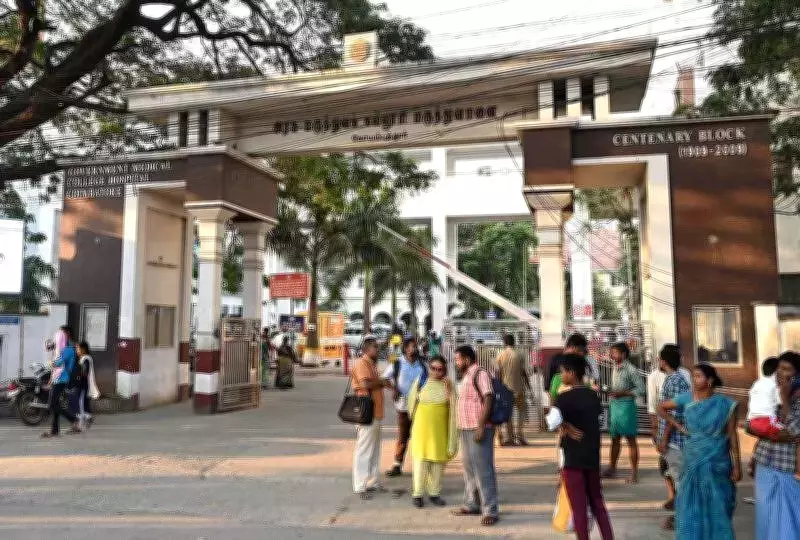
Coimbatore Hospitals and Colleges Forced to Revise Menus Amid Severe LPG Shortage
A critical cooking gas shortage in Coimbatore has compelled major healthcare and educational institutions to implement temporary but significant changes to their food service operations. The Coimbatore Medical College and Hospital (CMCH), along with several private colleges across the district, have revised their menus as an immediate measure to conserve LPG supplies.
Hospital Implements Emergency Menu Changes for Patients
The new menu for inpatients at CMCH took effect on Thursday night and is expected to continue for approximately one week. Hospital authorities have emphasized that despite the changes, all meals will remain nutritionally adequate for patients. CMCH currently houses between 1,400 and 1,500 inpatients, with nearly 1,000 to 1,100 receiving three free meals daily.
According to Resident Medical Officer Dr. B Saravanapriya, the revised menu strategically replaces food items requiring extended cooking times with alternatives that can be prepared more quickly using less fuel. Dinner items such as chapathi and upma have been substituted with wheat rava, while protein sources have been modified—channa, which demands longer cooking, has been replaced with green gram and soya.

Some meals have been simplified by combining dishes to further reduce cooking duration. Instead of serving rice with separate sambar and vegetable side dishes, the hospital may now provide vegetable rice accompanied by fruit. Additionally, dosa has been temporarily removed from the menu.
Infrastructure Upgrades and Government Consultation
Dr. Saravanapriya noted that while the state government has indicated that any further alterations to food arrangements would require consultation with a dietitian, the current revisions were introduced as an urgent response to manage the cooking gas shortage. The hospital has ordered two mass steamers capable of cooking 240 idlis and 30kg of rice, which can operate on both LPG and electricity. One steamer will be allocated to the medical college, and the other to the hospital.
Private Educational Institutions Adjust Hostel Menus
The LPG shortage has similarly impacted private educational institutions in Coimbatore, leading to adjustments in hostel menus. One college principal reported removing dosa and chapathi from the hostel menu for a week, substituting them with bread toast, idly, and banana.
At Karpagam Institutions, which accommodates around 10,000 students in hostels, dosa and parotta have been excluded from the menu for five days starting Thursday. Public Relations Officer Dr. K M G Athi Pandian stated that kichadi and idly have been introduced as alternatives.
Industry Appeals and Administrative Response
The Association of Self-Financing Arts, Science and Management Colleges of Tamil Nadu has appealed to the state government to ensure uninterrupted LPG supply to educational institutions with hostels and canteens, particularly during examination periods. In a representation to Chief Minister M K Stalin, the association highlighted that many students from across Tamil Nadu and other regions depend entirely on hostel messes and college canteens for daily meals.
Association President Dr. Ajeet Kumar Lal Mohan explained that disruptions in commercial LPG supply are creating operational challenges for colleges. Tamil Nadu is home to over 900 arts and science colleges, with more than 100 located in Coimbatore, Tirupur, Nilgiris, and Erode districts.
Coimbatore Collector Pavankumar G Giriyappanavar convened a meeting with officials from oil marketing companies on Thursday to review domestic LPG availability. He is scheduled to meet with representatives from schools, colleges, and hospitals to discuss fuel supply issues. The district administration is also exploring alternatives, such as induction cooking in collaboration with the Tamil Nadu Power Distribution Corporation Limited.
Furthermore, the Coimbatore Hostel Owners Association has petitioned the collector, seeking LPG supply for more than 600 private hostels that serve over one lakh people across Coimbatore, Tirupur, Erode, Salem, and Trichy districts.






