The Democratic Republic of Congo is once again battling an Ebola outbreak that is escalating rapidly. With over 900 suspected cases reported, global health agencies are raising urgent alarms. The epicenter of this crisis lies in Ituri province, a region plagued by conflict and public distrust, complicating containment efforts.
Ebola Outbreak: What's Happening?
The World Health Organization has assessed the risk inside Congo as very high. Congolese authorities and international health agencies have recorded more than 900 suspected infections and over 100 deaths. However, experts believe the actual numbers could be significantly higher due to limited testing and underreporting. What makes this outbreak particularly concerning is its occurrence in one of Africa's most unstable regions, marked by armed conflict, mass displacement, fragile healthcare systems, and widespread mistrust. Adding to the challenge, the current outbreak involves the Bundibugyo strain of Ebola, for which no approved vaccine or specific treatment exists. The crisis has escalated beyond a local outbreak, with health officials warning that violence, medical shortages, and cross-border movement could make containment extraordinarily difficult.
No Proven Vaccine So Far
The Bundibugyo strain presents a major challenge. According to the World Health Organization, past outbreaks utilized vaccines designed for the Zaire strain, but currently available Ebola vaccines are not specifically approved for Bundibugyo virus disease. This strain has also created diagnostic complications. Many rapid tests were originally designed for different Ebola variants, slowing detection efforts. Experts believe the virus may have spread unnoticed for weeks before identification.

Ongoing Violence in Congo
Violence and insecurity in eastern Congo pose another massive obstacle. Armed rebel groups and militias are attacking civilians, treatment centers, and even hospitals. Medical staff have been threatened and forced to evacuate. Fear, anger, and misinformation exacerbate the situation, hindering containment. In previous Ebola outbreaks, violence against healthcare workers severely damaged containment efforts, and experts fear a similar pattern is emerging.
Insufficient Healthcare Infrastructure
Congo's healthcare infrastructure is severely strained. Hospitals and clinics lack sufficient staff, medicine, and protective gear. The country has experienced repeated disease outbreaks over decades, including Ebola, measles, cholera, and malaria. Many hospitals continue operating with severe shortages. Even now, Ebola patients are sometimes treated alongside other sick individuals, risking further spread within healthcare facilities. Protective equipment, laboratory supplies, and testing capacity remain limited. Doctors note that general wards cannot provide the isolation Ebola requires, and many hospitals in affected areas are already overwhelmed.
Population Movement and Cross-Border Spread
Population movement and cross-border spread are major factors. Eastern Congo borders several countries and serves as a hub for trade, mining, and mass displacement. People cross borders frequently. The WHO has confirmed Ebola-linked cases in Uganda. Conflict-driven displacement means nearly a million people live in crowded camps, ideal conditions for virus transmission, especially where sanitation and medical access are poor.
Public Distrust in Highly Unstable Regions
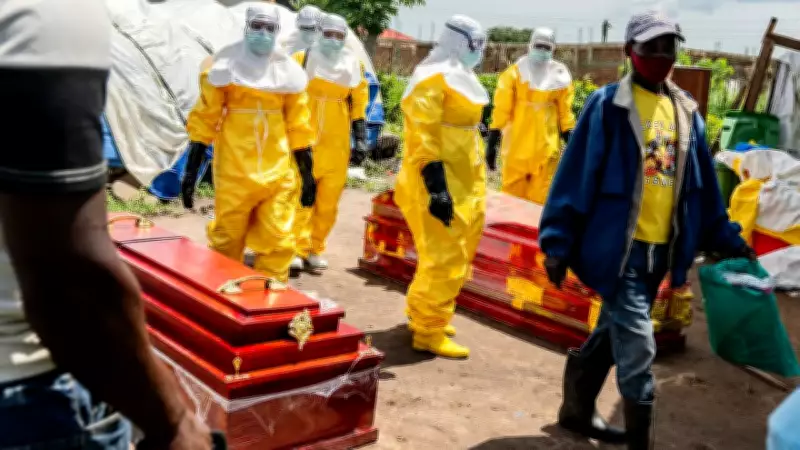
Perhaps the most difficult challenge is public distrust. Ebola outbreaks in Congo have historically faced resistance from communities suspicious of authorities, foreign aid groups, and burial restrictions. Funeral traditions involve close contact with bodies, and many communities in the DRC do not trust aid groups and health workers enough to abandon age-old rituals. This leads to rapid spread of Ebola, clashing with safer protocols. Misinformation spreads quickly, making some people reluctant to seek or accept help, avoid treatment, or resist tracing efforts, further complicating containment.

What's Ahead?
Despite the growing crisis, international risk remains relatively low, as Ebola does not spread through the air. If agencies can ramp up aggressive testing, isolation, and tracing, outbreaks are often manageable. However, in this situation, every obstacle is stacked against health workers: conflict, mistrust, weak healthcare, constant movement, and no vaccine. The WHO declared this outbreak a public health emergency, and aid groups continue to urge urgent funding and support. Health workers are racing against the clock to stop Ebola while overcoming fear, violence, and exhaustion in one of the world's most challenging outbreak zones.