Delhi's Community Kitchens Maintain Operations Amid LPG Supply Concerns
In the face of growing concerns about a potential liquefied petroleum gas (LPG) shortage impacting large-scale food preparation facilities, operations at numerous community kitchens and food service programs across Delhi remain largely stable at present. While stakeholders are monitoring the situation closely, most report that food preparation and distribution activities are continuing without interruption, with contingency measures prepared should supply disruptions intensify in the coming days.
Atal Canteens Report Normal Functioning
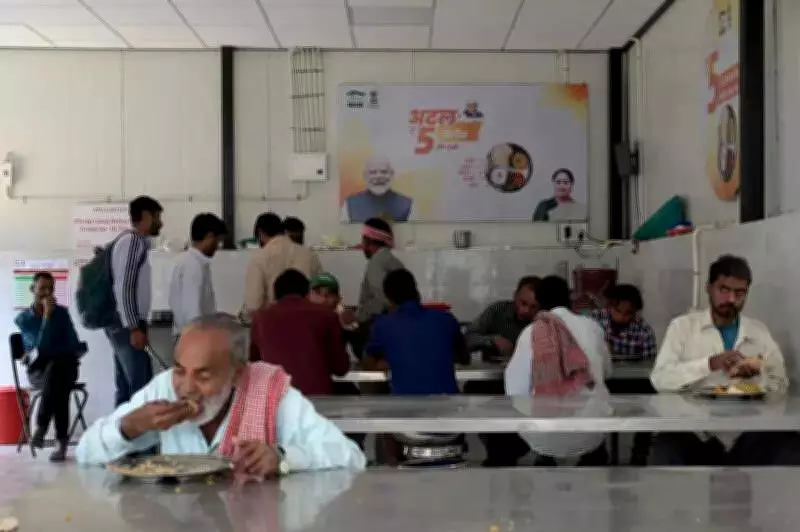
Officials connected to Delhi's network of Atal Canteens have confirmed that current food supply chains remain unaffected, though they acknowledge that a prolonged LPG shortage could eventually pose operational challenges. At the Lajpat Nagar Atal Canteen, staff members indicated that meals are being prepared and served without any disruption to their regular schedule.
"Till this morning, there has been no problem," stated a representative at the center. "The food is prepared at Mohan Estate and transported here for distribution. We typically receive food for around 500 people during the morning hours and another 500 in the evening. At the moment, everything is running normally."

Another official associated with the program echoed this sentiment, noting, "Right now, the operations are continuing smoothly and there is no disruption in food preparation or distribution. However, if the LPG situation becomes more severe in the future, certain parts of the process may face pressure. That said, it is unlikely that services would stop entirely."
Reduced LPG Dependence at Some Facilities
At the Sheikh Sarai Atal Canteen, staff members explained that their meal preparation methodology has significantly reduced reliance on LPG cylinders. According to workers at this center, most cooking is conducted at a centralized facility in Ghitorni using steam-based technology.
"Food for around 300 people is brought here every day, though on average about 200 people eat at this center daily," a staff member revealed. "As the use of LPG is limited, our supply may not be affected at all, even if there are constraints in the availability of cylinders."
Workers at the Anna Nagar canteen also expressed confidence that services will continue without interruption. "We receive food for roughly 300 people daily, and so far there is no issue at all," a staff member confirmed. "We remain in regular touch with our suppliers and, till now, they have not indicated any possible disruption in supplies."
Mid-Day Meal Programs Implement Preparedness Measures
Organizations responsible for operating mid-day meal programs in Delhi's government schools have begun preparing for potential supply challenges. Some have already written to government authorities seeking guidance and clarity regarding future LPG availability.
Bharatarshabha Dasa, national president and trustee of the Akshaya Patra Foundation, provided reassurance about their operations: "In the backdrop of the ongoing LPG supply situation, our efforts to nourish over 23 lakh children remain fully protected. We currently hold over a month's supply of LPG, ensuring uninterrupted supply of mid-day meals across all our operational kitchens."
He further explained, "Furthermore, unlike conventional cooking setups, our centralized kitchens are predominantly steam-based, with steam generated by boilers run by electricity or fuelled by briquettes. Many of our kitchens are also powered by PNG. As a result, our LPG dependency is significantly lower than what it may appear."
Some stakeholders have noted that the approaching summer vacations in schools could provide a temporary buffer, as demand for mid-day meals typically declines during this period.
Collaborative Efforts to Ensure Continuity
The Ekta Shakti Foundation, which provides mid-day meals to approximately 30,000 children daily, has initiated discussions with authorities to ensure smooth operations. Its CEO, Arun Singh Panwar, indicated that the government has already begun consultations with non-governmental organizations and other entities involved in the program.

"The intention is to assess the situation and ensure that beneficiaries, especially school students who rely on these meals, do not face any interruption in services," Panwar stated.
While the current LPG supply situation has raised concerns among food service providers across Delhi, the majority of community kitchens and meal programs continue to function normally. Organizations have implemented various strategies to mitigate potential disruptions, including reduced LPG dependence through alternative cooking methods, maintaining reserve supplies, and engaging in proactive dialogue with government authorities. The coming weeks will reveal whether these measures prove sufficient should LPG constraints become more pronounced.