

Essential Medicine Price Increase Implemented Amid Growing Concerns
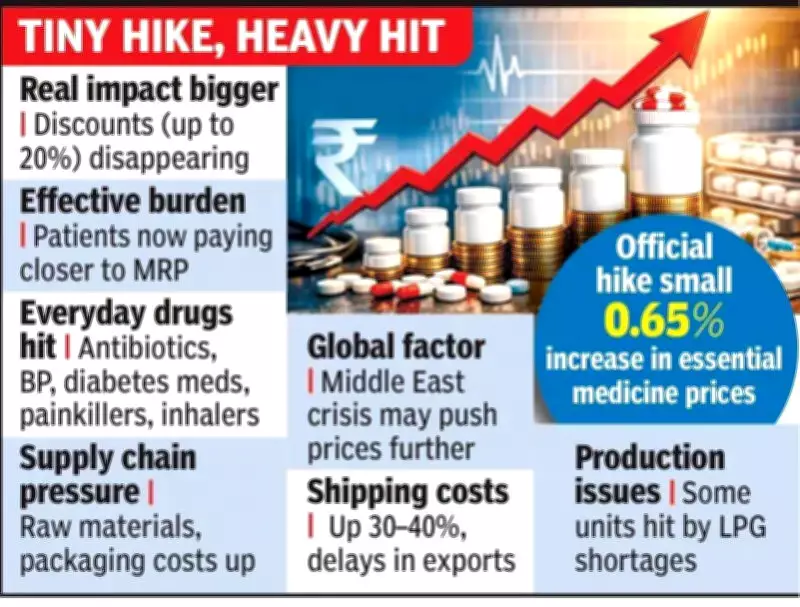
The National Pharmaceutical Pricing Authority's (NPPA) directive allowing a 0.65 percent increase in the prices of essential medicines officially came into force on Wednesday. While this percentage adjustment might appear relatively minor at first glance, the practical implications are already generating significant apprehension among both patients and pharmacy professionals across the country.
Vanishing Discounts Amplify Real Cost Impact
Previously, many chemists and pharmacies offered substantial discounts of up to 20 percent on routine prescription medications, providing crucial relief for families managing regular medical expenses. These consumer-friendly discounts are now rapidly disappearing from the market, forcing patients to pay amounts much closer to the full maximum retail price. Consequently, the effective increase in household medicine expenditures is proving to be substantially more severe than the official 0.65 percent figure would suggest.
"Once the fresh stock arrives, and if the Middle East crisis continues, we expect pharmaceutical companies will inevitably pass on the added transportation and other costs to consumers," explained Jitendra Dhakad, a prominent member of the Bhopal Chemist Association. He further cautioned that if the geopolitical conflict persists for another two weeks, medicine prices could escalate far more dramatically, ultimately leaving patients to shoulder the full burden at pharmacy counters nationwide.

Industry Voices Concerns Over Production Costs
Pharmaceutical manufacturers are expressing strong reservations about the government-approved price adjustment, arguing it falls woefully short of addressing actual production cost increases. "The government has currently approved an increase of only 0.64 percent in medicine prices. Small and medium-sized enterprises are likely to face significant difficulties," stated manufacturer Himanshu Shah, highlighting the strain on domestic producers.
The impact will be most acutely felt on everyday essential medications that millions of households rely upon regularly:
- Antibiotics for common infections
- Painkillers and analgesics
- Blood pressure management tablets
- Diabetes control medications
- Respiratory inhalers for asthma and COPD
Export challenges are compounding the domestic situation. "Raw materials have become expensive, production costs have also increased. Exports have also been adversely affected, with several shipping containers currently stranded at sea," noted exporter RS Goswami, describing the multifaceted pressures facing the pharmaceutical sector.
Broader Implications for Supply and Affordability
Industry associations are issuing warnings that without more substantial price adjustments, numerous smaller manufacturing facilities could face closure, potentially shrinking the overall supply of affordable generic medicines in the market. This could create longer-term availability issues beyond immediate pricing concerns.
For patients and consumers, however, the immediate reality remains starkly clear: the protective buffer of pharmacy discounts is evaporating, and even this seemingly modest official price increase is translating directly into higher out-of-pocket expenses for essential healthcare needs. The convergence of regulatory pricing decisions, geopolitical instability affecting supply chains, and rising production costs is creating a perfect storm that threatens both pharmaceutical industry stability and patient medication accessibility.






