A Family's Battle Against Rare Childhood Dementia in Essex
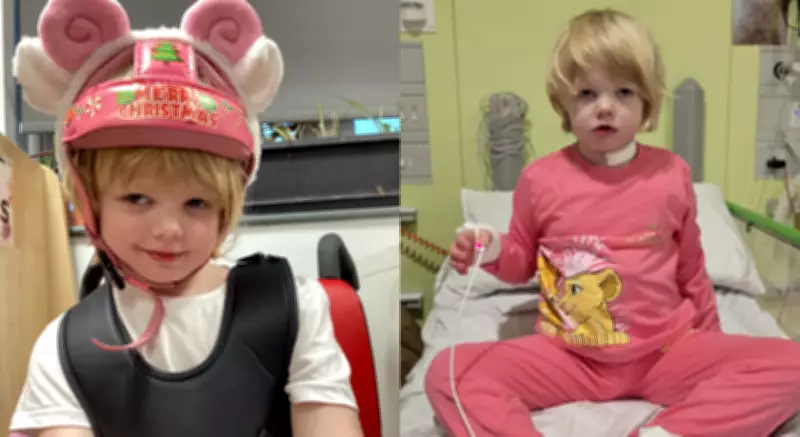
A five-year-old girl from Essex is confronting a rare and fatal form of childhood dementia that progressively robs her of the ability to walk, talk, see, and eat independently. Holly Nayler, from Colchester, Essex, has been diagnosed with CLN2 Batten disease, a degenerative neurological condition affecting fewer than fifty children in the United Kingdom and under two thousand globally.
Early Signs and Devastating Diagnosis
Holly now has a mental age ranging between twelve and eighteen months and can endure up to nearly two hundred seizures daily. On one particularly severe occasion, she suffered a staggering one hundred eighty-seven seizures within twenty-four hours. Her parents, James Nayler, aged forty, and Lauren Nayler, thirty-two, recall that there were no warning signs during Holly's early development. She walked early, passed all her health checks, and exhibited no developmental delays until shortly before her third birthday.
"It wasn't until the seizures started that we realised something wasn't quite right," James revealed. According to reporting by SWNS, Holly experienced her first seizure just days before turning three. Initially, doctors suspected an infection, and when that was ruled out, epilepsy was considered. It was only after comprehensive genetic testing that the family received the life-altering diagnosis. Holly was formally diagnosed with CLN2 Batten disease on March 26, 2024.

James, who has since become Holly's full-time carer, described the moment of diagnosis as overwhelming. "Your world just stops," he said. "You're trying to take in what they're telling you but at the same time, your mind is going a million miles an hour. There are all these emotions running through you." He added that, having never heard of the condition, immediate questions arose about its life-limiting and life-shortening impacts, with doctors confirming that without treatment, life expectancy typically ranges between five and eight years old.
Understanding CLN2 Batten Disease
CLN2 Batten disease is a type of childhood dementia caused by a genetic mutation that prevents the body from producing an essential enzyme. Without this enzyme, toxic waste accumulates in brain cells, leading to rapid neurological decline. Most untreated children lose mobility, speech, and vision, often requiring feeding tubes by around six years of age, with life expectancy generally between six and twelve years.
Daily Struggles and Unwavering Spirit
Despite the severity of her condition, Holly attends school five days a week. Some days she manages well, while on others, she struggles significantly. "Sometimes she'll survive all day and other times we'll get a phone call saying she's not coping well," James explained. "Some days her speech and communication is good and others the staff at the school will use picture flashcards." He noted that Holly's eyesight is now uncertain, and her seizures continue to worsen despite ongoing treatment.
Even with these challenges, James describes his daughter as full of character. "Holly is ultimately a really cheeky, happy little girl," he said. "She loves Paw Patrol and dinosaurs. As much as the seizures and disease try to slow her down, if she wants to get somewhere she will drag us by the hand and get us there." The Nayler family also includes an eighteen-month-old daughter, Poppy.
Groundbreaking Treatment Offering Hope
James and Lauren have chosen to pursue a treatment that, while not a cure, can slow the loss of basic skills and extend life expectancy into the late teens. This involves brain surgery to implant a port into blood vessels in the brain. Holly now travels to Great Ormond Street Hospital every two weeks for a four-hour enzyme infusion delivered directly into her brain, with round trips lasting up to thirteen hours.

She has been receiving this treatment since April 2024 and has become affectionately known as "The Holly" and "Holly the Dinosaur Princess" at both Colchester Hospital and GOSH. The drug, Brineura (cerliponase alfa), developed by BioMarin, is delivered via the NHS under a special access agreement with NICE. Clinical trials indicate it can stabilise or slow the loss of motor function and, for many children, dramatically reduce seizures.
James shared that for many children on this treatment, seizures stop entirely or reduce to one per month, though this has not been Holly's experience. "Holly would've lost her ability to walk. She would probably have lost most of her sight by now," he stated. "She wouldn't have the quality of life she has now."
Uncertain Future for Treatment Access
In August 2024, NICE issued draft guidance stating it would not recommend Brineura once the initial access agreement ends, citing its high cost—over £500,000 per child per year—and limited long-term evidence. After an appeal hearing in November, the agreement was extended until the end of June 2026, or until final guidance is published. While children already receiving the treatment will be allowed to continue, families fear for future access.
"These children deserve a life and they deserve a life which keeps as many of their skills and functions for as long as possible," James emphasised. "This drug is the only one in the world that can do that."
Context of Childhood Dementia in the UK
Holly's case emerges shortly after the death of the UK's youngest known dementia patient. Earlier this month, Andre Yarham died at age twenty-four, less than two years after being diagnosed with frontotemporal dementia. According to SWNS, Yarham was diagnosed a month before his twenty-third birthday, with doctors noting his brain showed degeneration comparable to that of a seventy-year-old. Fewer than 0.1 percent of people in the UK are diagnosed with dementia before age sixty-five.
For the Naylers, raising awareness is now as crucial as treatment. "The night before our appointment, I had Googled everything I could possibly think of that may cause all the symptoms she had," James recalled. "It didn't come up. We're just trying to work out what's happening, what it means for us as a family, what it means for Holly and what her life is going to be like in a few weeks, months, years."