

Gujarat's Weight Loss Revolution: Embracing Medical Injections Over Vanity
For years, the pursuit of a size-zero figure and the influence of social media were the primary motivators for weight loss in Gujarat. However, a significant transformation is now underway in clinics across the state. Patients who once sought basic diet charts or multivitamin advice are increasingly inquiring about medical weight-loss injections, marking a shift from casual lifestyle tips to structured medical consultations.
Study Reveals Rising Obesity and Medical Inquiries
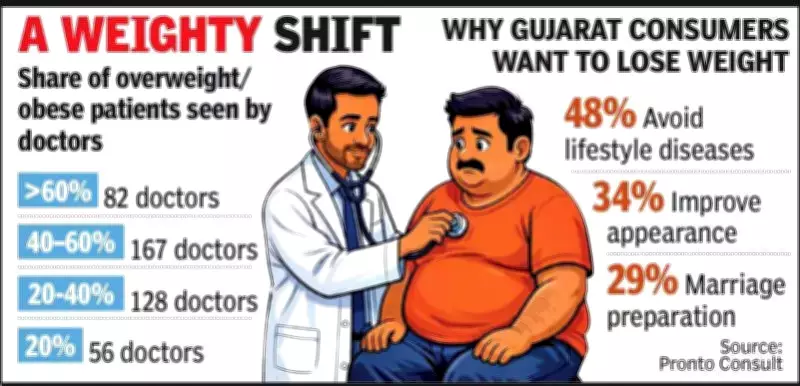
A recent stakeholder study by Pronto Consult highlights this trend. The research, involving 433 doctors and 233 consumers across urban and smaller cities in Gujarat, found that at least 58% of doctors report 40% or more of their patients as overweight or obese. Notably, 40-50% of patients now ask about new weight-loss injections during consultations, moving away from traditional symptom-focused discussions.
Gujarat's motivations for weight loss have evolved dramatically. Nearly half of consumers, 48%, cite prevention of lifestyle diseases such as diabetes and hypertension as their main driver, surpassing appearance-related reasons at 34%. This reflects a growing awareness of obesity as a health risk rather than merely a cosmetic concern.

Disease Avoidance Drives Action in Gujarat
Dr. Karishma Shah, founder and managing partner of Pronto Consult, explains, "Awareness among people in Gujarat about obesity and related drugs is intentional. Consumers are informed but cautious." A striking pattern specific to Gujarat is the dominance of disease avoidance over appearance. Fear of conditions like diabetes, hypertension, and fatty liver is prompting earlier action, with weight viewed as a risk multiplier. This aligns with Gujarat's rising metabolic disease burden, leading to drugs like Semaglutide being evaluated as preventive metabolic interventions, not just weight-loss solutions.
According to the study, nearly two-thirds of doctors in Gujarat are already prescribing GLP-1 therapies actively or occasionally, indicating growing clinical comfort. For some patients, these therapies have provided sustained metabolic benefits after years of unsuccessful lifestyle-only attempts.
Real-Life Success Stories with Medical Supervision
Himadri Mehta, a 59-year-old healthcare professional, struggled for nearly a decade with weight loss through exercise and diet, with little success. "My sister in the US suggested GLP-1 therapy as my HbA1C remained above 8 and I was living with diabetes. After consulting doctors, I started the treatment. Nearly two years on, I have lost 11 kg, my HbA1C has come down to 7.1, and my BMI has reduced," she said. Mehta experienced nausea and vomiting early on, underscoring the need for medical supervision.
In another case, Purav Parmar (name changed), a 35-year-old working in a major pharma firm, suffered from severe sleep apnoea, hypertension, and diabetes, with a BMI of 35 at 126 kg. Dr. Ramesh Goyal, a senior endocrinologist at Apollo Hospitals, noted that after initial diet and exercise failed, Parmar was administered GLP-1 treatment. In about eight months, he shed significant weight, now weighing 85 kg with a BMI of 27. "His productivity has increased and fatigue due to disturbed sleep has reduced significantly," added Dr. Goyal.
Cautions and Considerations for Injectable Therapies
However, Dr. Goyal cautions that GLP-1 should not be seen as a shortcut. "Not all are eligible – it is advisable only for those with a BMI of 30 or more, or 27 or more with major comorbidities like hypertension, diabetes, cardiac issues, or sleep apnoea," he said, adding that about 20% of his OPD patients are prescribed the treatment.
Affordability remains a key barrier. The study states that over 80% of consumers would consider injectable therapies if advised by a doctor, and nearly 60% are willing to spend up to Rs 3,000 monthly if safety and outcomes are assured. Consumer data shows caution: while 56% have heard of semaglutide and 46% have seen it on social media, high cost deters 68%, followed by fear of side effects at 46% and lack of doctor guidance at 41%.

Expert Insights on Rising Awareness and Risks
Dr. Manoj Agrawal, a paediatric and adolescent endocrinologist at Shalby Hospitals, notes that awareness of medical weight-loss options has risen sharply, with 40–50% of patients enquiring about injectable therapies. Uptake, once limited by cost, has increased with biosimilars and better outcomes. However, he warns that injections are not standalone solutions and are prescribed to only 20–30% of patients, alongside diet, exercise, and supervision. "Weight regain is common without follow-up, while rapid loss can lead to muscle depletion, making counselling and adequate protein intake essential," he added.
This shift in Gujarat underscores a broader move towards proactive health management, blending medical innovation with cautious consumer behavior in the fight against obesity and lifestyle diseases.





