

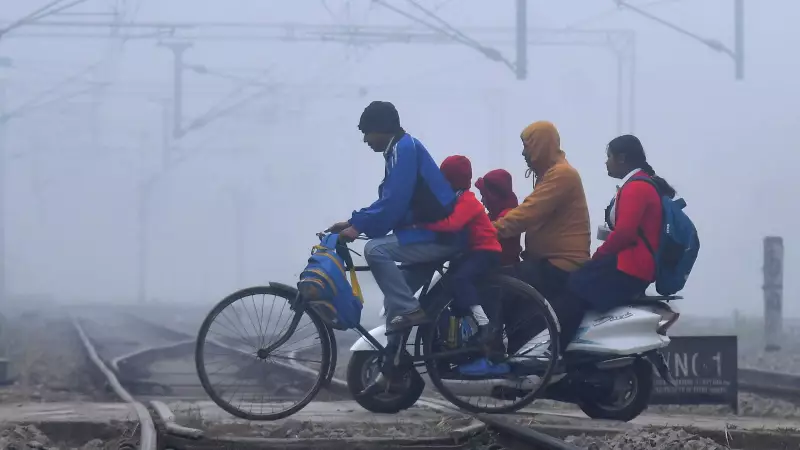
Gurgaon Freezes at 0.6°C: Unpacking the Unusual Cold
Residents of Gurgaon woke up to an exceptionally cold morning as temperatures plunged to a near-freezing 0.6 degrees Celsius on Sunday night. This marks the coldest night of the current season, according to data released by the India Meteorological Department on Monday.
Is This a Record-Breaking Chill?
The reading of 0.6°C did not set a new all-time record, but it came remarkably close. Historical IMD data shows Gurgaon last experienced such extreme cold on January 11, 1971, when the mercury dropped to exactly 0 degrees Celsius.
An automatic weather station located in the National Capital Region city captured this sharp temperature dip. Senior IMD officials immediately noted the unusual nature of the reading.

Local Factors Influencing Temperature Readings
"Open fields tend to cool faster, while stations located in dense urban areas usually record higher temperatures," explained a senior IMD official. The official emphasized that near sub-zero temperatures remain uncommon for cities like Gurgaon.
Several localized elements can significantly affect temperature measurements at specific weather stations:
- Soil type and composition
- Pollution levels in the immediate area
- Vegetation cover around the station
- Precise geographical location of the monitoring equipment
Meteorologists conduct special checks to rule out instrument calibration errors, though these investigations typically occur only when exceptionally wide variations appear in the data.
Weather Experts Weigh In
Mahesh Palawat, Vice-President for Meteorology and Climate Change at Skymet Weather, called the 0.6°C reading particularly unusual. "Cities that are generally colder reported minimum temperatures above 1 degree Celsius," Palawat noted, highlighting the anomaly.
Another IMD official pointed out that micro-level temperature variations within cities have become increasingly common. On the same night, while Gurgaon's station recorded 0.6°C, the nearby Aya Nagar station logged temperatures close to 3 degrees Celsius.
"Similar differences are often seen between stations such as Safdarjung and Palam in Delhi," the official added, illustrating how localized conditions create temperature disparities even within small geographical areas.
Delhi's Parallel Cold Experience
The national capital also experienced intense cold conditions, with minimum temperatures dipping to around 3 degrees Celsius at several weather stations. This made it Delhi's coldest January day since 2023.
Delhi last witnessed such low night temperatures on January 16, 2023, when the minimum plunged to 1.4 degrees Celsius. Station-wise data recorded at 8:30 AM showed Delhi's principal weather station at Safdarjung Observatory registered a minimum temperature of 3.2 degrees Celsius - 4.2 notches below normal for this time of year.
Why Is January So Cold This Year?
IMD officials confirm that January represents the climatologically coldest period for North India. However, this year's particularly sharp chill has specific meteorological causes.
A Western Disturbance affected the Himalayan region on January 8 and 9, leading to heavy snowfall. Following this event, northwesterly winds began transporting colder air from the Himalayas into the plains.
Krishna Mishra, a senior IMD official, explained that "such synoptic conditions are conducive to sharp temperature drops in the region during mid-January."
The Shimla Paradox: Warmer Hills
While plains shivered, hill stations like Shimla recorded relatively higher minimum temperatures around 8 degrees Celsius. Senior IMD scientist R K Jenamani attributed this to cloud cover associated with a low-intensity western disturbance.
"Clouds tend to trap heat at night, leading to relatively warmer conditions in hilly regions compared to the plains," Jenamani clarified, highlighting how different weather phenomena affect various geographical areas.
Forecast and Air Quality Concerns
The IMD has issued an orange alert for Tuesday, warning of cold day conditions at isolated places. Cold wave conditions are likely to persist over the Capital for the next two days.

Meanwhile, Delhi's air quality remained in the poor category. According to Central Pollution Control Board data, the city's overall Air Quality Index stood at 297, showing a slight increase from Sunday's reading of 291.
As North India braces for continued cold conditions, meteorologists continue monitoring weather patterns that might bring relief or prolong the winter chill across the region.
