

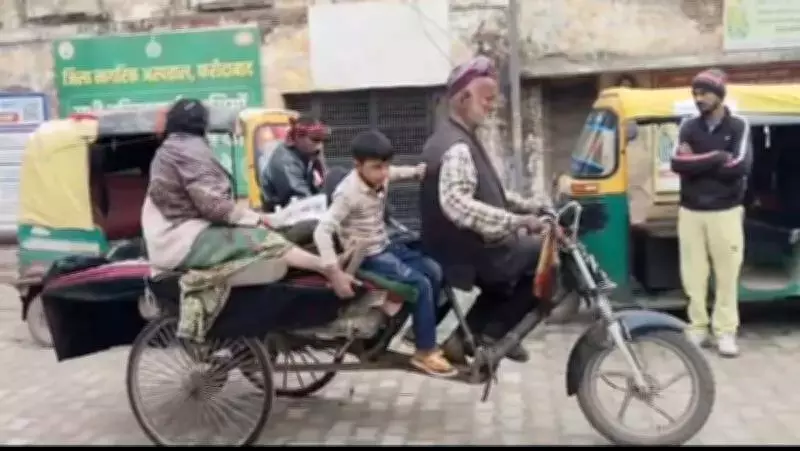
In a deeply distressing incident that underscores systemic healthcare gaps, the family of a 35-year-old tuberculosis patient in Gurgaon was compelled to transport her deceased body home using their very own motorized pushcart—the same vehicle they rely on for their daily livelihood. This tragic event unfolded on Wednesday, revealing the harsh realities faced by economically disadvantaged families when confronted with medical emergencies and death.
A Heart-Wrenching Final Journey
Anuradha, a 35-year-old woman battling tuberculosis complications, passed away around 3 PM on Wednesday at Badshah Khan Civil Hospital in Faridabad. Her husband, Jhunjhun, exhausted all financial resources—approximately Rs 4 lakh—on her treatment, which included multiple referrals to Delhi's Safdarjung Hospital and AIIMS as her condition deteriorated over recent months. With no money remaining, the family faced an impossible choice when ambulance operators demanded Rs 700 to transport Anuradha's body to their home in Sarurpur.
Family's Desperate Decision
Left with no alternatives, Jhunjhun, along with Anuradha's father and grandfather, placed her body on their motorized pushcart—their primary source of income—for the 10-kilometer journey home. The scene was both poignant and tragic: as the grandfather drove the cart through traffic, Anuradha's seven-year-old son clung to the sheet covering her corpse, preventing it from being blown away by the wind. The family of four navigated the route alone, with bystanders witnessing their sorrowful procession.

Broader Systemic Failures
This incident is not isolated. Across India, families from economically weaker sections frequently resort to unconventional means—such as carts, rickshaws, motorcycles, and autos—to transport sick or deceased relatives due to unaffordable ambulance services. Just last week, a 70-year-old man cycled a rickshaw 300 kilometers from Sambalpur to Cuttack to hospitalize his wife, unable to pay for an ambulance. These cases starkly highlight the absence of institutional support and accessible healthcare transportation for vulnerable populations.
Official Response and Accountability
Deputy Civil Surgeon Dr. MP Singh clarified that government ambulances are not authorized to transport corpses, directing families to Red Cross-provided hearse vans available through hospital control rooms in Faridabad. Singh acknowledged the civil surgeon's awareness of the incident, stating, "If the family was forced to take the body on a cart, the case will be investigated. If any negligence is found, action will be taken." He emphasized that private ambulance operators operate independently, beyond the health department's jurisdiction.
Community Support and Aftermath
In the wake of this tragedy, neighbors in Sarurpur village collectively contributed funds for Anuradha's last rites, as Jhunjhun had to borrow money for her cremation. This community solidarity, while heartening, contrasts sharply with the systemic inadequacies that precipitated the family's ordeal. The incident raises urgent questions about healthcare accessibility, ambulance affordability, and social safety nets for India's economically marginalized citizens.
As Gurgaon grapples with this sobering reminder of healthcare disparities, it underscores the pressing need for policy reforms and enhanced support mechanisms to prevent such harrowing scenarios from recurring. The family's plight serves as a powerful call to action for improved institutional responsiveness and compassionate care in times of crisis.






