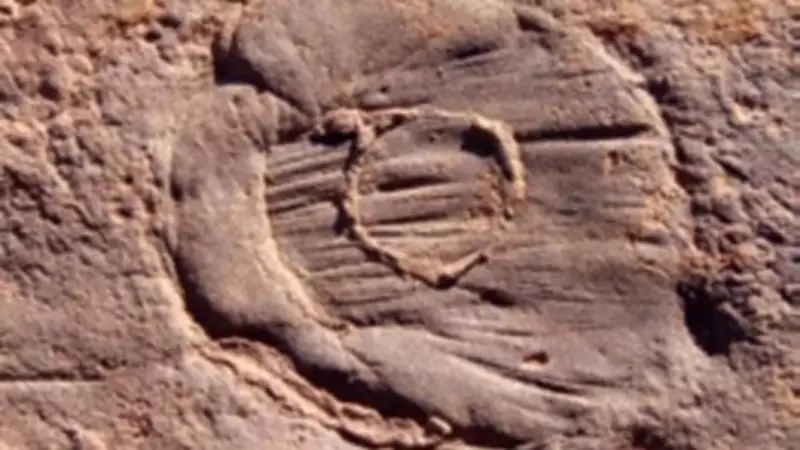
For over a century, the Ediacara Biota has presented a persistent puzzle to the scientific community. These remarkable fossils, dating back approximately 570 million years, capture soft-bodied organisms preserved in sandstone—a phenomenon that defies conventional understanding of fossilization processes.
Why Soft-Bodied Organisms Rarely Become Fossils
Soft-bodied creatures typically make poor candidates for fossilization. Organisms like jellyfish, worms, and leaf-like life forms usually decay rapidly without leaving any trace behind. This explains why the vast majority of fossils we encounter belong to animals possessing hard shells or durable bones. The Ediacara Biota completely shatters this established pattern.
These extraordinary fossils display fragile life forms preserved within sandstone—a rock type notoriously harsh on organic material. For decades, scientists engaged in heated debates about whether these impressions even represented animals at all. Some researchers proposed they might be giant algae formations. The central mystery extended beyond identifying these creatures to understanding how they managed to leave behind such exquisitely detailed records.

How Ancient Seawater Chemistry Preserved Ediacaran Life
According to groundbreaking research published by NASA titled "Exceptional preservation of soft-bodied Ediacara Biota promoted by silica-rich oceans", the secret lies in the unique chemistry of ancient seawater. Approximately 570 million years ago, oceans appear to have been rich in dissolved minerals that behaved fundamentally differently from today's marine environments.
When these soft-bodied organisms settled into sandy sediments, clay minerals formed almost immediately around them. These clays functioned as a natural cement, binding sand grains together before the organisms had any opportunity to decompose. Imagine pouring cement around a footprint just as the tide begins to rise—when the sediment eventually hardened, the impression became permanently set.
The entire preservation process occurred with remarkable speed, capturing even the finest details of these ancient life forms. This explains why these fossils remain astonishingly sharp and well-defined despite having endured for hundreds of millions of years.
Why Sandstone Preserved These Fossils Differently Than Expected
Sandstone typically spells disaster for soft tissues because water can move freely through its porous structure. This constant movement gradually breaks down organic material over geological timescales. However, in Ediacaran environments, the abundant clay minerals dramatically reduced this water movement.
These minerals filled the gaps between sand grains, creating more stable sediment that was significantly less prone to erosion. What might seem like a minor chemical difference actually transformed everything about the preservation potential of these ancient ecosystems.
Why the Ediacara Biota Discovery Matters
Understanding how these fossils formed provides scientists with crucial insights for interpreting what they're actually observing. Instead of examining distorted remnants, researchers can now approach these shapes with greater confidence that they reflect genuine biological structures.
These fossils may represent evolutionary experiments that ultimately didn't survive, or they could be early relatives of modern animals. Regardless of their precise biological relationships, knowing how they were preserved enables scientists to reconstruct ancient ecosystems with unprecedented accuracy.
This discovery serves as a powerful reminder that fossil records depend as much on environmental conditions as they do on biological factors. Earth continues to hold ancient stories in its geological archives, waiting for the right combination of scientific approaches to reveal their secrets.