

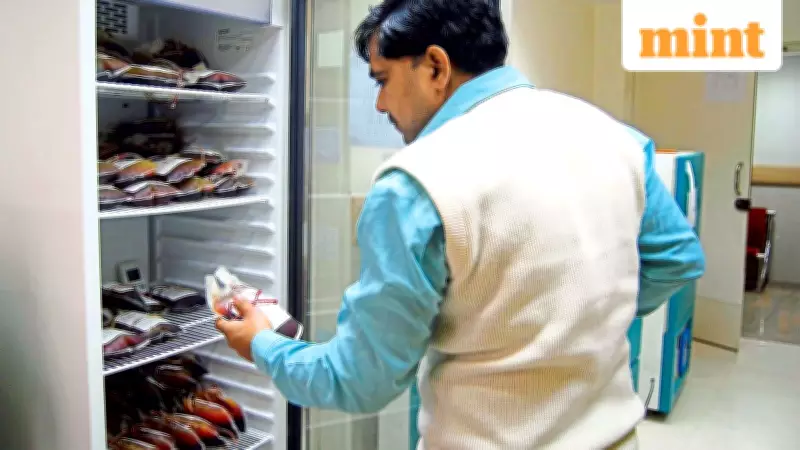
Nationwide Blood Bank Audit Ordered After HIV-Positive Cases in Children
The Union government has initiated a comprehensive nationwide audit of all 4,153 licensed blood banks and centers across India. This decisive action comes in response to alarming reports of children testing HIV-positive following allegedly contaminated blood transfusions in multiple states.
Immediate Regulatory Response
The Central Drugs Standard Control Organization (CDSCO) has commenced risk-based inspections of all blood facilities, with non-compliant centers facing immediate closure. Unlike random checks, this surveillance approach prioritizes facilities based on their potential risk to patient safety.
Health Secretary Punya Salila Srivastava has directed all states and Union Territories to conduct priority audits and implement advanced testing methods. "Ensure testing of all blood units for mandatory transfusion-transmitted infections, namely HIV, Hepatitis B, Hepatitis C, Malaria and Syphilis," she stated in an official communication.

Advanced Testing Protocols Mandated
The health ministry is pushing states to transition from rapid card tests to fourth-generation ELISA/CLIA methods. These advanced tests can detect low-level viral loads that simpler rapid tests might miss, significantly improving screening accuracy.
Dr. Soumya Swaminathan, former WHO chief scientist, emphasized the importance of this shift: "Being stricter with blood banks and insisting on the use of fourth-generation ELISAs is good. While PCR testing has become more affordable and is now standard in many places, at least fourth-generation ELISA testing must be the bare minimum."
Geographical Spread of Cases
The audit follows confirmed cases of HIV transmission through blood transfusions during thalassemia treatment in:
- Satna, Madhya Pradesh
- West Singhbhum, Jharkhand
- Jaipur, Rajasthan
- Kamrup, Assam
These incidents revealed suspected breaches in existing screening protocols, prompting the nationwide regulatory overhaul.
Digital Tracking and Donor Management
The ministry is enforcing several critical measures to enhance blood safety:
- Biometric linkages for all donors to eliminate professional donors
- Mandatory digitized tracking through the e-Raktkosh portal
- Transition to 100% voluntary, non-remunerated donation systems
Raman Gangakhedkar, former ICMR chief scientist, explained the significance of these measures: "Integrating biometric data via the e-Raktkosh platform is important to dismantle the professional donor system and ensure donors are truly voluntary."
Technical Advancements in Testing
The fourth-generation ELISA testing reduces the window period—the time between viral entry and detection—from three weeks to just two weeks. While PCR testing remains the gold standard for detecting genetic material during the silent infection phase, fourth-generation ELISA provides a substantial improvement over previous methods.
"ELISA tests only detect infection after antibodies have formed in the blood," Dr. Swaminathan noted. "While molecular testing (PCR) might not be possible in all blood banks immediately, the current measures are the absolute minimum that should be insisted upon."
Historical Context and Future Goals
India's journey toward safe blood transfusion dates back to the landmark 1996 Supreme Court judgment banning professional blood donation. The country requires approximately 14.6 million units of blood annually to meet transfusion needs.
Gangakhedkar highlighted the long-term objective: "While lapses have occurred globally and locally due to greed or shortcuts in rural areas, our goal remains a camp-based, voluntary approach to reach zero transmission of infections."
The ministry's statement emphasized the need to "discourage continued reliance on replacement blood donation—instead promote voluntary, non-remunerated regular blood donors." This aligns with international standards followed by countries like the UK, US, and Japan, which have successfully transitioned to 100% voluntary donation models.

This comprehensive regulatory intervention represents a significant step toward ensuring ethical blood supply and eliminating transfusion-transmitted infections across India's healthcare system.





