

Agricultural Expert Advocates for Policy Shift to Boost India's Nutritional Security
As India's food production continues to expand, critical questions are emerging about the nation's overall nutritional health. In a significant address, international agricultural authority Prabhu L Pingali emphasized the urgent need to realign India's agricultural policies towards greater crop diversification, supported by enhanced investments in transportation, marketing, and storage infrastructure.
Call for Targeted Agricultural Policies
Speaking as the chief guest at the combined 56th, 57th, and 58th graduation ceremonies of Professor Jayashankar Telangana Agricultural University in Hyderabad, Pingali, who serves as the director of the Tata-Cornell Institute for Agriculture and Nutrition, articulated that India requires multiple, targeted agricultural strategies. He argued that a single, uniform policy approach is insufficient to effectively combat malnutrition and adapt to rapidly evolving consumer dietary patterns.
Pingali highlighted the historical context, noting that while the Green Revolution successfully transformed India from a nation facing food shortages in the 1960s into a food-exporting country, its heavy focus on a limited number of staple crops has led to significant imbalances. This concentration has resulted in lagging production of essential pulses and coarse grains, which continues to contribute to widespread nutritional deficiencies across the population.

Addressing Changing Food Consumption Patterns
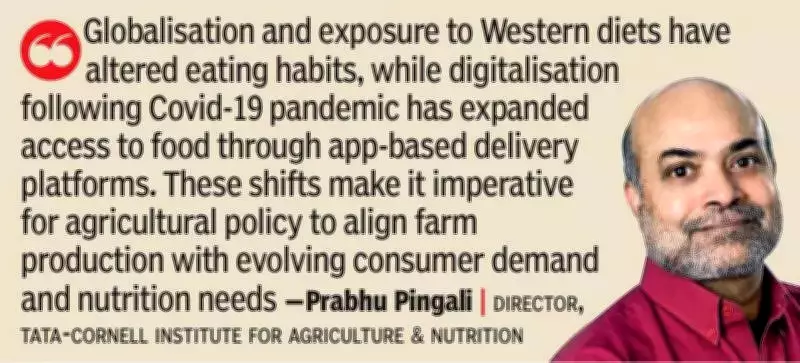
The expert also drew attention to the profound shifts in food consumption habits driven by globalization and increased exposure to Western diets. Furthermore, the digitalization accelerated by the Covid-19 pandemic has expanded food accessibility through various app-based delivery platforms. Pingali stressed that these dynamic changes make it imperative for agricultural policy to synchronize farm production with both evolving consumer demand and critical nutritional requirements.
University Initiatives and Graduation Highlights
During the ceremony, University Vice-Chancellor Professor Aldas Janaiah presented a comprehensive convocation report outlining several key academic and outreach initiatives undertaken by the institution. Notable measures include reserving 15% of undergraduate seats specifically for children of agricultural laborers and implementing fee reductions under special quota provisions.
The graduation event celebrated the academic achievements of a substantial number of students. Degrees were conferred upon 2,135 undergraduate students, 480 postgraduate scholars, and 129 PhD candidates. In recognition of academic excellence, gold medals were awarded to 64 undergraduates, 26 postgraduates, and six doctoral researchers.
This call for policy reform underscores a growing consensus on the need to move beyond mere food quantity to ensure quality and nutritional adequacy, positioning agricultural innovation as a cornerstone of public health in India.






