

India Plans Major Overhaul of Disease Outbreak Response with Regional Push
The Union government is undertaking a significant transformation of India's approach to detecting, tracking, and containing communicable diseases, with the upcoming Union budget expected to mark a decisive shift in strategy. This move comes as infectious disease outbreaks become more frequent and complex across the nation.
Decentralizing the National Disease Control Framework
At the heart of this initiative is a comprehensive revamp of the National Centre for Disease Control (NCDC), aimed at decentralizing outbreak response mechanisms and reducing critical diagnostic delays. According to officials familiar with government deliberations, the plan involves establishing five new regional offices, creating twenty metropolitan surveillance units specifically for crowded urban centers, and setting up twenty-seven state regional centers under India's apex public health institute.
This structural transformation is designed to ensure a more responsive and localized approach to disease outbreaks, moving away from the current centralized model that has shown limitations during recent health emergencies.

Enhanced Laboratory Infrastructure and Specialized Units
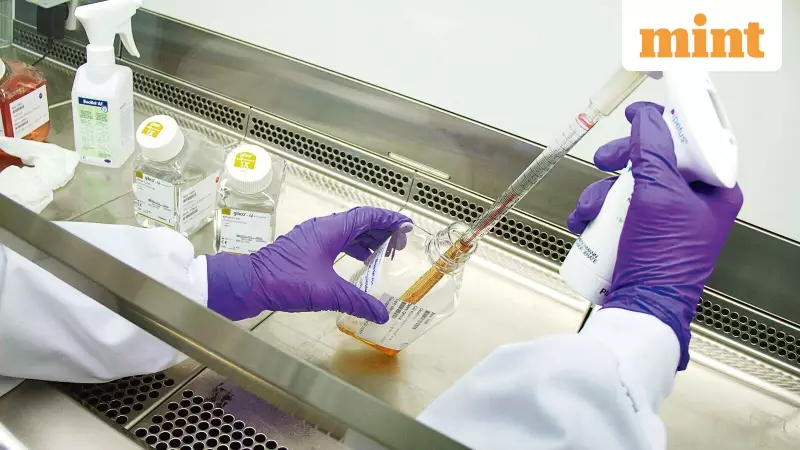
The proposals, which fall under the new iteration of the Pradhan Mantri Ayushman Bharat Health Infrastructure Mission (PM-ABHIM), include establishing ten new biosafety level-3 (BSL-3) laboratories to enable advanced diagnostics at the field level. These high-containment facilities are crucial for preventing the escape of airborne pathogens and form an intrinsic part of national strategies for detecting and surveilling emerging diseases and viruses.
Currently, India operates thirty-five BSL-3 laboratories across various institutions including NCDC, ICMR, CSIR, ICAR, DBT, and the Anusadhan National Research Foundation. The country has only one biosafety level 4 (BSL-4) laboratory at the National Institute of Virology in Pune, which handles the deadliest pathogens including Ebola, Marburg, and Lassa viruses.
The development assumes particular significance given India's increasing vulnerability to infectious disease outbreaks, including zoonotic threats such as Nipah virus, Zika virus, avian influenza (H5N1), Crimean-Congo hemorrhagic fever, Kyasanur forest disease, leptospirosis, Japanese encephalitis, and scrub typhus. These diseases have accounted for substantial fatalities over the past five years, with additional threats from chikungunya, influenza A (H3N2), human metapneumovirus, and Guillain-Barré syndrome outbreaks showing concerning upward trends.
Addressing Critical Gaps in Public Health Infrastructure
"By upgrading these facilities, the government intends to bridge critical gaps in the public health network, allowing for faster identification and containment of infections," explained a government official involved in the planning. "This strategic step aims at creating a pandemic-resilient healthcare system capable of responding to diverse regional health challenges."
The necessity for this overhaul becomes evident when examining current capacity limitations. As of March 2025, India had 237 biosafety laboratories total, a number considered vastly inadequate for a population of India's size facing increased zoonotic threats. This insufficiency forces samples to travel hundreds of kilometers for high-containment testing, creating dangerous diagnostic delays that have contributed to fatalities during previous outbreaks.
Dr. Sujeet Singh, former NCDC director, highlighted specific vulnerabilities: "During the 2018 Nipah outbreak, we faced diagnostic delays that contributed to fatalities because samples had to travel 600 km for testing. Similarly, in H1N1, Nipah, and COVID-19 outbreaks, existing laboratories including NCDC and NIV Pune were overburdened with samples."
Dr. Singh emphasized that India needs a robust network of at least fifteen BSL-3 laboratories and dedicated BSL-4 facilities for human samples to address these systemic vulnerabilities effectively.

Specialized Focus on Urban Health Security
The plan specifically addresses urban health challenges through the creation of metropolitan surveillance units. "The necessity of specialized metropolitan surveillance units are vital to managing urban health security," Dr. Singh noted. "Large populations reside in our metros, and unless you have a clear metropolitan surveillance unit, you won't be able to tackle outbreaks and do robust disease surveillance. It has to have a totally different structure focused on urban problems such as overcrowding and sanitation."
This urban focus is particularly relevant given India's demographic landscape. After surpassing China to become the world's most populous country in 2023, India now has six megacities—Delhi, Mumbai, Kolkata, Bangalore, Chennai, and Hyderabad—each with populations exceeding ten million, plus fifty-three additional urban centers with over one million residents each.
Budgetary Considerations and Implementation Timeline
The ₹64,180 crore PM-ABHIM scheme concludes in the current fiscal year (FY26), with fresh budgetary allocations planned from FY27 to ensure continued disease surveillance and laboratory maintenance. While specific funding details remain undisclosed pending the budget announcement scheduled for February 1, the government will make final allocation decisions based on fiscal scenarios, specific funding needs, and macroeconomic prospects.
The restructuring also clarifies institutional roles within India's public health ecosystem. Under the new framework, NCDC will assume full responsibility for frontline service delivery, evidence collection, and field surveillance, while the Indian Council of Medical Research (ICMR) will concentrate on medical research activities.
Expert Perspectives on the Strategic Shift
Public health experts have welcomed the proposed changes while emphasizing their critical importance. Raman Gangakhedkar, former chief scientist of epidemiology and communicable diseases at ICMR, described the revamp plan as "a crucial element for our future survival" whether for detecting new organisms or investigating outbreaks.
Dr. Singh further elaborated on the regional approach: "The establishment of five high-capacity regional centres is needed to decentralize the burden on Delhi, and these must be 'technical hubs' rather than mere administrative branches. Our east, west, north, and south health problems are different. NCDC should raise their level to BSL-4 like CDC Atlanta... We should become a regional centre for the Southeast Asia region."
This comprehensive restructuring represents India's most significant effort to date to build a responsive, decentralized public health infrastructure capable of addressing the complex disease landscape of the twenty-first century, particularly as climate change, urbanization, and globalization continue to alter disease transmission patterns.





