

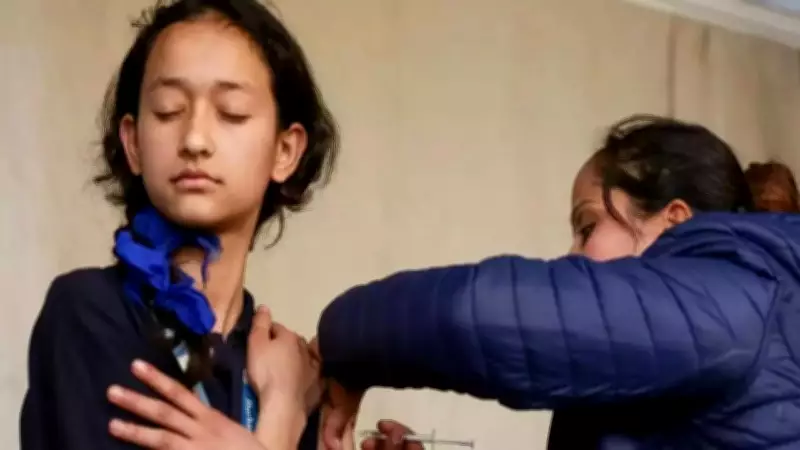
India Launches Historic Free HPV Vaccine Drive for 14-Year-Old Girls Nationwide
In a landmark public health initiative aimed at combating cervical cancer, the Central government is preparing to launch a comprehensive nationwide human papillomavirus (HPV) vaccination campaign. The program, scheduled to begin later this month, will provide free HPV vaccinations to all 14-year-old girls across India at government health facilities.
Massive Scale Targeting 1.2 Crore Adolescents Annually
The ambitious vaccination drive will specifically target girls who are turning 14 years old each year, covering an estimated annual cohort of approximately 1.2 crore adolescents throughout the country. The vaccination will be entirely voluntary and administered at designated government health centers and facilities. This strategic approach ensures systematic coverage while maintaining individual choice and accessibility for families across urban and rural regions.
Addressing India's Second Most Common Women's Cancer
Cervical cancer represents a significant health burden in India, ranking as the second most common cancer among women nationwide. The disease causes nearly 80,000 new cases annually and results in over 42,000 deaths each year. Medical research has established that persistent infection with high-risk HPV types, particularly strains 16 and 18, accounts for more than 80% of all cervical cancer cases. This direct correlation makes vaccination a crucial preventive strategy against this devastating disease.

Prime Minister's Sustained Emphasis on Prevention
The vaccination initiative follows sustained emphasis from the highest levels of government leadership. Prime Minister Narendra Modi has repeatedly highlighted the importance of cervical cancer prevention, advocating for comprehensive approaches including vaccination, early screening, and affordable treatment options. The Prime Minister reinforced this commitment during his participation at the Quad Cancer Moonshot event in September 2024, where he emphasized India's dedication to cancer prevention and healthcare innovation.
Special Campaign Structure and Digital Tracking
Unlike routine immunization programs conducted under the Universal Immunisation Programme, the HPV vaccination drive will operate as a special campaign conducted on designated immunization days. The program will utilize the U-WIN digital platform for tracking and monitoring, ensuring rapid coverage and efficient administration across the vast nation. This digital infrastructure will enable real-time monitoring of vaccination progress and help identify areas requiring additional outreach efforts.
Vaccine Details and International Support
The vaccination campaign will utilize the Gardasil vaccine, which provides protection against HPV types 16 and 18—the primary cancer-causing strains—along with types 6 and 11. Global vaccine alliance Gavi has committed 2.6 crore doses to support India's initiative, with approximately 1.5 crore doses already delivered to the country. Health officials estimate that roughly 1.2 crore doses will be required annually to cover each new cohort of girls turning 14 years old. Globally, HPV vaccines have established an impressive safety record with over 500 million doses administered worldwide.
Medical Experts Hail Historic Public Health Step
Dr. Abhishek Shankar from the Department of Radiation Oncology at AIIMS described the vaccination rollout as a historic step that significantly strengthens India's push to eliminate cervical cancer. He emphasized that the program will protect lakhs of girls from a preventable disease while simultaneously reducing future treatment burdens on the healthcare system, aligning with World Health Organization elimination goals for cervical cancer.
Dr. Pragya Shukla, Head of Clinical Oncology at Delhi State Cancer Institute, highlighted the critical importance of vaccination timing, stating, "Vaccination before sexual debut is essential, as HPV infection is typically silent and irreversible once established. The vaccine has proven to be safe and effective through extensive global research and implementation." India's adoption of a single-dose vaccination strategy is supported by substantial global evidence demonstrating its effectiveness in preventing HPV infection and subsequent cervical cancer development.






