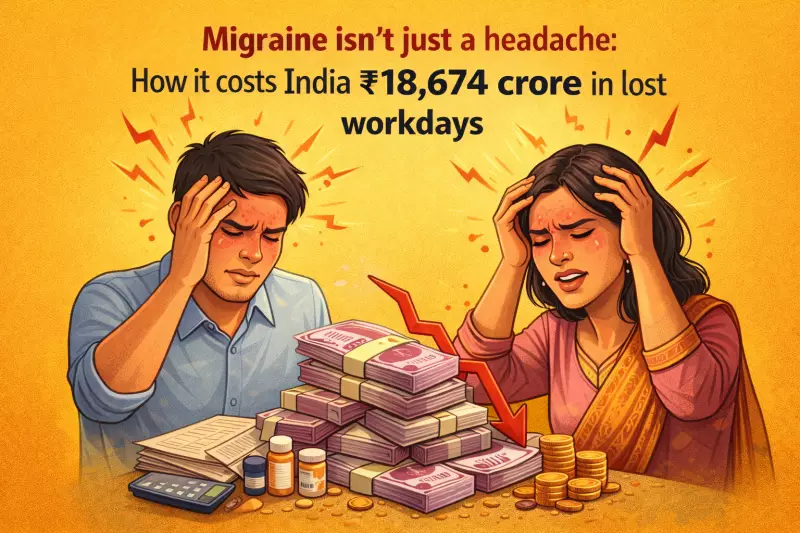
For millions of working professionals in India, a migraine attack is not just a severe headache but a direct ticket to a lost workday. This neurological condition, far more debilitating than a common headache, has emerged as a silent epidemic crippling productivity, especially among the prime working-age population of 20 to 50 years.
The Silent Epidemic: Understanding Migraine's Grip on India
Globally, migraines are recognized as a major neurological disorder, and India is no exception. An estimated 25% of the Indian population suffers from migraines, aligning with the global statistic of one in four people. The impact is severe: according to a 2019 report in The Lancet, migraines rank as the second-highest disabling neurological condition worldwide. The suffering is lifelong for many, with profound personal and professional consequences.
Dr. Rahul Kulkarni, Consultant Neurologist and Head of the Department of Neurology at Pune's Deenanath Mangeshkar Hospital, emphasizes a shift in treatment goals. "The focus is no longer just to avoid pain or a single outcome, but to attain freedom from migraines," he states. "It’s about reducing frequency, shortening duration, and minimizing impact so people can reclaim their lives and resume their work. That’s the ultimate goal—migraine freedom."

The High Cost of Pain: Economic and Professional Fallout
The professional toll of migraines in India is staggering. Data reveals that patients miss an average of 5.9 workdays per month due to this condition. This absenteeism translates into a massive economic burden. The annual economic loss per person is estimated at INR 8,731, culminating in a colossal national loss of approximately INR 18,674.35 crore.
This figure only accounts for direct absenteeism. It does not capture 'presenteeism'—when employees are physically present but unable to function optimally due to pain, reduced concentration, and slower performance. Beyond the numbers, migraines force individuals to cancel plans last-minute, miss important life events, and sometimes even reconsider their career paths, leading to a diminished quality of life.
The Path to 'Migraine Freedom': A Holistic Strategy
Breaking this debilitating cycle requires a comprehensive, multi-pronged approach to care. Medical intervention forms the cornerstone. Migraine medication is most effective when taken at the very onset of a headache. Clear communication from doctors regarding treatment timelines, potential side effects, and the importance of adherence is crucial for building trust and ensuring consistent care.
Equally important are lifestyle modifications and trigger management:
- Maintaining structured work breaks and managing screen time and glare.
- Ensuring conscious hydration and healthy, regular sleep cycles.
- Keeping a headache diary to identify and avoid personal triggers like certain foods, stress, or irregular schedules.
The International Headache Society's goal of "migraine freedom" is now the clinical benchmark. By combining pharmacological treatments with diligent trigger identification and sustainable lifestyle adjustments, individuals can significantly reduce attack frequency and severity. This empowers them to regain normal functioning, return to work faster, and achieve a substantial overall improvement in their quality of life, keeping both their heads and their workdays clear.