

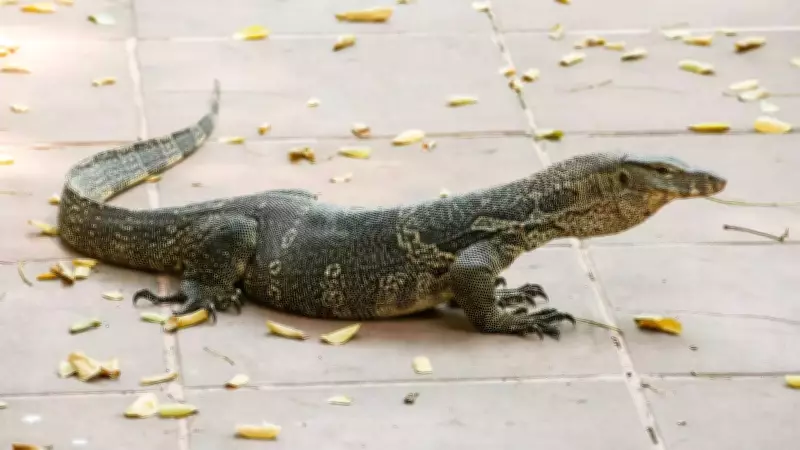
Monitor Lizards vs. Common House Lizards: A Tale of Tails
At first glance, monitor lizards and common house lizards share striking similarities: long bodies, sharp claws, and extended tails. This visual resemblance often leads to confusion, especially when people witness a small wall lizard dropping its tail to escape danger. This natural observation sparks a compelling question: can larger reptiles like monitor lizards perform the same feat? If a monitor lizard loses its tail, will it grow back? The scientific answer is clear and well-documented, rooted in reptile biology, evolutionary history, and extensive research on regeneration.
Understanding Tail Autotomy in Lizards
Tail autotomy is a sophisticated defense mechanism observed in many lizard species. The term autotomy originates from Greek, meaning self-cutting. When threatened by predators, certain lizards can voluntarily detach their tails. The detached tail continues to wriggle for a brief period, serving as a distraction that allows the lizard to flee. According to research published in the journal Biological Reviews and studies in reptile physiology, this process is facilitated by fracture planes within the tail vertebrae. These pre-formed weak points enable a clean break with minimal blood loss.
Following detachment, numerous lizard species regenerate a new tail over time. However, the regrown tail is typically composed of cartilage rather than bone and may exhibit differences in color and structure compared to the original. This regeneration capability is not universal across all lizards, highlighting the diversity in reptilian adaptations.

Which Lizards Can Regrow Their Tails?
Tail regeneration is prevalent in several lizard families, including geckos, skinks, and some iguanas. As documented in the book Biology of the Reptilia, edited by Carl Gans, tail autotomy has evolved independently multiple times throughout lizard evolution. The regenerated tail is not an exact replica of the original; studies indicate it lacks true vertebrae, forming instead a cartilaginous rod. Muscle arrangement and scale patterns may also differ. This ability significantly enhances survival, particularly for smaller lizards vulnerable to predation.
The Case of Monitor Lizards: No Tail Regrowth
Monitor lizards belong to the family Varanidae and the genus Varanus, encompassing over 80 recognized species worldwide, such as the Nile monitor, Asian water monitor, and Komodo dragon. Scientific evidence firmly establishes that monitor lizards do not possess the tail autotomy mechanism found in geckos or skinks. Research on tail anatomy reveals that many autotomy-capable lizards have intra-vertebral fracture planes in their tail vertebrae, allowing for controlled detachment with minimal blood loss. Monitor lizards lack these structural adaptations, meaning they cannot intentionally drop their tails as a defense strategy.
Evolutionary Reasons Behind This Loss
Evolution tailors survival strategies to the specific needs of different animals. Small lizards, facing threats from birds, snakes, and mammals, benefit from tail shedding as it boosts survival odds. In contrast, monitor lizards grow much larger and are active predators, often capable of aggressive self-defense. A peer-reviewed article in PLoS ONE found that tail loss through autotomy can reduce running speed and alter behavior, imposing biological costs on survival and fitness. Monitor lizards utilize their tails as weapons, with observational studies showing species like the Komodo dragon employing tail-whipping for defense. This alternative strategy diminishes the evolutionary necessity for tail shedding.
How Monitor Lizards Defend Themselves
Since they cannot drop their tails, monitor lizards rely on a suite of other survival mechanisms:

- Strong jaws and sharp teeth for biting and deterring threats.
- Powerful claws used for climbing and combat.
- Tail whipping as a physical defense to fend off predators.
- Speed and climbing ability to escape danger quickly.
- Swimming skills in aquatic species, enhancing evasion in water habitats.
These adaptations underscore how monitor lizards have evolved to thrive without the tail regeneration seen in smaller lizard relatives, emphasizing the intricate balance between form, function, and survival in the natural world.





