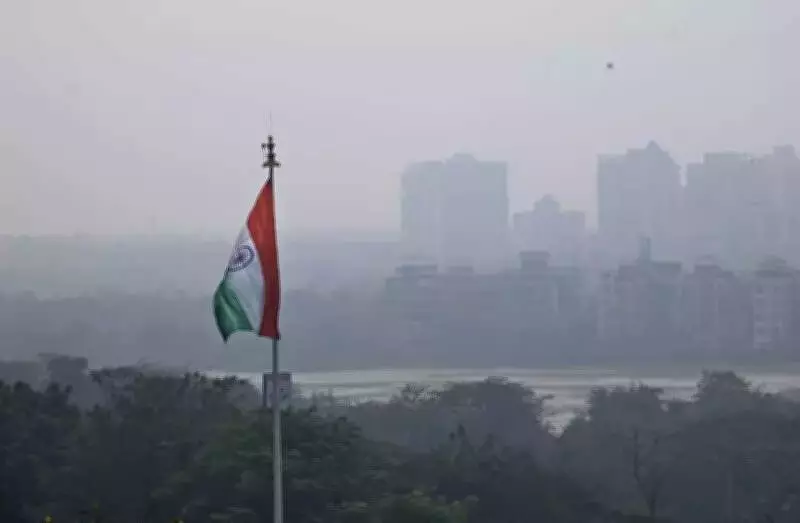
Navi Mumbai Municipal Corporation Intensifies Anti-Pollution Drive Following Judicial Directives
In response to directives from the Supreme Court and Bombay High Court to combat escalating pollution levels, the Navi Mumbai Municipal Corporation (NMMC) has launched a comprehensive crackdown. The civic body is implementing stringent measures and compelling stakeholders to address this critical environmental issue.
Persistent Poor Air Quality Triggers Urgent Action
The Air Quality Index (AQI) in Navi Mumbai continues to register poor and unhealthy readings, with areas like Nerul, Vashi, and Sanpada recording the highest pollution levels. Despite previous efforts, the corporation is grappling with mitigating the situation effectively.
Commissioner Kailas Shinde has urgently appealed to various government agencies operating within Navi Mumbai to enforce rigorous air pollution control protocols. This move comes amid growing frustration among residents, who have voiced complaints about deteriorating air quality over recent months.

Strict Enforcement at Construction Sites
The civic administration has mandated strict compliance with pollution norms at all construction sites. Demonstrating its seriousness, the NMMC issued show-cause notices to three staff members from the Airoli node for negligence in overseeing pollution control measures at a construction site and nullah work.
During a special review meeting, authorities from multiple agencies were instructed to implement required measures more stringently. The meeting included senior officials from the Maharashtra Pollution Control Board, Maharashtra Industrial Development Corporation, and the Regional Transport Department, all crucial to Navi Mumbai's air quality management.
Resident Concerns and Root Causes
Local residents express skepticism, believing agencies are more talk than action, as the city's AQI has remained unhealthy for weeks. Daily average AQI readings currently fluctuate between 100 and 200.
Nature enthusiast Gopal Das attributes rising pollution to extensive redevelopment projects and indiscriminate tree cutting. Commissioner Shinde emphasized that multiple authorities—including MPCB, MIDC, Cidco, RTO, PWD, National Highway Authority, Railways, and MMRDA—share collective responsibility for Navi Mumbai's air quality.
Comprehensive Compliance Mandates for Developers
With over 700 small and large construction projects active across the NMMC jurisdiction through various authorities and private developers, Shinde mandated strict adherence to Standard Operating Procedures (SOPs) for air pollution control at all construction sites.
He directed departmental officers to inspect all sites and submit reports within days to verify SOP compliance. Shinde asserted that Navi Mumbai's air quality must improve, warning that non-compliant developers would face work stoppages.
"If improvements are not made after that, a notice should be issued stating that the construction permission certificate will be cancelled," Shinde declared.
Mandatory Monitoring and Vehicle Regulations
The commissioner made it compulsory for all construction sites, regardless of size, to install air quality monitoring devices from MPCB-approved suppliers, with data integrated into a dedicated app. MPCB must install these devices at RMC plants, while MIDC and Cidco should deploy them at their worksites immediately.
Alerts from these devices must be shared with NMMC departmental officers, the environment department, site supervisors, and developers. Shinde emphasized zero tolerance for negligence.
Given the high volume of heavy vehicles on Navi Mumbai highways, Shinde advised the Regional Transport Office to conduct regular checks ensuring construction materials are fully covered and vehicles do not exceed capacity limits.
Scientific Waste Management and Tracking Systems
The commissioner directed that all construction and demolition waste must be disposed of scientifically at the C&D Waste Plant in Turbhe's solid waste management project site. Additionally, vehicles transporting construction materials and debris must implement GPS tracking systems, with prompt action on geo-tagging initiatives.

This multi-pronged approach underscores NMMC's commitment to transforming Navi Mumbai's air quality through coordinated enforcement, technological integration, and stakeholder accountability.