

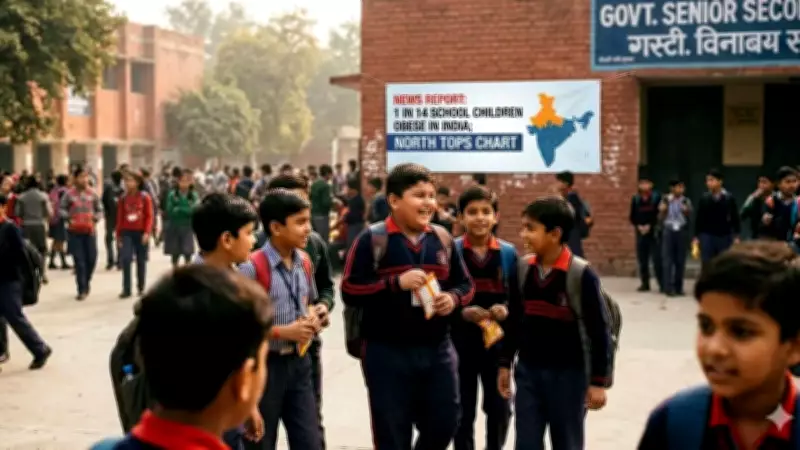
A new national analysis has revealed that nearly 7% of school-going children in India are obese, with rates steadily rising across the country. The study, published in the Indian Journal of Community Medicine, was conducted by researchers from the ICMR–National Institute of Traditional Medicine, along with collaborators from India and the UK. They analyzed data from 125 studies conducted between 1995 and 2023.
Key Findings
The overall prevalence of obesity among school children was found to be 6.97%, with significant regional variations. The highest rate was observed in northern India at 8.58%, while central India recorded the lowest at 5.63%. The study also highlighted a consistent increase in obesity rates over time, attributing this trend to changing diets, sedentary lifestyles, and reduced physical activity.
Expert Insights
Dr Pradeep Agarwal, Principal Consultant in Paediatrics at Sri Balaji Action Medical Institute, noted that the rise is driven by poor diet and decreased activity. “Children today consume more processed foods, sugary drinks, and packaged snacks, while outdoor play has declined. Academic pressure, long screen time, and lack of sleep are adding to the problem. Obesity is no longer limited to urban areas — it is spreading across regions,” he said.

Dr Anjali Bhola, a dietician at AIIMS, emphasized that changing food habits are a major contributor. “Frequent snacking, low-protein diets, and sugary drinks, along with eating while using screens, are driving weight gain. Many packaged foods marketed as ‘healthy’ are misleading and calorie-dense,” she explained.
Health Implications
Researchers warned that childhood obesity is closely linked to adult conditions such as diabetes and heart disease. Dr Agarwal highlighted that obesity is becoming a medical concern earlier, with increasing cases of insulin resistance, prediabetes, and early hormonal changes in children. Dr Bhola stressed prevention, stating, “Cutting sugary drinks and shifting to balanced, home-based diets can significantly reduce long-term risks.”
With obesity often persisting into adulthood, experts called for early intervention through improved diets and increased physical activity to prevent future chronic diseases. The findings underscore a growing public health concern that requires immediate attention from policymakers, educators, and families.






