

Northern Pike: Anatomy, Reproduction, and Habitat of a Formidable Freshwater Predator
The Northern Pike, scientifically known as Esox lucius, is a member of the Kingdom Animalia and stands as one of the most formidable freshwater predators in temperate regions of the Northern Hemisphere. This species can exceed one meter in length and, in exceptional cases, weigh over twenty-five kilograms, making it a dominant force in aquatic ecosystems.
Specialized Anatomy for Ambush Hunting
This powerful fish employs an ambush hunting strategy, utilizing sudden bursts of speed to capture prey with quick surprise attacks. According to the U.S. Fish and Wildlife Service, the Northern Pike possesses a unique body shape reminiscent of a torpedo, with dorsal and ventral fins positioned far towards the rear of its body. This anatomical design functions like a rear engine, enabling rapid acceleration when prey is within close range.
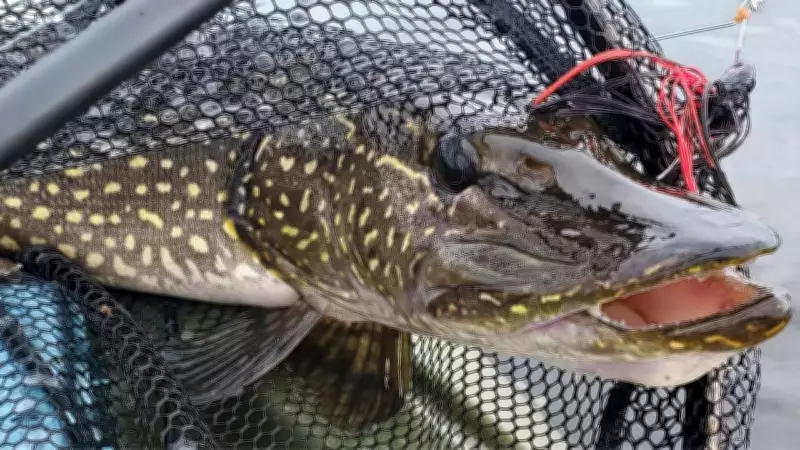
The olive-green and yellow-spotted coloration of the Northern Pike provides effective camouflage in clear, vegetated lakes and slow-moving rivers. This allows the fish to lie motionless, blending seamlessly into its surroundings until an unsuspecting fish moves within striking distance.

Impressive Reproductive Capabilities
The reproductive abilities of the Northern Pike are equally remarkable. A single large female can produce as many as 500,000 eggs during a single spawning event. These eggs adhere to shallow vegetation through a mucous coating, a process known as broadcast spawning, which does not involve any form of parental care.
This reproductive strategy is a survival gamble, relying on sheer volume to overcome high mortality rates. The timing of spawning is critical; Northern Pike migrate to shallower waters shortly after ice melts, ensuring that fry hatch when other prey species are also emerging, providing a ready food source. The mucous covering helps glue the eggs and fry to vegetation, protecting them from being smothered by silt.
Habitat Preferences and Geographical Range
To maintain their status as apex predators, Northern Pike are highly specific about their habitats. They require cool-water environments with significant submerged cover, such as logs or aquatic plants, which serve as hunting grounds and protection for young from predators. The availability of such habitats directly influences the population density of Northern Pike in a given body of water.
Geographically, the Northern Pike has an incredibly broad range, inhabiting cold-temperate waters throughout North America, Europe, Asia, and Siberia. This makes it one of the most widely distributed freshwater fishes in the Northern Hemisphere. They thrive in clear, vegetated lakes and slow-moving rivers where they can effectively employ their ambush hunting techniques.
In summary, the Northern Pike's specialized anatomy, prolific reproductive strategy, and specific habitat requirements underscore its dominance in freshwater ecosystems across the globe.






