Pune's Sassoon Hospital Faces Service Disruption as Nurses Join Statewide Strike
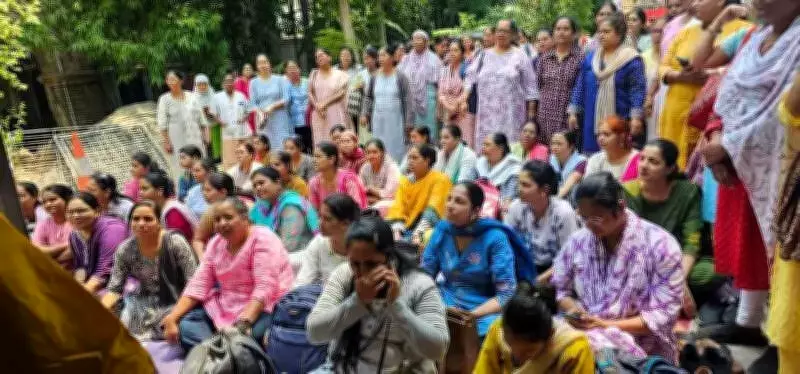
The first day of an indefinite strike by government employees in Maharashtra severely impacted patient care services at the state-run Sassoon General Hospital in Pune on Tuesday. More than 600 nurses employed at the hospital participated in the protest, leading to noticeable reductions in new admissions and routine surgical procedures.
Immediate Impact on Hospital Operations
Hospital officials confirmed that the strike primarily affected new patient admissions and scheduled surgeries. However, they managed to mitigate the impact on already admitted patients by deploying additional staff to handle the excess workload. Dr. Eknath Pawar, dean of BJ Medical College, provided details on the contingency measures implemented.
"We deployed 294 nursing college students to fill the staffing gaps, and also requested 35 nurses from the Yerawada regional mental hospital. The latter were not available for today. Due to the strike, only routine surgeries and new admissions were affected slightly," Dr. Pawar told TOI.

Most protesting nurses wore black ribbons as a symbol of their agitation but continued to serve patients, ensuring that critical care was not entirely halted.
Quantifying the Disruption
The tangible effects of the strike were evident in the hospital's daily statistics. On Tuesday, Sassoon hospital admitted only 110 new patients, a sharp decline from the usual daily average of approximately 200 admissions. Surgical procedures were also significantly reduced.
- Close to 45 major and 60 minor surgeries were conducted, far below the typical daily count exceeding 200 procedures.
- Only 14 deliveries, including five Caesarean sections, took place, compared to the usual 30-40 deliveries per day.
Fortunately, the outpatient department remained largely unaffected, with 1,509 patients receiving treatment between 8 am and 4 pm.
Statewide Strike and Demands
The Maharashtra State Government Employees Confederation had announced the indefinite strike starting April 21, with an estimated 17 lakh employees across the state expected to participate. This includes 24,000 nurses from government medical colleges, district hospitals, and rural facilities.
The strike aims to address long-pending issues affecting government and semi-government employees, including teachers and non-teaching staff. Key demands include:
- Reinstatement of the Old Pension Scheme (OPS)
- Recruitment to fill vacant nursing positions
- Increasing the retirement age from 58 to 60 years
The Maharashtra Government Nurses Association, affiliated with MSGEC, has joined the strike at Sassoon hospital. Pragya Gaikwad, Pune president of the association, expressed frustration over the lack of government response.
"The chief minister has come all the way to these parts, yet he did not bother to meet protesters taking part in such a major strike. We will continue till our demands are met. Around 700 of the 900 nurses at Sassoon are associated with us, so this will likely hamper hospital management as well," Gaikwad stated.
Hospital Management's Response
Dr. Yallapa Jadhav, medical superintendent at Sassoon hospital, provided specific numbers regarding staff participation in the strike. "Of the 927 nurses deployed at our hospital, 640 are on strike. Starting Wednesday, some of these nurses will participate in a black ribbon agitation, but patient care will resume as usual," Dr. Jadhav explained.
Widespread Impact Across Maharashtra
The strike's effects extended beyond Pune, with significant disruptions reported in other regions. In Kolhapur, more than 65,000 staffers, including teaching and non-teaching personnel from government colleges, observed the strike, leaving many public offices deserted.
Exceptions were made for staff deployed at exam centers, voter registration sites, and nurses in critical and emergency hospital units, who continued working following appeals from department heads. Hundreds of protesters gathered at Hutatma Garden near the district collector's office, staging a dharna for several hours on Tuesday.

Government Response and Pension Scheme Controversy
Chief Minister Devendra Fadnavis has directed top officials to engage with representatives of government staff associations to find a resolution. However, as of Tuesday evening, no breakthrough had been achieved.
Anil Lavekar, Kolhapur district president of a government employees' association, highlighted the pension scheme issue. "We had earlier demanded reinstitution of the OPS. Thereafter, state govt under then-CM Eknath Shinde decided to implement a revised National Pension Scheme on the lines of Centre's scheme. While it was to take off on March 1, 2024, we are still waiting for its implementation. Govt claims the rules are not yet prepared," Lavekar said.
He issued a warning to the government: "We have warned govt to roll out the rules before May 1 or we will start a non-cooperation agitation."
The revised NPS promises employees a pension equal to 50% of their last drawn salary plus dearness allowance, with 60% as family pension. Lavekar added, "As per our calculation, the revised NPS will help get pension equal to or nearly as much as the OPS. So, we want enforcement of the revised NPS."
The strike continues as employees await concrete action from the state government on their demands, with potential implications for public services across Maharashtra.