Teen's Tragic Death Reignites National Debate on Toxic Herbicide Ban
The heartbreaking death of a 16-year-old girl from Jagtial, Telangana, has sparked renewed and urgent demands for a comprehensive nationwide ban on paraquat, a highly toxic herbicide with devastating consequences. The young victim, whose identity remains protected, consumed the chemical on February 22 after reportedly experiencing bullying-related stress at her educational institution.
Family's Harrowing Account and Medical Community's Response
J Surender, the girl's uncle, shared the family's traumatic experience. "She returned home and consumed the substance, suffering from constant vomiting immediately afterward. We rushed her to a government hospital, but despite eight days of intensive medical care, she tragically passed away," he recounted with visible emotion.
This devastating case was highlighted alongside similar tragedies during a gathering at the Indian Medical Association (IMA) Telangana office in Koti on Tuesday. Families of other victims, including those of T Reddy and A Govardhan, joined medical professionals and political leaders in demanding immediate regulatory action against paraquat.

Medical Experts Outline Three Critical Reasons for Ban
Healthcare specialists presented compelling arguments for prohibiting paraquat, emphasizing three fundamental concerns:
- No Antidote Exists: Unlike many other toxic substances, paraquat has no known antidote, making treatment extremely challenging and often ineffective.
- Extreme Toxicity: Even minute quantities can prove fatal, with the chemical causing rapid and irreversible damage to vital organs.
- Safer Alternatives Available: Numerous less hazardous herbicides exist that could replace paraquat without compromising agricultural productivity.
Doctors from prominent medical institutions including Nizam's Institute of Medical Sciences (NIMS), Gandhi Hospital, and Osmania General Hospital revealed alarming statistics. Each facility handles approximately 100 to 150 paraquat poisoning cases annually, with district hospitals reporting similar or even higher numbers.
Alarming Statistics and Irreversible Health Consequences
Dr Mahesh Reddy, president of Doctors Against Paraquat Poison (DAAP), provided disturbing insights into the widespread impact. "The situation in agricultural districts is particularly severe, with dozens of cases reported monthly and over ten deaths occurring regularly in farming-dominant regions. Whether patients seek treatment at government or private facilities, outcomes remain overwhelmingly grim," he explained.
Dr Reddy further detailed the deceptive nature of paraquat poisoning. "Patients may remain hospitalized for weeks, creating false hope among families who believe recovery is underway. However, the lung damage is completely irreversible. This poison offers no second chances," he emphasized.
Chemical Properties and Fatal Mechanisms
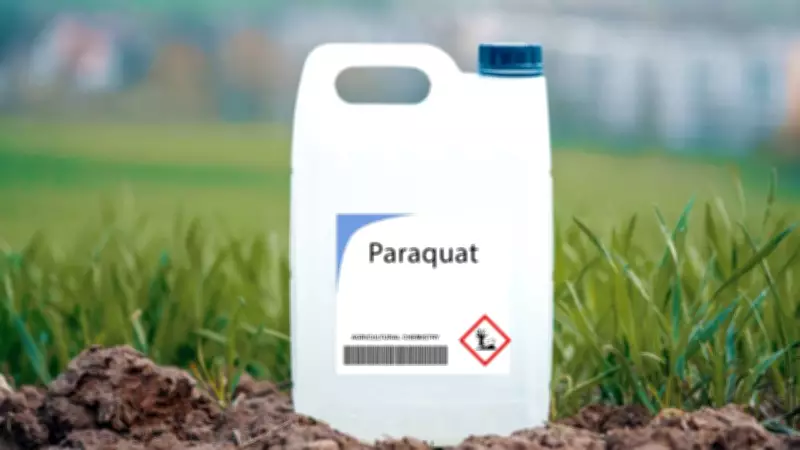
Paraquat dichloride, commonly available at fertilizer shops for 250 to 300 rupees, is widely used for weed control despite its extreme danger. Dr T Krupal Singh, head of Forensic Medicine and Toxicology at Gandhi Hospital, described its devastating effects. "The chemical rapidly attacks and destroys kidney, liver, and lung tissues. Dialysis and other conventional treatments have limited effectiveness because the toxin directly targets cellular structures," he stated.
Dr Singh highlighted the staggering mortality rate associated with paraquat exposure. "Approximately 90% to 95% of poisoning cases result in death, making this one of the most lethal substances readily available in agricultural communities," he revealed.
Psychological Factors and Accidental Exposures
Dr Gangadhar T, head of Nephrology at NIMS, noted the psychological dimensions of many poisoning incidents. "Numerous victims consume paraquat during moments of acute distress, completely unaware of its invariably fatal nature. The accessibility and affordability of this chemical make it a particularly dangerous option during emotional crises," he observed.

The medical community also raised concerns about accidental exposures. Dr Mahesh cited a tragic case from Karimnagar where a child died after mistakenly drinking paraquat stored in a soft drink container. "Despite spending fifteen lakh rupees on treatment, the child could not be saved. This highlights how improper storage practices contribute to preventable tragedies," he lamented.
Agricultural Usage Patterns and Regulatory Context
Medical professionals presented evidence suggesting paraquat is not essential for agricultural productivity. "Farmers report using this herbicide only once or twice annually, primarily for clearing bushes rather than regular crop maintenance. This indicates viable alternatives could easily replace it without affecting yields," explained one expert.
Under the Insecticides Act of 1968, state governments possess authority to impose temporary restrictions lasting 60 to 90 days. However, despite paraquat being banned in seventy countries across the globe, including several Asian nations, regulatory action in India has consistently stalled at various administrative levels.
Political Support and Proposed Regulatory Measures
IMA Telangana president Dr P Kishan and secretary Dr V Ashok presented specific demands for immediate action. "We advocate for either a complete prohibition or significantly stricter regulation. Sales should require licensing, storage must occur under lock and key, purchases should be linked to Aadhaar identification, waiting periods should be implemented, and online monitoring must be substantially enhanced," Dr Kishan proposed.
The movement has gained substantial political momentum, with cross-party support emerging from prominent figures. Congress MP Kadiyam Kavya, BJP MP Eatala Rajender, and BRS MP Vinod Kumar have all endorsed the ban demands. Kavya announced plans to mobilize at least fifty parliamentarians to push for legislative amendments through the Parliamentary health committee.
This tragic case has illuminated the urgent need for comprehensive chemical safety reforms in India's agricultural sector, with medical professionals, affected families, and political leaders uniting behind calls for immediate action to prevent further unnecessary deaths.