

Ahmedabad's Sabarmati Riverfront Faces Disturbing Suicide Epidemic
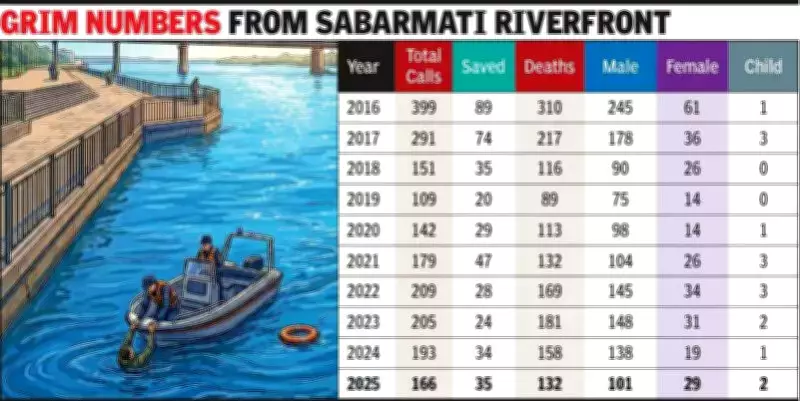
Ahmedabad's iconic Sabarmati riverfront, celebrated as a premier public space, has become the tragic epicenter of a severe suicide crisis. Official data reveals that since 2016, at least 1,617 individuals have ended their lives by jumping into the Sabarmati River from this location. This staggering figure translates to an average of one life lost every 48 hours over the nine-year period from 2016 to 2025.
Daily Distress Calls and Demographic Patterns
Authorities report receiving approximately one distress call per day from the riverfront area, highlighting the persistent nature of this emergency. Statistical analysis shows a clear demographic pattern: men, particularly those aged between 20 and 50 years, constitute an overwhelming majority of the victims year after year.
A senior police officer explained the primary triggers: "Most cases are directly linked to prolonged illness, severe financial crises, and acute relationship problems. These factors create immense psychological pressure that drives individuals to this extreme step."

Gender-Specific Causes and Tragic Family Incidents
While men dominate the statistics, cases involving women reveal different underlying causes. Police investigations indicate that suicides by women often stem from harassment by husbands or in-laws, while younger women sometimes take this drastic action due to relationship complications.
An officer disclosed even more heartbreaking scenarios: "In incidents involving children, we have documented cases where mothers first threw their children into the river before ending their own lives. These represent some of the most tragic dimensions of this crisis."
Critical Infrastructure and Response Deficiencies
The nearly 12-kilometer stretch of riverfront suffers from severe operational shortcomings that exacerbate the situation. The fire brigade has deployed only three dedicated rescuers for the entire area, creating dangerous response gaps during emergencies.
An official familiar with rescue operations described the public response problem: "In emergency situations, bystanders frequently record videos on their phones instead of immediately contacting rescue services. Many people avoid calling the emergency helpline 112 due to fears of legal complications. These delays mean that by the time the fire brigade is alerted and rescuers are mobilized, crucial minutes that could determine survival are already lost."
Design Vulnerabilities and Rescue Challenges
Rescue teams face additional operational hurdles, including difficulty pinpointing exact jump locations along the expansive riverfront. "Time represents the most critical factor in these cases," emphasized the official. "Any delay significantly reduces the chances of successful rescue and survival."
In 2016, the Ahmedabad Municipal Corporation installed high grills and railings on all bridges crossing the Sabarmati River as a preventive measure. While this intervention reduced suicides from bridges, it inadvertently shifted the problem to open promenades and walkways along the riverfront.
An urban planner analyzed the design paradox: "The riverfront was intentionally designed to create a sense of proximity to water, enhancing its aesthetic and recreational appeal. Ironically, that very design feature has now become a significant vulnerability, providing easy access points for those in distress."
Expert Recommendations for Prevention
Urban safety experts and mental health professionals warn that without comprehensive intervention strategies, the riverfront will continue to claim lives at alarming rates. They advocate for a multi-pronged approach including:

- Implementation of round-the-clock security patrols along the entire riverfront
- Enhanced lighting systems to improve visibility and deterrence
- Comprehensive CCTV monitoring with real-time response capabilities
- Clear location markers to facilitate faster emergency response
- Establishment of a dedicated, well-equipped rescue force specifically for the riverfront
- Public awareness campaigns about mental health resources and emergency protocols
The Sabarmati riverfront crisis represents both a public safety emergency and a broader societal challenge requiring coordinated action from municipal authorities, mental health professionals, and community organizations to prevent further loss of life at Ahmedabad's most prominent public space.





