Snakebite Crisis in Coastal Karnataka: Doctors Warn Against Myths and Delays
Mangaluru: Snakebites remain a critical medical emergency in coastal Karnataka, with consistent reports emerging from peripheral regions including Puttur, Sullia, and Belthangady. This persistent threat underscores a pressing public health challenge in rural areas.
Weekly Cases and Seasonal Peaks
Dr. Jeedhu Radhakrishnan, cluster head of emergency medicine at KMC Hospital, revealed that the facility handles an average of one to two snakebite cases every week. Most patients originate from rural locales, initially seeking help at local centers or resorting to traditional remedies before arriving at hospitals.
He explained that cases surge between April and October. "During extreme summer, snakes abandon their burrows in search of cooler environments. In the rainy season, flooding displaces them from habitats into drier areas, heightening human contact risks," Dr. Radhakrishnan noted. He emphasized that snakes are inherently shy, with bites typically occurring accidentally when humans unintentionally step on or disturb them.

Vulnerable Groups and Venomous Species
Farmers and agricultural workers are among the most exposed populations. Bites frequently happen early in the morning as farmers traverse paddy fields or venture outside in low visibility, often barefoot or without protective footwear.
The region hosts common venomous snakes such as cobras, kraits, and vipers. While cobra and viper bites usually cause immediate pain and noticeable symptoms, krait bites can be deceptively painless. "Krait bites often mimic a mosquito bite. Many victims disregard them and return to sleep, only to face severe complications later," Dr. Radhakrishnan cautioned.
Dangerous Myths and Harmful Practices
Dr. Radhakrishnan highlighted perilous myths that persist in communities. One widespread belief is that doctors must see the snake to administer treatment, leading individuals to attempt capturing and bringing the reptile to hospitals. "In one incident, a snake escaped inside the emergency department, causing widespread panic," he recalled.
Another case involved three family members bitten while trying to catch a snake that had bitten a child. "They chased the snake for identification, resulting in bites to the father and uncle. Fortunately, all received successful treatment," he added.
He clarified that India employs polyvalent Anti-Snake Venom (ASV), effective against cobra, krait, and viper bites. However, he warned against harmful first-aid practices:
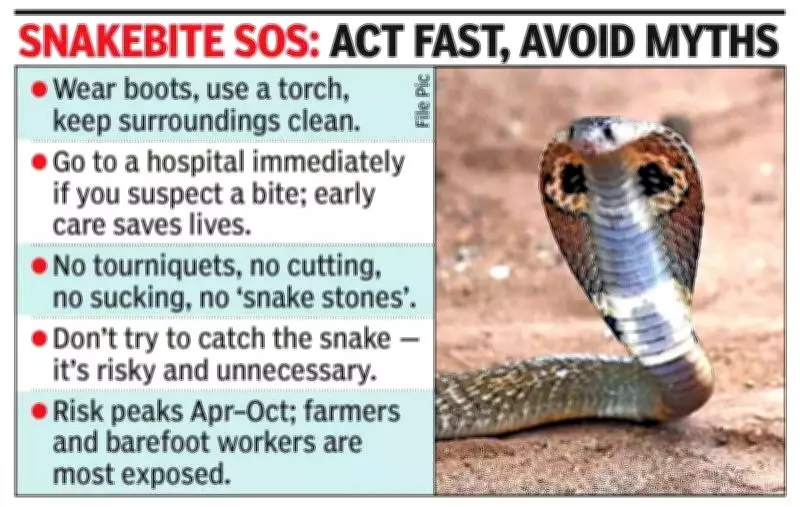
- Tying tight tourniquets can sever blood supply and lead to limb loss.
- Cutting the wound or sucking venom increases infection risks without providing benefits.
- So-called 'snake stones' lack scientific validity and only delay crucial treatment.
Prevention and Early Intervention
Dr. Radhakrishnan stressed that prevention and prompt medical care are vital. Key measures include:
- Wearing boots and using torches at night to reduce encounters.
- Maintaining clean surroundings to deter rodents, which attract snakes.
- Seeking hospital care immediately upon any suspicion of a snakebite, without waiting.
"Early treatment within the golden hour significantly enhances survival rates. Timely medical intervention saves lives," he asserted, reinforcing the urgency of addressing this ongoing health crisis in coastal Karnataka.