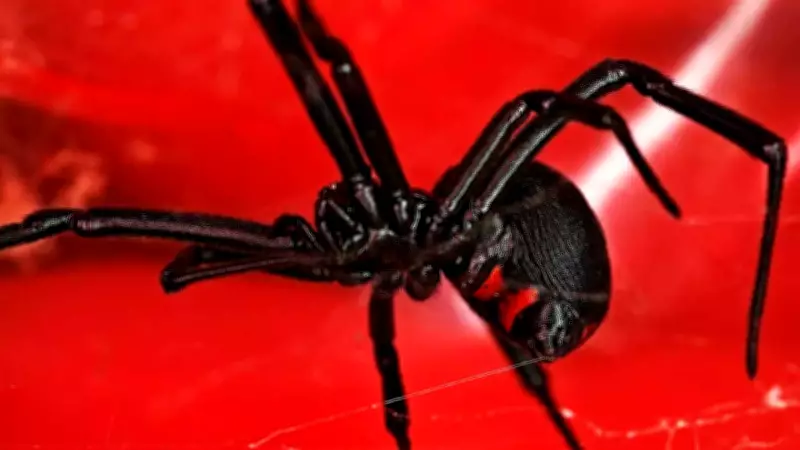
Alaska's Unique Status: The Only US State Without Deadly Black Widow Spiders
The black widow spider, widely regarded as one of the deadliest arachnids in the world, instills fear in many due to its potent venom and distinctive appearance. As a member of the Latrodectus family, this spider demonstrates remarkable adaptability, thriving in diverse environments across every continent except Antarctica. Throughout North America, black widows are commonly found, yet there exists one rare location where these venomous creatures are entirely absent: the state of Alaska.
The Evolutionary Barrier: Why Black Widows Avoid Alaska
The absence of black widow spiders in Alaska is rooted in their evolutionary history. Originating in tropical and equatorial climates, these spiders have developed biological systems optimized for warmth. Their bodies possess inherent cold barriers, making survival in Arctic conditions impossible. The extreme cold of Alaska acts as a natural deterrent, preventing the spread of black widows northward.
Anatomical Limitations in Arctic Conditions
According to research from the Smithsonian Magazine, the female black widow's anatomy is perfectly suited for temperate environments but fails in the Arctic. Her body shape and eight thin legs are designed for detecting vibrations and silk-wrapping in stable settings. As a cold-blooded organism, she cannot generate body heat, rendering her non-functional in Alaska's frigid climate. Before she can utilize her 'scooper comb'—a row of bristles on her hind legs for capturing prey or mates—her bodily functions cease in the cold.

Diet, Habitat, and Hunting Strategies
Black widow spiders are solitary, nocturnal creatures that prefer secluded habitats such as woodpiles, basements, and rotting logs. They construct messy, tangled webs from exceptionally strong silk. Their diet primarily consists of flies, mosquitoes, grasshoppers, and beetles. Using vibration detection, they paralyze prey with venom and digest tissues with digestive enzymes, showcasing energy-efficient hunting. However, these strategies are ineffective in cold climates like Alaska's.
The 30-Degree Formula: Thermal Tolerance Explained
A 2023 research study highlights the thermal limitations of black widow spiders. The western black widow, the most thermally resilient species in the US, cannot endure prolonged exposure to temperatures below 30 degrees Fahrenheit. At this threshold, they experience 'biological freezing.' Alaska's consistently sub-zero winters create an insurmountable barrier; any black widow venturing into the state would perish during the first severe frost.
As cold-blooded organisms, black widows rely entirely on external heat sources. In the Arctic, their metabolic functions halt, preventing them from seeking food or mates. Without periodic energy intake, survival is impossible, cementing Alaska's status as a widow-free zone.