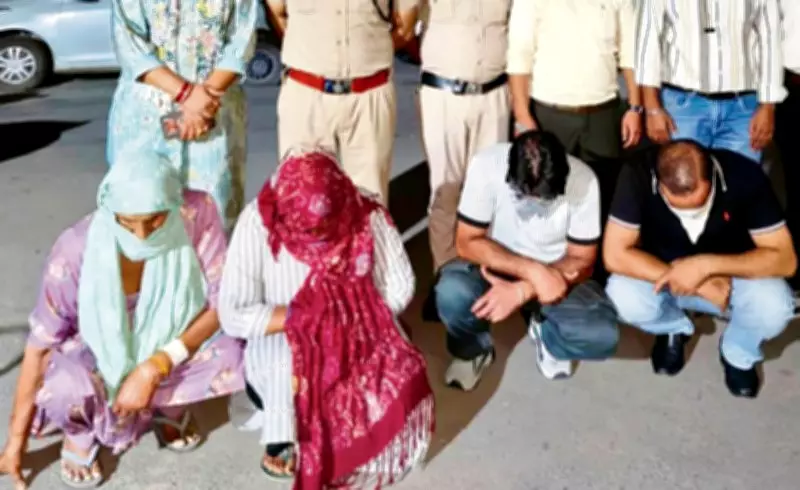
Police data from Sirsa district reveals a troubling new dimension to the region's drug crisis: a growing number of women are being arrested for involvement in the illegal narcotics trade. Officials say the trend is fueled by the lure of quick money and a perception that women attract less scrutiny from law enforcement. The arrests have taken place under anti-drug campaigns including the Nasha Mukt Bharat Abhiyan.
Women drawn to drug trade for quick money, less suspicion
According to health officials and police sources, women are increasingly acting as carriers and sellers of narcotics such as heroin (chitta), smack, opium, and cannabis. The shift is particularly alarming because it coincides with a deepening addiction crisis among young people in the district. In several villages, residents report that drugs are easily available, and the number of addiction-related deaths is rising.
Shahpur Begu village, on the outskirts of Sirsa city, has become a symbol of the epidemic. Villagers claim that more than 30 people have died from drug addiction in the past two to three years. Just days ago, another young man reportedly lost his life after struggling with substance abuse. Locals allege that drugs remain openly accessible and that women are among those selling them.

Health experts call addiction a treatable disease
Speaking at an awareness camp at the Community Health Centre (CHC) in Madhosinghana on the International Day Against Drug Abuse and Illicit Trafficking, Dr Pawan Kumar, Civil Surgeon of Sirsa, said substance abuse had become a major public health challenge. He urged collective action from society to address the crisis.
Ajay Singh, a member of the District Mental Health and De-addiction Programme, detailed the severe health consequences of drug abuse. He explained that substances like heroin, smack, opium, cannabis, and tobacco can damage nearly every major organ. Long-term addiction leads to heart disease, liver disorders, lung ailments, high blood pressure, memory loss, depression, anxiety, and suicidal tendencies.
Addiction impacts families and fuels crime
Health officials warned that addiction extends beyond the individual user, often causing financial hardship, domestic disputes, and emotional trauma within families. Children in such households may suffer academically and socially. Some addicts turn to crime to fund their habits, further destabilizing communities.
Experts stressed that addiction should be viewed as a treatable disease, not a social stigma. They urged families to seek timely medical help, counselling, and rehabilitation services available through de-addiction centres in the district.
Police crackdown alone insufficient, experts say
While police continue to arrest traffickers, experts argue that enforcement alone cannot win the fight against drugs. They emphasize the need for greater public awareness, community participation, and early intervention. Without these measures, more young lives will be lost to addiction, and the drug trade—now drawing in women—will continue to spread.