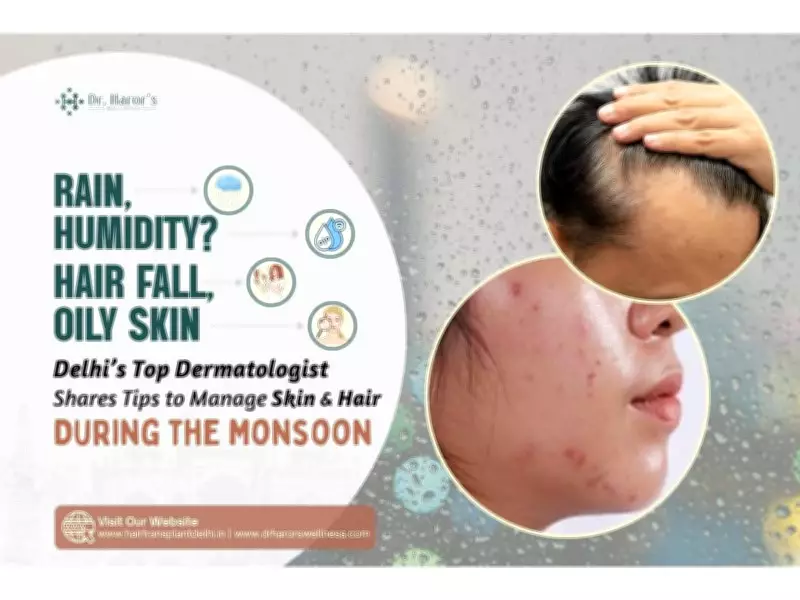
Dr. Vineeta Pathak, a skin specialist at Dr. Haror's Wellness in Delhi, explains that increased humidity during monsoon leads to excess sebum, clogged pores, acne, fungal infections, and hair fall. She emphasizes that proper precautions can manage these issues effectively.
Why Monsoon Affects Skin and Hair
High humidity boosts sebum production, causing oily skin, acne, and dullness. The scalp becomes sweaty and itchy, while hair roots weaken, leading to shedding. Many mistakenly reduce skincare during cooler weather, but experts say a targeted routine is essential.
Monsoon Skincare Routine
Dr. Pathak advises against over-moisturizing. Key tips include: cleanse twice daily with a mild cleanser; use non-comedogenic, lightweight moisturizers; apply sunscreen even on cloudy days; avoid touching face with unclean hands; exfoliate 1-2 times weekly; keep makeup minimal; drink water; eat antioxidant-rich foods.

Expert Haircare Tips
Dr. Navnit Haror, founder of Dr. Haror's Wellness, notes that damp scalps from rain or sweat weaken roots. He recommends: wash hair regularly with sulphate-free shampoo; use hydrating conditioner; apply deep conditioning mask weekly; massage scalp with lukewarm coconut or argan oil; dry scalp thoroughly before tying hair; limit heat styling; consume protein, iron, zinc, and vitamins; consult a specialist for persistent hair loss.
Lifestyle Habits Matter
Experts warn that smoking, alcohol, poor diet, lack of sleep, stress, and nutritional deficiencies worsen skin and hair issues. A balanced diet with proteins, vitamins, minerals, and antioxidants, along with exercise and stress management like yoga, supports skin and hair health.
When to See a Specialist
Persistent acne, oiliness, clogged pores, or hair shedding beyond a few weeks warrant a dermatologist visit. These may indicate severe acne, infections, scalp inflammation, or hair loss requiring professional treatment.
Dr. Pathak states, "An increase in skin and hair issues during the rainy season is very common... However, with proper precautions, these issues can be effectively managed." Dr. Haror adds, "The key is to maintain scalp hygiene and avoid practices that cause additional stress to the hair."
By following these expert tips, you can enjoy the monsoon without compromising skin and hair health. For persistent problems, consult a skin specialist or trichologist promptly.
Disclaimer: This article is for general informational purposes only. Please consult a healthcare professional for personalized medical advice.