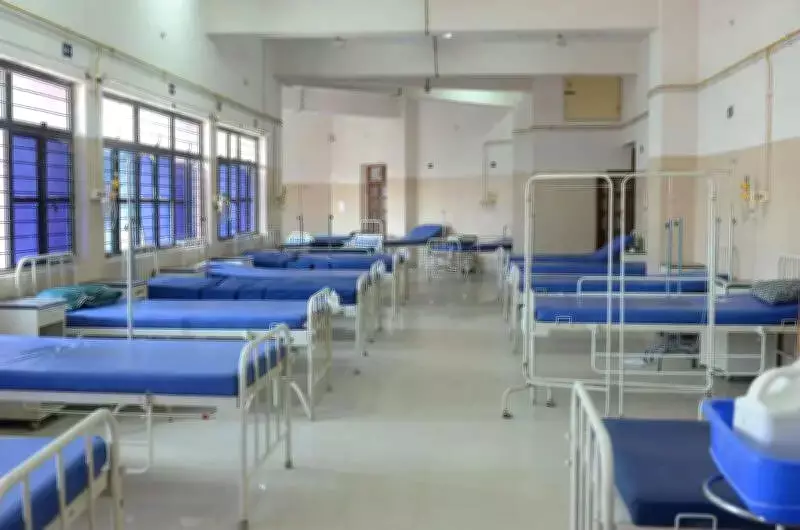
Ahmedabad's Healthcare Infrastructure Expands Significantly Post-Pandemic
Ahmedabad has witnessed a substantial increase in hospital bed capacity following the Covid-19 pandemic, with approximately 2,000 new beds added to the city's healthcare system. This growth, primarily driven by expansions in superspeciality and mid-segment hospitals, was highlighted by doctors and industry representatives ahead of World Health Day on April 7.
Post-Pandemic Healthcare Surge in Gujarat
The Covid-19 pandemic, which began affecting Gujarat in March 2020, prompted both state government and private sector initiatives to enhance medical infrastructure. Hundreds of beds equipped with oxygen and intensive care facilities were rapidly introduced to meet escalating demand during the crisis. Estimates indicate that government and private hospitals collectively had around 10,000 beds at the pandemic's onset.
Dr Bharat Gadhavi, president of the Ahmedabad Hospitals and Nursing Homes Association (AHNA) and regional director of HCG Hospitals Gujarat and Rajasthan, provided detailed insights. "Today, Ahmedabad has approximately 2,200 hospitals and nursing homes, with 1,200 being our members. The private sector alone now boasts 10,000-12,000 cumulative beds. Compared to pre-Covid levels, we've observed a 20-25% increase, translating to roughly 2,000 additional beds," he explained.

Growth in Specialized and Mid-Segment Facilities
Dr Gadhavi emphasized that the expansion occurred in two key categories: specialized hospitals focusing on cardiac care, urology, and cancer treatment, and mid-segment hospitals with 50 to 100 beds. "The immediate post-pandemic period saw numerous new hospitals emerge and existing ones increase capacity, with stabilization occurring from 2022 onward. A critical development was the establishment of ICU and oxygen beds, which constitute about 15% of the new additions," he noted.
In the government sector, significant enhancements were made at MediCity within the Civil Hospital campus. A 1,200-bed hospital became operational shortly after the pandemic for general purposes, while institutions like UNMICRC, IKDRC, and GCRI contributed at least 300 more beds through new or expanded premises. Officials confirmed that ongoing expansion projects will bring Civil Hospital's total to 1,800 beds.
Factors Driving Healthcare Expansion
Dr Maulik Sheth, director of Silver Touch Hospital and secretary of the Ahmedabad Medical Association (AMA), identified two major post-Covid trends. "Firstly, government schemes such as PMJAY and MAA have expanded coverage to include more hospitals than before the pandemic. The rise of government and private health insurance has transformed healthcare access, encouraging patients to utilize mid-segment hospitals for hospitalizations. Secondly, increasing cases of non-communicable diseases (NCDs) in a city like Ahmedabad necessitate matching infrastructure, especially with major events like the upcoming Commonwealth Games," he stated.
Dr Sheth added that his own facilities expanded by 160 beds post-Covid. Dr Keyur Patel, a neurologist and MD of HealthOne Hospital, underscored the pandemic's role in highlighting the importance of mid-segment hospitals. "We've operationalized over 250 beds across multiple hospitals since Covid-19. Doctor-operated hospitals adopting asset-light models are emerging as a sustainable solution, offering advanced procedures like robotic surgeries and organ transplants at affordable rates. This approach is not only viable but will form the backbone of future health delivery systems," he asserted.
Vadodara's Parallel Growth and Future Prospects
Vadodara has experienced even more dramatic growth, with 4,775 new beds recorded after the pandemic. Dr Mitesh Shah, president of the Indian Medical Association (IMA) Vadodara and national secretary of IMA's medical student network, provided comparative data. "In 2019, Vadodara had 2,649 hospitals with 16,725 beds. Currently, the city has 3,200 hospitals, including single-bed facilities, totaling 21,500 beds," he reported.

Looking ahead, Ahmedabad's healthcare landscape is poised for further transformation. Major corporate players like the Adani Group and Torrent Group are planning entries into the sector, promising additional investments and infrastructure developments over the next five years. This collective growth underscores Gujarat's strengthened healthcare readiness in the post-pandemic era, aligning with World Health Day's emphasis on global health improvements.