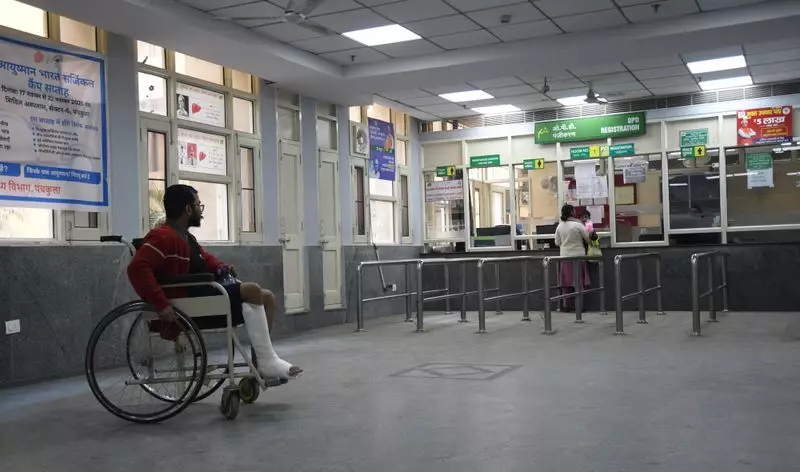
The Delhi High Court has expressed serious concern over significant delays in the implementation of crucial technology systems across government hospitals in the national capital. The court has directed the city's health department to provide a clear and detailed timeline for the rollout, emphasizing the impact on patient care.
Court's Stern Observations on Implementation Delays
During a recent hearing, a bench comprising Acting Chief Justice Manmohan and Justice Manmeet Pritam Singh Arora scrutinized the progress of the Hospital Management Information System (HMIS) and the Electronic Health Record (EHR) system. The bench noted that the project, initiated to modernize hospital operations and improve patient services, was moving at a snail's pace. The court was hearing a public interest litigation (PIL) that highlighted the inadequate infrastructure in Delhi's government-run healthcare facilities.
The judges pointed out that despite the passage of considerable time, the full-scale deployment of these integrated IT systems remained incomplete. The court stated that such delays are unacceptable as they directly affect the efficiency of hospital administration and the quality of care provided to patients. The bench demanded concrete answers from the authorities responsible for the technological upgrade.

Government's Response and Missed Deadlines
In response to the court's queries, the Delhi government's health department submitted a status report. This report revealed that while some modules of the HMIS had been activated in a few hospitals, the comprehensive integration and full functionality were far from achieved. The implementation, which was expected to streamline processes like patient registration, appointment scheduling, bed management, and digital record-keeping, has missed several internal deadlines.
The health department informed the court that the EHR system, a critical component for maintaining seamless digital health records of patients, is still in the testing phase and has not been rolled out universally. Officials cited challenges such as infrastructure readiness, staff training, and data migration from old systems as reasons for the hold-up. However, the court remained unimpressed with these explanations, stressing that administrative hurdles should not compromise public health services.
Implications for Patient Care and Next Steps
The delay in technology adoption has tangible consequences for patient welfare. Without a fully functional HMIS and EHR, hospitals struggle with manual processes, leading to longer wait times, potential errors in record-keeping, and inefficient use of resources. A unified digital system is essential for tracking patient history, managing inventory, and ensuring timely clinical decisions.
The High Court has now mandated the Delhi government's Health Secretary to file a fresh and detailed affidavit. This document must outline a clear, phase-wise plan with definitive deadlines for the complete implementation of both the HMIS and EHR systems across all major government hospitals in Delhi. The court has made it clear that it will monitor the progress closely and expects the authorities to treat the matter with utmost urgency.
The PIL, which brought this issue to light, encompasses broader concerns about the state of physical infrastructure, sanitation, and availability of medicines in Delhi's government hospitals. The technological upgrade is seen as a pivotal step in addressing some of these systemic issues. The next hearing in the case is scheduled for a future date, where the court will review the compliance report from the health department.