

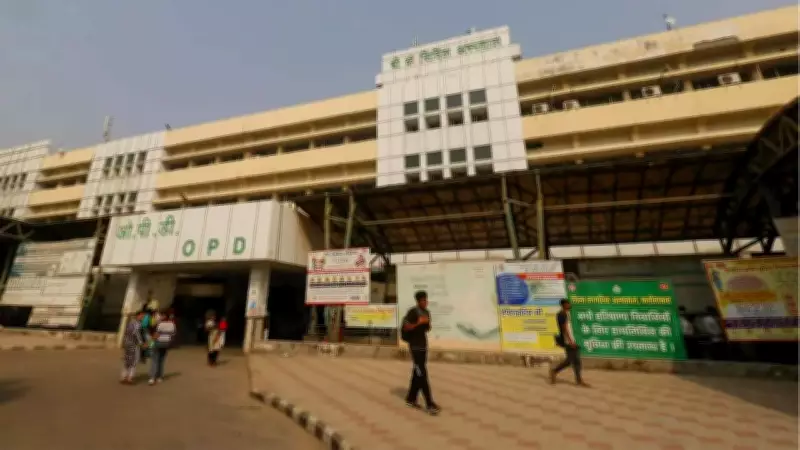
Faridabad Hospital Faces Scrutiny Over Patient Death Amid Negligence Allegations
Tensions flared dramatically at BK Civil Hospital in Faridabad on Monday following the tragic death of a 45-year-old man, which triggered serious allegations that crucial minutes were lost due to administrative paperwork and a reportedly defunct elevator system. The incident has ignited a fierce debate about emergency response protocols and basic infrastructure at government healthcare facilities.
Friends Allege Critical Delays in Emergency Treatment
According to friends who rushed Faiz Ahmed to the government hospital, medical staff initially demanded they complete formalities before any doctor would examine the critically ill patient. Taufiq, one of the companions, claimed they were repeatedly instructed to obtain a hospital card and an OPD slip despite the obvious emergency situation. "Instead of administering immediate treatment, they kept telling us to get paperwork done first," Taufiq alleged, describing the frantic moments as Ahmed's condition deteriorated.
Alleged Infrastructure Failure Compounds the Crisis
The friends further asserted that after doctors finally examined Ahmed and recommended transferring him to the cardiac center on the third floor, they encountered another significant obstacle. "The lift was completely broken and non-functional," stated Bobban Majhi, another companion. "We had no choice but to carry him through the extensive underground ramp, which represents a very long and arduous route. By the time we finally reached the third-floor doctors, he had already passed away."

Another individual who accompanied Ahmed made similar disturbing claims, explaining they were forced to transport the patient through the lengthy ramp while he was in an extremely grave medical state. Witnesses present at the hospital during the incident described the entire episode as demonstrating "gross negligence" and emphasized that emergency facilities must maintain basic services, particularly functioning elevators, available at all times without exception.
Hospital Administration Strongly Denies All Allegations
Hospital management has categorically rejected all accusations of negligence or system failure. Dr. Jayant Ahuja, Chief Medical Officer of Faridabad, stated unequivocally that Ahmed arrived at the facility already in a critical, "near-death" condition and received immediate medical attention without any procedural delays. "The elevator was fully operational and functional throughout," Dr. Ahuja emphasized. "There was absolutely no delay attributable to any technical fault or infrastructure issue."
Emergency Medical Officer Dr. Aman Kaushik supported this assessment, noting the patient was brought in a "gasping" state and was effectively "brought dead" to the hospital. Officials maintained that medical staff attended to Ahmed immediately upon arrival but could not revive him due to his extremely critical condition. A hospital representative insisted there was "no defect in the system" and suggested that social media claims about negligence appeared to be "misleading and potentially fabricated stories."
Broader Context of Hospital Infrastructure Concerns
This distressing incident has brought renewed focus on BK Civil Hospital's emergency response capabilities and overall infrastructure quality. The controversy emerges against the backdrop of previous concerns at the same facility, where a daily wage laborer allegedly had to transport his wife's body on a wooden pushcart for approximately 15 kilometers after failing to secure an ambulance and being unable to afford private transportation.
The case highlights ongoing challenges in India's public healthcare system, particularly regarding emergency protocols, administrative efficiency, and maintenance of essential medical infrastructure. As investigations continue and both sides present conflicting narratives, the fundamental question remains about ensuring timely, effective emergency care without bureaucratic or physical obstacles in critical life-or-death situations.






