

Gurgaon's Block-Level Government Hospitals Confront Severe Infrastructure and Systemic Challenges
Government hospitals in Farrukhnagar, Pataudi, and Sohna are grappling with crumbling infrastructure and systemic lapses that have pushed basic amenities out of reach for patients and attendants. While authorities work on building a new civil hospital in Gurgaon city, primary healthcare facilities in these areas urgently require repair and restoration to function effectively.
Farrukhnagar Hospital: Basic Amenities Missing, Construction Incomplete
During recent visits, journalists found significant gaps in healthcare delivery at these facilities. The sub-district hospital in Farrukhnagar presented a troubling picture with taps running dry in washrooms, clogged or dust-coated washbasins, and overflowing waste bins creating unhygienic conditions.
The 50-bed civil hospital, which became operational in 2024, struggles with daily upkeep despite being a relatively new facility. "This is a basic facility. There should at least be running water in washrooms," said a young mother waiting outside the OPD. "It feels like walking into a germ room and getting infected in a hospital."

The hospital building remains incomplete, with third and fourth floors still under construction. Patients have raised safety concerns about the main gate opening directly onto an uncovered drain. "If someone is not careful, an accident can easily happen," noted Ram Kumar, a patient receiving treatment at the facility.
Pataudi Hospital: Emergency Care Deficiencies and Systemic Gaps
In Pataudi, the government hospital demonstrates significant limitations in handling emergencies. Manish Yadav, who rushed to the facility with an injured family member, received an immediate referral to Gurgaon. "They told me to take my brother to Gurgaon. Why is this hospital here if patients have to be taken to Gurgaon for everything?" he questioned the fundamental purpose of the local healthcare facility.
Basic systems affecting daily care show consistent gaps across these hospitals. Medicine availability remains uneven, with frequent stockouts of essential drugs. Even the water supply pump meant to feed overhead tanks functions unreliably, raising serious sanitation concerns for routine hospital operations.
Monitoring mechanisms for vulnerable patients appear patchy at best. Systems designed to track high-risk pregnancies, postnatal care, and breastfeeding outcomes are inconsistently followed according to patient accounts. Kaushalya Devi, a pregnant woman flagged as high-risk, described erratic follow-up care: "We are asked to come many times, yet we rarely get to see the doctor."
Sohna Hospital: Institutional Decline and Limited Service Hours
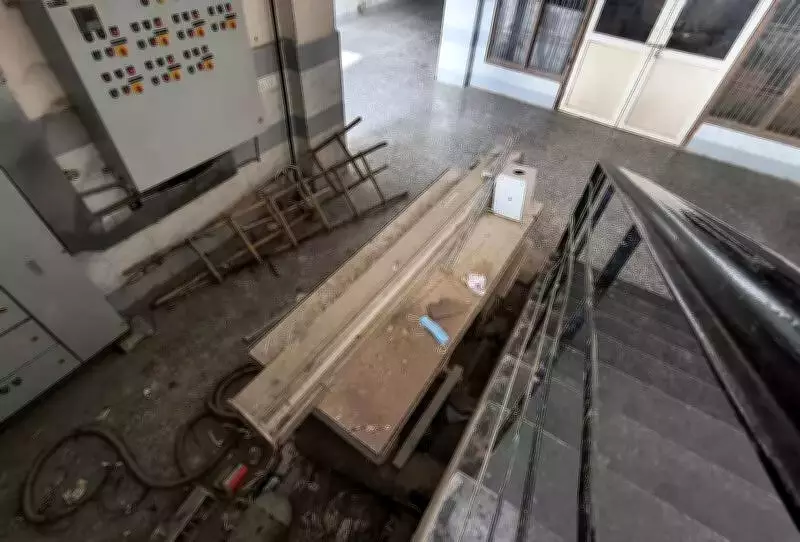
Sohna's sub-district hospital reflects deeper institutional decline beginning with the physical infrastructure. Across the campus, cracked walls, peeling plaster, exposed wiring, and damaged electrical panels create visible signs of neglect. Near the main gate, a broken sewer lid remains uncovered, posing constant risks to patients and visitors.
Inside the facility, service limitations become apparent with X-ray facilities shutting by late afternoon and blood sample collection ending around noon. This leaves patients arriving later with few options beyond returning the next day or seeking expensive private care.
Manoj Singh described a harrowing experience with his four-year-old son: "No one works here after dark. I came with my son last night, and after more than four hours we could finally see a doctor. My son only got treatment in the morning. There is hardly anyone in the hospital at night."
Patients collectively describe Sohna's sub-district hospital functioning more as a limited outpatient facility than a reliable public health institution. Infrastructure decay, reduced service hours, and significant care gaps leave residents increasingly vulnerable during medical emergencies.
Systemic Issues Across All Facilities
Common problems plague all three healthcare centers:

- Staff shortages that compromise patient care delivery
- Inconsistent medical record maintenance leading to treatment delays
- Heavy dependence on referrals to larger Gurgaon hospitals
- Limited in-house capacity to manage complications
- Irregular staff identity displays making it difficult to identify healthcare providers
- Minimal digital health processes including ABHA ID creation and record linkage
While some medical equipment exists on paper, trained staff are not consistently posted to operate it effectively. This discrepancy between available resources and operational capacity reinforces patient concerns about healthcare reliability at these block-level institutions.
Official Response and Accountability
When questioned about these concerning conditions, Gurgaon Chief Medical Officer Lokveer Singh responded: "We will investigate all the issues. There are separate hospital heads for all these setups, but I will take up these matters."
The statement acknowledges administrative awareness but leaves unanswered questions about why such fundamental healthcare deficiencies have persisted across multiple facilities. The gap between official acknowledgment and on-ground reality highlights systemic challenges in public healthcare delivery that extend beyond individual hospital management.
As Gurgaon continues to develop as an urban center, the condition of its peripheral healthcare facilities raises important questions about equitable access to quality medical services. The infrastructure crisis at Farrukhnagar, Pataudi, and Sohna hospitals represents not just building maintenance issues but fundamental challenges in delivering reliable public healthcare to communities outside the city center.





