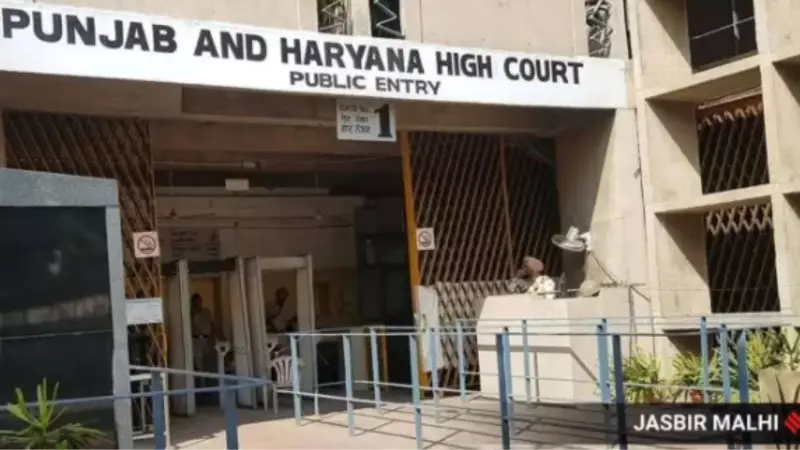
Punjab and Haryana High Court Demands Explanation on Absence of Essential Diagnostic Equipment in District Hospitals
The Punjab and Haryana High Court has issued a stern directive to the Punjab government, demanding a clear explanation as to why CT scan and MRI machines are not considered mandatory facilities in every district hospital across the state. The court emphasized that this inquiry is particularly crucial given the substantial population each hospital serves, raising serious concerns about equitable access to advanced medical diagnostics.
Court Criticizes Clustering Model and Highlights Shocking Deficiencies
During the hearing of a public interest litigation filed by petitioner Bhisham Kinger, the bench expressed deep dissatisfaction with the government's reliance on a clustering model for diagnostic facilities. The state's affidavit, which referenced the 2021 Indian Public Health Standards, categorised CT scan and MRI machines as desirable rather than mandatory, based on bed strength and proximity to other hospitals within a cluster.
However, the court found this justification inadequate, noting that the affidavit failed to specify which hospitals and districts fall under each cluster. The bench questioned the effectiveness of this model, especially when it was revealed that MRI machines are available in only six out of Punjab's 23 districts. This glaring disparity underscores a significant gap in healthcare infrastructure that could adversely affect patient outcomes.

Shocking Absence of ICU at Malerkotla District Hospital
The petitioner brought to light severe deficiencies at the Malerkotla district hospital, which, despite having a bed strength of 130, lacks an Intensive Care Unit (ICU). The court described this absence as not only surprising but shocking, highlighting a critical failure in providing essential emergency care services at the district level.
Furthermore, discrepancies emerged regarding the staffing of specialist medical officers. While the state claimed that all 15 sanctioned posts at Malerkotla hospital had been filled, the petitioner contested this, stating that at least two specialists in medicine and gynaecology had not joined, and several postings were made through transfers rather than fresh recruitment. The court sought clarification on whether these posts were filled through fresh appointments or transfers, expressing concern that transfers merely shift vacancies between districts without addressing the underlying shortage.
Government's Response and Court's Directives
In response, the Punjab government informed the court that fresh recruitment of specialist doctors is pending, with a proposal for appointing around 161 specialists awaiting Cabinet approval before being forwarded to the Punjab Public Service Commission. Additionally, due to the shortage of specialists, guidelines issued on January 6, 2026, allow government hospitals to temporarily engage private specialist doctors, though these guidelines were not included in the affidavit on record.
The court, taking note of these deficiencies, directed the health secretary to file the next affidavit, emphasizing that responsibility could not be fixed on a junior officer. It ordered the state to provide detailed information on the clustering model and address concerns about diagnostic facilities and critical care infrastructure. The court cautioned that it requires compliance rather than repeated affidavits, setting a deadline for a fresh affidavit within a week and scheduling the next hearing after two weeks.
This judicial intervention underscores the urgent need for robust healthcare infrastructure in Punjab's district hospitals, ensuring that advanced diagnostic tools and critical care units are accessible to all citizens, regardless of their location.