

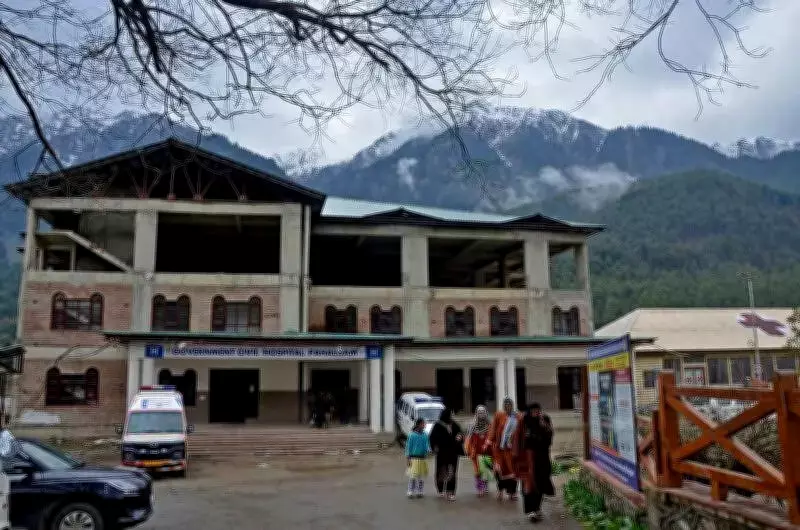
Pahalgam Hospital's Unchanged Reality One Year After Terror Attack
On April 22, 2025, the one-storey government hospital in Pahalgam began its day with the usual trickle of outpatients. However, a single phone call shattered the routine, forever altering the town. Just two kilometers away, terrorists' AK-47 bullets were tearing into tourists, marking one of the darkest chapters in Indian history.
Emergency Response and Aftermath
The small facility swiftly shifted into emergency mode, becoming the first point of succor for survivors. By evening, it had received 26 dead and 17 wounded individuals. Despite being lightly staffed, the hospital team worked tirelessly to save lives and provide dignity to the deceased. Doctors and paramedics from across south Kashmir were scrambled to assist as news of the attack spread.
Staff quickly arranged beds in an adjacent under-construction building, using a hall to hold the 26 bodies. This building, intended to expand the hospital, remains incomplete to this day, symbolizing the ongoing challenges.

Current State of the Hospital
A year later, little has changed at Pahalgam Civil Hospital. It still operates from just five rooms, where doctors see outpatients and paramedics conduct X-rays and ECGs. A three-storey building stands next to the existing structure, but its construction has been delayed for years due to bureaucratic and funding issues.
Outside, three ambulances are parked on a patchy lawn that turns muddy in the rain, making access difficult. The hospital continues to function with a limited team: a surgeon, an anaesthetist, a gynaecologist, a medical officer, and seven paramedics. An additional ambulance has been added, but resources remain scarce.
Role in Tourism and Local Healthcare
Pahalgam serves as a critical hub, acting as a base camp for the annual Amarnath Yatra and catering to a booming tourist industry. In 2024, the town received nearly 1.2 million tourists and approximately 512,000 Amarnath pilgrims. The hospital also provides care for an estimated 200,000 residents in Pahalgam and surrounding areas.
It handles a range of medical issues, from heart attacks and fall injuries to hypothermia, especially during the pilgrimage season. However, with limited capabilities, doctors often refer critically ill patients to Anantnag, an hour's drive away.
Bureaucratic Delays and Funding Shortfalls
The incomplete building used to hold bodies on April 22 highlights persistent delays. Many locals say the government appears in no hurry to finish the project. Health department officials blame the roads and buildings (R&B) department for the holdup, while R&B officials counter that the health department has not released about Rs 4.3 crore in funds.
"We have added another storey to the building. The construction of a lift and interior works is pending. If the health department releases funds now, we can make the building operational in six months," an R&B official stated.
In 2021, authorities approved a proposal to upgrade the hospital to a 50-bed facility, but the project has stalled. Posts were created to bring it on par with a sub-district hospital, yet they remain unfilled, leaving the institution to operate with constrained resources.
The Pahalgam hospital stands as a stark reminder of the gap between emergency needs and systemic support, continuing to serve as the first line of care in a region grappling with both tragedy and tourism.

