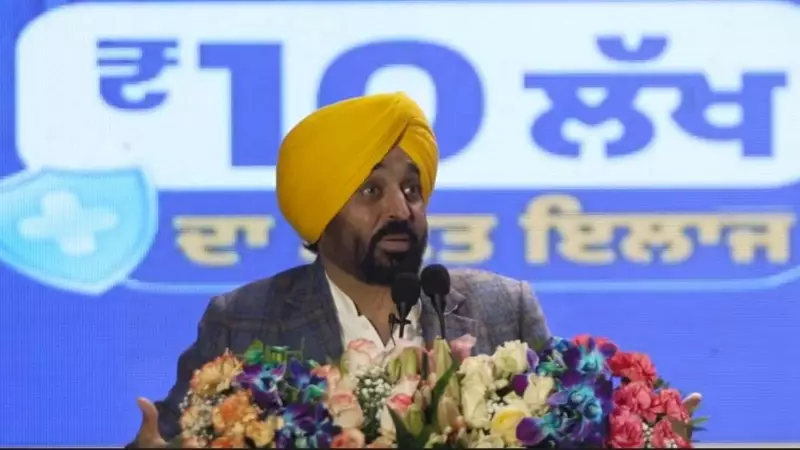
The Punjab Hospitals and Nursing Home Association (PHANA) has expressed its support for the state government's ambitious decision to universalize the Mukh Mantri Sehat Bima Yojana (MMSBY), which provides Rs 10 lakh in free health cover to every resident of Punjab. However, the association has simultaneously raised significant concerns regarding the scheme's financial sustainability, payment mechanisms, and the reliability of the appointed insurance company.
Support for Universal Health Coverage
PHANA President Dr Vikas Chhabra emphasized that the scheme holds immense potential to benefit the poor and underprivileged sections of society. He stated that universalizing the health cover reflects the government's strong commitment to achieving Universal Health Coverage, aligning with World Health Organization (WHO) guidelines. The association, representing nearly 500 private hospitals across Punjab, praised the move as a progressive step towards inclusive healthcare.
Financial and Operational Concerns
Despite their endorsement, PHANA leaders have flagged critical issues that could jeopardize the scheme's success. Dr Divyanshu Gupta, Honorary Secretary of PHANA, highlighted that once the scheme covers 100% of the population, empanelled hospitals will become fully dependent on government reimbursements. Any delays in payments could severely impact hospital operations, including the timely disbursement of staff salaries.

PHANA has stressed that the 15-day payment clause mentioned in the Memorandum of Understanding (MoU) must be strictly enforced. Failure to adhere to this timeline might compel hospitals to suspend treatment for beneficiaries due to financial constraints, undermining the very purpose of the scheme.
Budgetary Allocation and Insurance Company Reliability
The association has submitted a written demand for adequate financial provisioning, estimating that a minimum budget of Rs 2,500 crore per annum is required for smooth implementation. This figure starkly contrasts with the current allocation of approximately Rs 1,300 crore, raising alarms about potential funding shortfalls.
Furthermore, PHANA has expressed concerns over the appointment of United India Insurance Company by the Punjab government. The association pointed out that the insurer had previously defaulted on payments during the Bhagat Puran Singh Health Scheme under the SAD-BJP regime, with several cases still pending and dues yet to be cleared. PHANA has questioned the clarity on responsibility for hospital reimbursements if funds are exhausted and the insurance company fails to make payments.
Role of Small and Medium Hospitals
Dr Gupta noted that PHANA primarily represents small and medium-sized empanelled hospitals, which form the backbone of the scheme. While most large corporate hospitals remain outside its ambit, these smaller institutions have consistently supported the government and ensured uninterrupted treatment to beneficiaries. Their reliance on timely reimbursements is therefore crucial for the scheme's sustainability.
Government Engagement and Assurances
Both Dr Chhabra and Dr Gupta praised Punjab Health Minister Dr Balbir Singh, Principal Health Secretary Kumar Rahul, and State Health Agency CEO Sanyam Aggarwal for maintaining continuous engagement with the association during the scheme's formulation. Government officials have assured PHANA that payments to hospitals will be regular and uninterrupted, which the association describes as critical for long-term implementation.
In summary, while PHANA backs the Punjab government's Rs 10 lakh health cover initiative as a transformative step for public health, it urgently calls for robust financial planning, strict payment adherence, and reliable insurance management to prevent operational disruptions and ensure the scheme's success for all residents.