

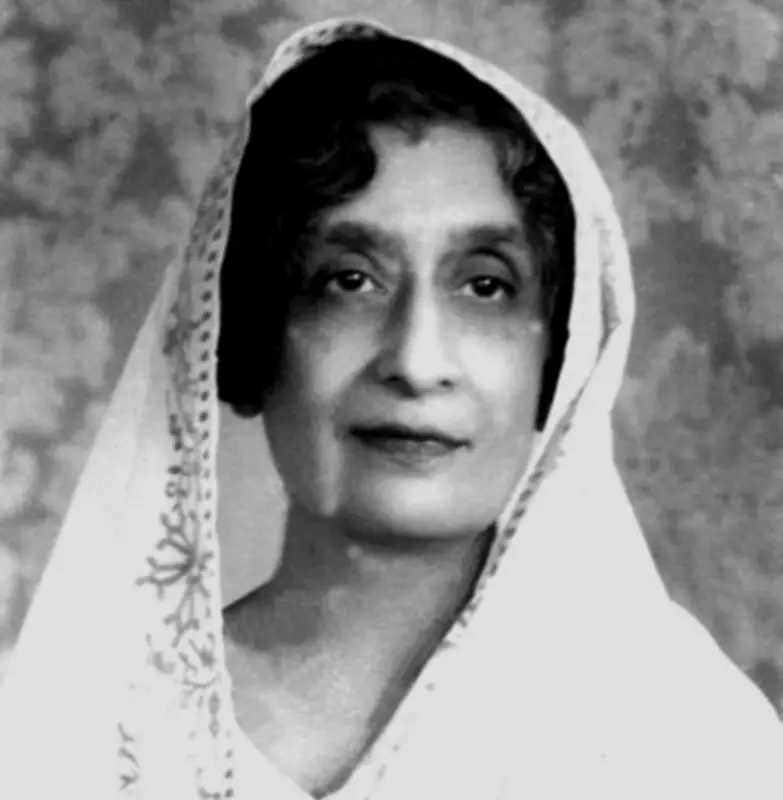
Rajkumari Amrit Kaur: The Princess Who Shaped India's Healthcare System
Rajkumari Amrit Kaur, born into the royal family of Kapurthala, stands as a towering figure in India's history, not for her aristocratic lineage, but for her monumental contributions to the nation's healthcare landscape. As India's first health minister after independence, she played a critical role in laying the foundation for a modern public health system that continues to impact millions of lives today.
From Royalty to Revolutionary Leadership
Amrit Kaur's journey from princess to politician was marked by a deep commitment to social reform and public service. Educated in England and influenced by Mahatma Gandhi, she became an active participant in the Indian independence movement, serving as Gandhi's secretary for over a decade. This experience instilled in her a profound understanding of India's social and health challenges, which she later addressed with vigor in her ministerial role.
Architect of Key Healthcare Institutions
One of her most enduring legacies is the establishment of the All India Institute of Medical Sciences (AIIMS) in New Delhi. As health minister from 1947 to 1957, she championed the creation of this premier medical institution, envisioning it as a center of excellence for medical education, research, and patient care. Under her leadership, AIIMS was founded in 1956, setting a benchmark for healthcare standards in the country.

Additionally, she was instrumental in founding the Indian Council of Medical Research (ICMR) and the Tuberculosis Association of India, reflecting her focus on both research and disease control. Her efforts extended to promoting women's health and family planning, making her a pioneer in integrating these aspects into national health policy.
Shaping Public Health Policies
Amrit Kaur's tenure saw the formulation of key public health initiatives aimed at combating widespread diseases and improving sanitation. She advocated for vaccination programs, maternal and child health services, and the control of epidemics, recognizing the need for a comprehensive approach to healthcare in a newly independent nation. Her policies emphasized accessibility and equity, striving to bridge the gap between urban and rural healthcare.
Legacy and Recognition
Beyond her ministerial achievements, Amrit Kaur was a vocal advocate for women's rights and education, serving as the president of the World Health Assembly in 1950. Her multifaceted contributions have earned her a place among India's most influential leaders in healthcare. Today, institutions like AIIMS stand as a testament to her vision, continuing to advance medical science and care.
In summary, Rajkumari Amrit Kaur's legacy is not merely that of a princess turned politician, but of a visionary who shaped India's healthcare system from its infancy. Her work in establishing critical institutions and policies has left an indelible mark, ensuring that her impact endures in the health and well-being of the nation.






