

India's Medical and Space Giants Unite for Groundbreaking Space Medicine Initiative
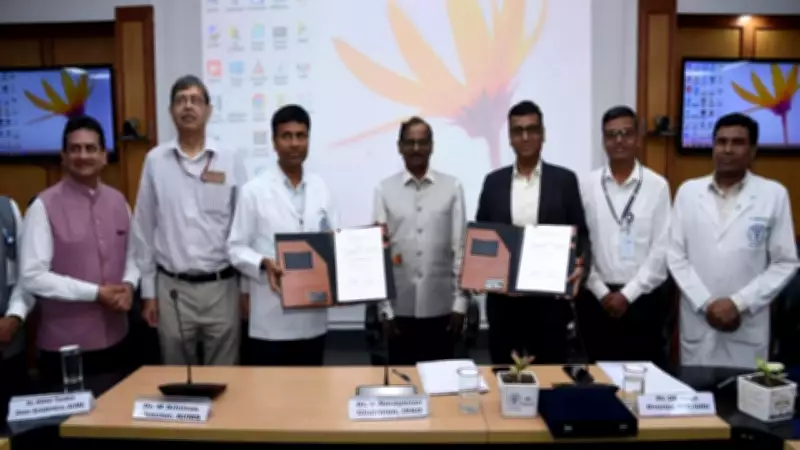
In a historic development for India's scientific community, the All India Institute of Medical Sciences (AIIMS) and the Indian Space Research Organisation's Human Space Flight Centre have officially joined forces through a memorandum of understanding signed on Monday. This landmark agreement establishes a comprehensive framework for collaborative research in the emerging field of space medicine, positioning India at the forefront of studying how the human body responds to extraterrestrial environments.
Research Scope: From Microgravity Physiology to Terrestrial Healthcare Applications
The collaboration will facilitate both ground-based and space-based investigations across multiple critical domains of human health. Research areas will encompass human physiology under microgravity conditions, cardiovascular and autonomic regulation systems, musculoskeletal health maintenance in space environments, microbiome and immunology studies, genomics and biomarker identification, and behavioral health assessment during space missions.
Professor K K Deepak, former head of physiology at AIIMS, emphasized the profound medical implications of such research. "Astronauts in microgravity experience physiological changes that remarkably resemble accelerated aging processes," he explained. "They undergo muscle atrophy, bone density reduction, and significant fluid redistribution within their bodies. By meticulously studying these phenomena, scientists can gain unprecedented insights into how aging affects musculoskeletal systems and circulatory functions in Earth-bound populations."

Dual Benefits: Space Exploration Technologies with Earthly Medical Applications
The partnership promises to yield technologies with dual applications. Medical devices developed to counteract physiological challenges faced by astronauts—such as equipment designed to enhance blood circulation in lower extremities during prolonged space missions—could revolutionize treatment approaches for patients suffering from circulatory disorders on Earth. Similarly, interventions created to preserve muscle strength in microgravity could benefit individuals experiencing muscle-wasting conditions.
Professor M Srinivas, Director of AIIMS, characterized the agreement as providing "the escape velocity needed to venture into the new frontier of space medicine." He elaborated that "the synergistic research between India's premier medical institution and space agency will generate knowledge that benefits patients, advances national capabilities, and ultimately contributes to human welfare on a global scale."
Historical Context and Future Implications
During the signing ceremony, ISRO Chairman V. Narayanan reflected on India's remarkable space journey—from humble beginnings when rocket components were transported via bicycles and bullock carts to the nation's current status as a global space technology leader. He emphasized that strategic partnerships with elite institutions like AIIMS will be instrumental in strengthening India's human spaceflight capabilities as the country advances its ambitious Gaganyaan mission and other crewed space exploration initiatives.
The memorandum was formally executed by AIIMS Director Professor M. Srinivas and Dinesh Kumar Singh, Director of ISRO's Human Space Flight Centre. The signing ceremony witnessed the presence of ISRO leadership, senior faculty members, and students from the medical institute, symbolizing the interdisciplinary nature of this pioneering collaboration.
This partnership represents a significant milestone in India's scientific advancement, bridging the gap between space exploration and medical innovation while creating research pathways that could transform healthcare delivery both in space and on our home planet.






