

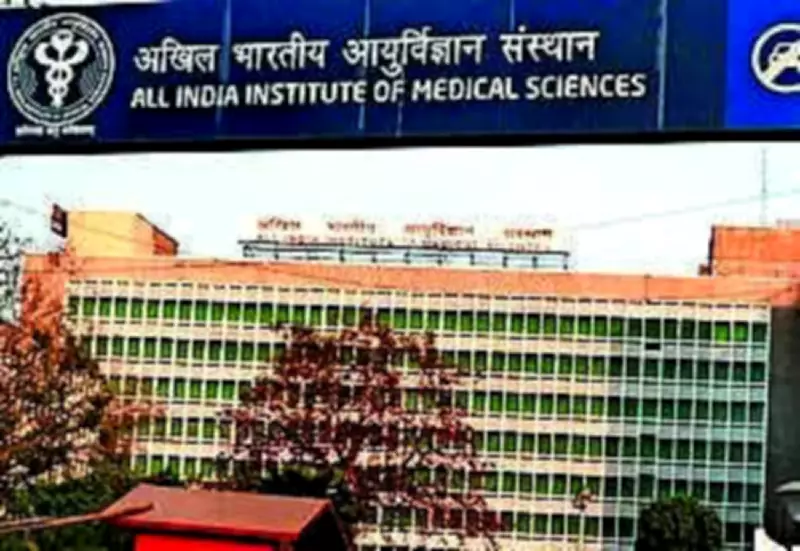
AIIMS to Introduce Non-Invasive Focused Ultrasound Therapy for Parkinson's in India
In a significant advancement for Parkinson's care in India, the All India Institute of Medical Sciences (AIIMS) in New Delhi is set to launch Focused Ultrasound Therapy (FUT), a groundbreaking non-invasive treatment that could provide a new therapeutic avenue for select patients. This innovative technology, expected to be operational by August, utilizes sound waves guided by magnetic resonance imaging (MRI) to precisely target specific brain areas without the need for surgical incisions or skull opening.
How Focused Ultrasound Therapy Works
Unlike conventional surgical procedures such as Deep Brain Stimulation, which requires implants and lengthy recovery periods, FUT involves no cuts, implants, or extended hospital stays. The treatment directs focused ultrasound waves through the skull to ablate or modulate problematic brain tissue responsible for movement disorders. Initially, AIIMS plans to offer this therapy free of charge, making it accessible to patients who might otherwise face costs of several lakhs rupees in the private sector, where it is currently available only at a few specialized centers.
"Once functional, AIIMS could become the first government facility in India to offer this therapy, which represents a major step forward in neurosurgical care," stated Prof P Sarat Chandra, head of neurosurgery at AIIMS. He emphasized that focused ultrasound is particularly effective for patients with tremor-dominant symptoms, offering a less invasive alternative when medications prove insufficient or surgery is not suitable.

Limited Application and Growing Parkinson's Burden in India
However, medical experts caution that FUT is not a primary treatment for Parkinson's disease itself. Its primary application is for essential tremor, a related neurological condition, with use in Parkinson's restricted to select cases where conventional therapies fail. This development coincides with World Parkinson's Day observations on April 11, highlighting increasing concerns about the debilitating condition in India, where it is increasingly affecting younger populations.
Data from an Indian study involving over 2,000 patients, cited by the International Parkinson and Movement Disorder Society, reveals that nearly 45% developed Parkinson's between ages 22 and 49, with average onset around 51 years—almost a decade earlier than in many Western countries. Doctors at AIIMS report many patients now exhibit symptoms before age 50, sometimes even before 40, challenging the traditional perception of Parkinson's as solely an old-age disease.
Global and Local Impact of Parkinson's Disease
Globally, Parkinson's burden is rising sharply. A study published in the British Medical Journal estimates cases could reach 25.2 million by 2050, more than double current numbers, with South Asia including India potentially accounting for nearly 6.8 million cases. In India, experts estimate over 7.5 lakh people may be living with Parkinson's, though underdiagnosis suggests the actual figure could be higher, affecting not just patients but also their families and caregivers.
Parkinson's primarily impairs movement, causing tremors, stiffness, and bradykinesia (slow movement), but often begins subtly years before diagnosis. Early warning signs can include sleep disorders where individuals act out dreams, anxiety, and other non-motor symptoms frequently overlooked. While no cure exists, early diagnosis combined with treatments like medication, Deep Brain Stimulation, and potentially FUT can better manage symptoms. Doctors recommend regular exercise such as walking and cycling to slow disease progression.
The clear message from healthcare professionals is that Parkinson's is no longer exclusively an aging-related condition—early signs should not be ignored, and innovative therapies like focused ultrasound offer hope for improved quality of life in appropriate cases.

