

Fresh political violence in Bangladesh is poised to severely disrupt the flow of patients seeking medical treatment in Kolkata, dealing a significant blow to the city's healthcare and health tourism sector which had just begun to see a recovery.
Advisory and Immediate Fallout
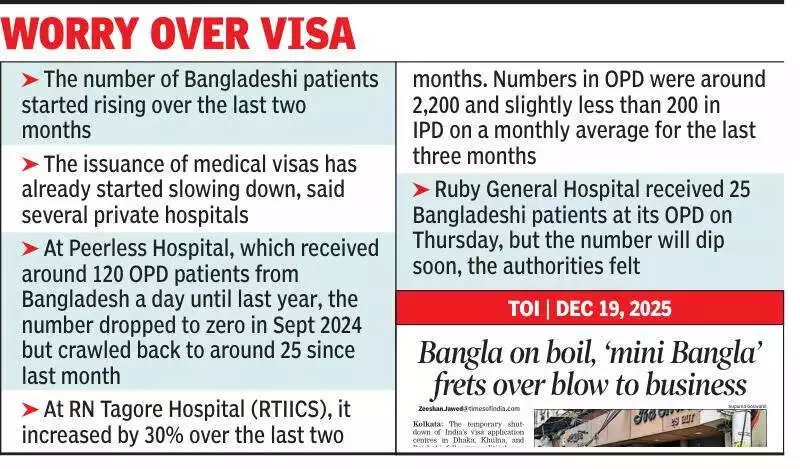
The trigger for this expected downturn was an attack on an assistant high commissioner at the Indian Embassy in Chittagong. In response, the embassy issued a travel advisory, urging Indian citizens in Bangladesh to avoid non-essential travel. This move, while aimed at ensuring safety, has had an immediate chilling effect on medical tourism from Bangladesh. Several leading private hospitals in Kolkata have confirmed that the issuance of medical visas has already started slowing down, which will discourage Bangladeshi patients from travelling.
Hospital Data Shows Alarming Trend
The numbers paint a stark picture of vulnerability. At Peerless Hospital, which used to see around 120 Bangladeshi outpatients daily until last year, the figure plummeted to zero in September 2024. It had only just crawled back to about 25 patients per day over the last month. Bangladeshi patients contribute approximately 15% of the hospital's revenue.

"The impact will show in a week since visa clearances will either stop or slow down," said Sudipta Mitra, CEO of Peerless Hospital. "This is a major setback since the flow started rising. We had five Bangladesh patients admitted until November-end. We still have Bangladesh patients visiting our OPD, but if the situation doesn't improve soon, the number will drop sharply."
The situation is echoed at other major facilities. RN Tagore Hospital (RTIICS), a unit of Narayana Health, was receiving around 2,200 OPD patients and 200 inpatients monthly from Bangladesh until August 2024. R Venkatesh, COO of Narayana Hospitals, warned that if the unrest continues, patient numbers could drop by 50% or more in the coming months, reverting to levels seen 14 months ago.
Patients in Limbo, Sector-Wide Concerns
The uncertainty is causing anxiety among Bangladeshi patients already undergoing treatment in Kolkata. Hospitals fear many may be forced to discontinue their care prematurely. "It happened in 2024, and we might see a repeat now," Mitra added. "Critically ill cancer and cardiac patients started resuming treatment, but now they will have to stop it midway."
The ripple effects extend beyond Kolkata. Prashant Sharma, Chairperson of the Indian Chamber of Commerce Healthcare Committee, stated that the drop will also affect hospitals in south India that depend on these patients. "This is an overall setback for the healthcare and health tourism sector," he said.
While hospitals like Desun and Ruby General are monitoring the situation closely, the immediate outlook is grim. Subhashis Datta of Ruby General Hospital noted that while appointment requests haven't dropped yet, a decline seems imminent. "The flow started improving, but it's likely to hit a trough yet again. We have seen such drops repeatedly since August 2024," he stated.
The industry now watches Bangladesh anxiously, hoping for a swift return to normalcy to revive a vital cross-border healthcare corridor.






