

Groundbreaking Research Challenges Immediate Stenting Protocol for Heart Attacks
In government healthcare systems where treatment delays are common due to ambulance shortages, crowded catheterization labs, and specialist deficits, a revolutionary study from Madras Medical College offers a promising alternative. New research indicates that postponing stenting procedures for up to 48 hours following initial medical intervention can save lives just as effectively as rushing patients to immediate angioplasty.
Redefining the Gold Standard in Heart Attack Care
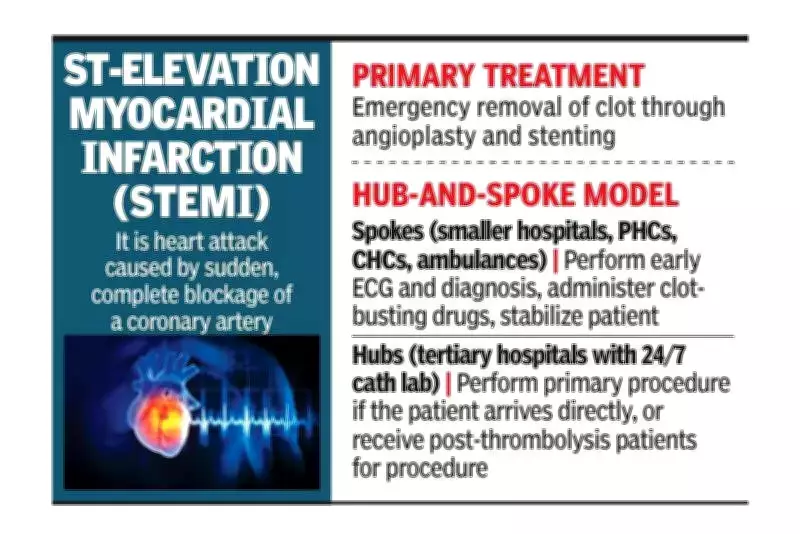
The study, recently published in the prestigious American Journal of Cardiology, presents compelling evidence that for patients treated with clot-busting medications, performing angioplasty and stent insertion up to 48 hours later achieves comparable outcomes to the traditional immediate approach within 90 minutes. This finding challenges the long-established gold standard for treating ST-elevation myocardial infarction (STEMI), the most severe form of heart attack characterized by complete blockage of a major coronary artery.
STEMI represents a critical medical emergency where oxygen supply to heart muscle is abruptly cut off, causing tissue death without swift intervention. While immediate percutaneous coronary intervention (PCI) remains ideal, this procedure is often inaccessible for patients arriving at smaller hospitals or rural clinics lacking advanced catheterization facilities.

The Hub-and-Spoke Model and Treatment Delays
In such scenarios, physicians typically administer thrombolytic drugs to dissolve clots before transferring patients to specialized centers for definitive stenting within 24 hours. Tamil Nadu has employed this "hub-and-spoke" care model for over a decade, yet treatment delays persist due to multiple factors including insurance complications and logistical challenges.
"We aimed to investigate whether waiting up to 48 hours after thrombolysis could match the outcomes of immediate PCI," explained Dr. Justin Paul Gnanaraj, Professor of Cardiology at Madras Medical College and the study's lead author. "Our findings provide crucial evidence for healthcare systems with limited resources."
Comprehensive Patient Analysis Reveals Surprising Results
The research team meticulously reviewed medical records of 2,499 patients treated between September 2018 and October 2019 at Rajiv Gandhi Government General Hospital. Their analysis revealed that only 248 patients (approximately 10%) received primary percutaneous coronary intervention within the recommended 90-minute "door-to-balloon" timeframe.
Notably, at least 210 patients underwent delayed stenting up to 48 hours after receiving clot-busting medications. Another 44% received only thrombolytic therapy, while some patients received treatment later or none at all due to various factors including health conditions, patient willingness, insurance issues, or hospital arrival delays.
Identical Mortality Rates Between Immediate and Delayed Approaches
When researchers divided the 210 delayed-stenting patients into subgroups—those receiving stents within 24 hours and those between 24 and 48 hours—they discovered no significant difference in clinical outcomes. "This finding was particularly encouraging," Dr. Gnanaraj noted. "It demonstrates we're not simply watering a dead plant with delayed interventions."
The data revealed identical mortality rates between delayed and immediate stenting approaches. Among patients undergoing delayed procedures, the in-hospital death rate stood at 1.4%, with one-year mortality at 7.4%—matching the rates observed in immediately treated patients.
Transforming Heart Attack Management in Resource-Limited Settings
"Our research clearly demonstrates that stenting up to 48 hours after clot-dissolving drug administration is comparable to urgent stenting procedures," stated Dr. Anne Princy Steaphen M, senior cardiologist and study co-author. "This represents an important message for regions with limited medical facilities and could significantly improve patient outcomes where immediate intervention isn't feasible."

Dr. Steaphen emphasized that all STEMI patients should undergo angioplasty and stenting within this extended 48-hour window, as this approach effectively lowers overall mortality rates while accommodating healthcare system limitations.
Cautious Optimism and Future Research Directions
While the study provides promising evidence for delayed stenting protocols, researchers caution that their findings are based on hospital registry data rather than randomized controlled trials. The medical community will require long-term follow-up studies extending beyond two years and larger-scale investigations to confirm delayed stenting as a universally safe alternative to immediate procedures.
This research has the potential to reshape global heart attack treatment strategies, particularly in healthcare systems struggling with resource constraints, infrastructure limitations, and specialist shortages. By validating an extended treatment window, the study offers hope for improved patient outcomes in diverse medical settings worldwide.





