

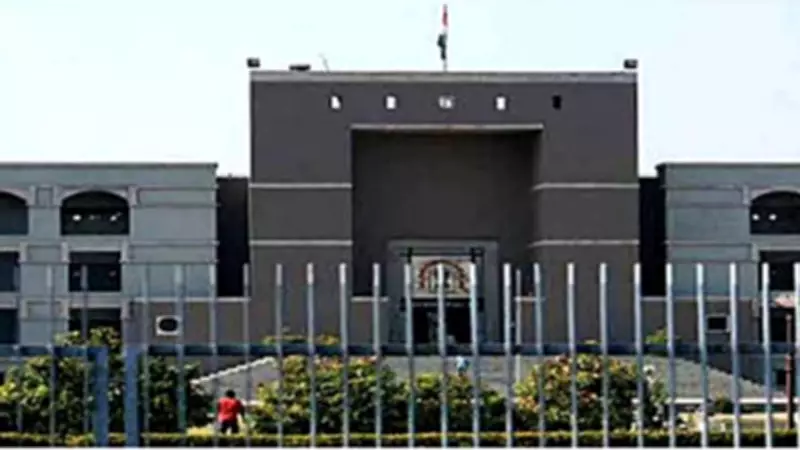
Gujarat High Court's Last-Minute Intervention Saves Medical Student's PG NEET Admission
In a dramatic turn of events that unfolded mere minutes before a crucial deadline, the Gujarat High Court has stepped in to protect the career aspirations of a medical student. Justice Nirzar Desai delivered an oral order just 20 minutes before the closing time for postgraduate medical admission applications, emphasizing the need for swift action to prevent what could have been a lifetime of regret for the petitioner.
The Race Against Time
The court's intervention came at 11:40 AM on Monday, February 3, 2026, with the admission window scheduled to close at 12:00 PM. Justice Desai explicitly noted the time constraints, stating he was keeping the order "as short as possible" given the impending deadline. This eleventh-hour judicial action highlights the high stakes involved in medical admissions and the court's willingness to prioritize substantive justice over procedural technicalities.
The Student's Plight
The petitioner, Swara Bhatt, a medical graduate who completed her undergraduate course on an NRI seat, had secured an All India Rank of 180339 in the NEET PG 2025 examination. Despite her academic merit, her application faced rejection due to a single missing document—the passbook of her aunt, who was serving as her sponsor for the NRI category admission.

According to court records, Bhatt had successfully uploaded all other necessary documents but failed to include this one crucial financial document. She later sent the missing documents via email to the authorities on January 30 at 8:44 PM, but this submission occurred after the initial application period had closed.
The Court's Reasoning
Justice Desai acknowledged that while medical professionals should maintain precision in their applications, "such a minor mistake of failing to upload a single document ought not to result in a lifetime regret for a student like the petitioner." The court emphasized that while uploading the passbook was technically mandatory, this procedural lacuna should not derail the career of a meritorious student.
The order stated: "Though the requirement of uploading the passbook is mandatory, such a lacuna ought not to cost the career of a meritorious student, nor should a less meritorious candidate be granted admission by ignoring the claim of a more meritorious student."
Court's Directive and Conditions
The Gujarat High Court directed the Medical Counselling Committee (MCC) of the Directorate General of Health Services to consider Bhatt's application for inclusion in the PG NEET merit list, provided she meets all other eligibility criteria. The court exercised its writ jurisdiction under Article 226 of the Constitution of India to issue this directive.
In a significant development during the proceedings, Senior Advocate Mitul Shelat, representing the petitioner, informed the court that Bhatt was willing to donate ₹1,00,000 to the High Court Legal Services Committee within one week, regardless of whether she ultimately secures admission. The court accepted this offer and directed her to deposit the amount within the specified timeframe.
Broader Implications
This case raises important questions about the balance between procedural compliance and substantive justice in competitive medical admissions. The court's decision reflects a growing judicial trend toward considering the human impact of technical errors in high-stakes educational processes.
The ruling also highlights the particular challenges faced by NRI category applicants, who must navigate additional documentation requirements while competing in India's intensely competitive medical education landscape. For students like Swara Bhatt, who have already invested years in medical training, such procedural hurdles can have career-altering consequences.
This judgment serves as a reminder to admission authorities about exercising discretion in cases where minor technical errors might otherwise exclude genuinely meritorious candidates from consideration.






