

Mumbai Hospital Data Reveals Alarming Rise in Heart Disease Among Women
Medical literature has traditionally asserted that heart disease predominantly affects men, with women believed to possess a natural biological shield due to the presence of estrogen. However, recent data from the civic-run Sion Hospital in Mumbai indicates that this protective barrier is rapidly deteriorating.
Surge in Cardiac Procedures
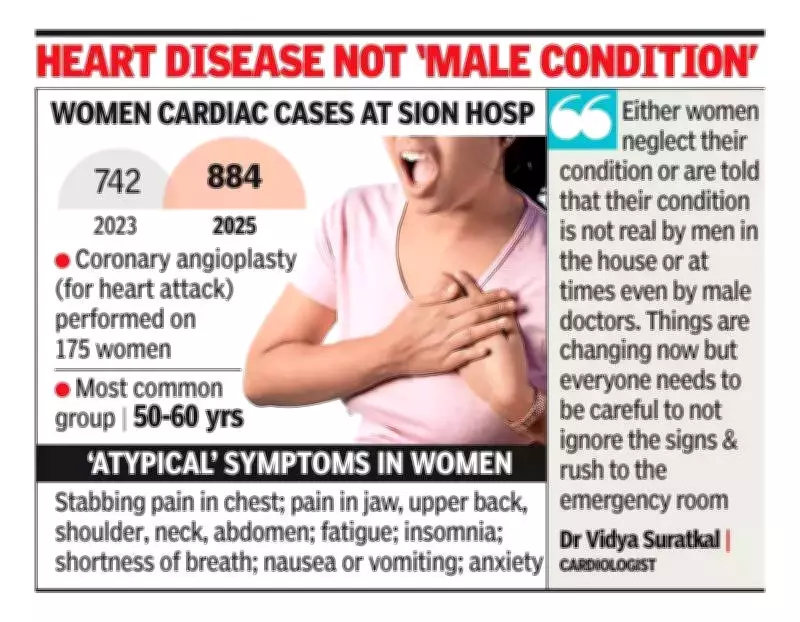
Cardiac procedures among women at Sion Hospital surged by nearly 20% over a two-year period, escalating from 742 cases in 2023 to 884 in 2025. Notably, this increase includes women in the younger age bracket of 20-40 years, although the most commonly impacted group remains those aged 50-60. Coronary angioplasty, a procedure typically performed during heart attacks, accounted for 20% of all cardiac interventions in women.
Primary Risk Factors and Atypical Symptoms
Diabetes, tobacco use, and hypertension continue to be the primary risk factors. Dr. Pratap Nathani, head of the cardiology department at Sion Hospital, expressed concern that many women are referred through various outpatient departments without recognizing heart attack symptoms. He emphasized that women often neglect illnesses, and their symptoms are not classic, such as chest pain. Instead, they may experience atypical signs like acidity, fatigue, back pain, abdominal pain, jaw or neck pain, nausea, flu-like symptoms, or anxiety, which can be mistaken for other ailments.

Case Studies and Contributing Factors
A poignant example is a 28-year-old woman treated by Dr. Vidya Suratkal at Lilavati Hospital, who initially presented with gastrointestinal issues but required an angioplasty after angiography revealed blockages. She later underwent a bypass, with no clear identifying cause. At Sion Hospital, stress was identified as a contributing factor in 16% of cases, ranging from financial to domestic issues, while the cause remains unknown in 1% of cases annually.
Expert Insights on Urban Lifestyle and Data Interpretation
Dr. Nathani attributed the breakdown of estrogen's protective effects to urban life, stress, lack of proper sleep, and increasing smoking rates among women. Dr. Charan Lanjewar, a cardiologist at KEM Hospital, cautioned that the uptick might also reflect improved diagnostic services and expanded healthcare coverage under schemes like the Mahatma Jyotirao Phule Jan Arogya Yojana, which could contribute to the rise in reported cases.
Both doctors noted a potential correlation between pollution and heart issues but stressed the need for more data to establish a definitive link. This data underscores a critical shift in cardiovascular health trends, urging greater awareness and preventive measures for women's heart health.






