

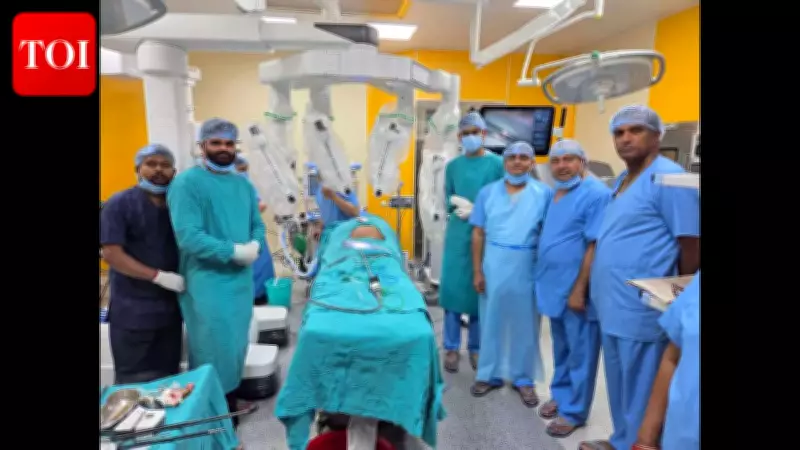
Patna Hospital Pioneers Robotic Surgical Procedures in Bihar
In a significant advancement for medical care in Bihar, doctors at the Indira Gandhi Institute of Medical Sciences (IGIMS) in Patna are set to perform three complex kidney-related robotic surgeries on Friday. This includes two critical procedures for kidney cancer patients, as the institute's clinical trial of robotic surgery technology accelerates rapidly.
Expanding Robotic Surgery Capabilities
Since the trial commenced earlier this week, IGIMS has successfully completed six robotic procedures across its urology and gastro surgery departments. This represents a major leap forward in bringing cutting-edge surgical techniques to the region.
The surgical schedule has been intensive:

- February 10: Two robotic surgeries—one gall bladder procedure and one hernia repair
- Wednesday: Two additional gall bladder surgeries
- Thursday: A gall bladder surgery combined with a hiatus hernia procedure
Friday's focus shifts to the urology department, where three nephrectomy (kidney removal) procedures are planned. The institute is also preparing to extend robotic surgery capabilities to its paediatric department in the near future.
Specialized Surgical Expertise
Dr. Rohit Upadhyaya, head of the urology department and an experienced uro-robotic surgeon, explained the significance of Friday's procedures. "We will perform one partial and one total nephrectomy on cancer patients where traditional laparoscopic surgery would be particularly challenging," he stated. "Robotic surgery enables us to remove cancerous tissue with exceptional precision while minimizing blood loss."
Dr. Rakesh Kumar Singh of the gastro surgery department, who is the institute's first trained robotic surgeon, highlighted the broader applications of this technology. "Robotic surgery offers tremendous benefits for cancers affecting the stomach, small and large intestine, and anal region," he noted. "The technique involves minimal invasion and negligible blood loss, allowing for clear identification of arteries and veins while reducing the risk of damage or the need for blood transfusion during or after surgery."
Remarkably, Dr. Singh added that even complex gastro surgeries are being performed at IGIMS for approximately Rs 50,000, making advanced care more accessible.
Institutional Support and Public Response
Deputy director (administration) Dr. Vibhuti Prassan Sinha revealed that the formal inauguration of robotic surgery at IGIMS is scheduled for February 15, with health minister Mangal Pandey expected to officiate the ceremony.
Institute director Dr. Bindey Kumar emphasized the pioneering nature of this initiative, stating that "IGIMS is the first government health institute in Bihar to acquire the da Vinci Surgical System, one of the most advanced surgical technologies available worldwide."
Hospital superintendent Dr. Manish Mandal reported overwhelming public interest since the launch of robotic surgeries. "We have received a large number of queries through phone, email, and at our counters," he said. "Many people are pleasantly surprised by the relatively low cost and have enquired about Ayushman Bharat coverage, though it's important to clarify that robotic surgery is not currently covered under the scheme."
This development positions IGIMS Patna at the forefront of surgical innovation in Eastern India, potentially transforming treatment outcomes for numerous patients requiring complex procedures.






