

IIT Bombay's Breakthrough in Gentler Cell Recovery for Cancer Immunotherapy
Cancer immunotherapy is revolutionizing oncology by leveraging the body's immune system to combat tumors. A pivotal form of this treatment is CAR T-cell therapy, where T-cells extracted from a patient are genetically modified in laboratories to identify and eliminate cancer cells. However, a critical challenge lies in growing and retrieving these cells without damage. A new study from the Indian Institute of Technology-Bombay (IIT Bombay) has introduced a gentler recovery technique that could significantly enhance the reliability and cost-effectiveness of advanced cancer care.
The Challenge of T-Cell Recovery
T-cells, a type of white blood cell, serve as the body's primary defense against infections and abnormal cells like cancer. In CAR T-cell therapy, these cells are engineered with chimeric antigen receptors (CARs) to target cancer more effectively. After modification, they are cultured in large quantities outside the body and reinfused into the patient. While this therapy has shown success for blood cancers such as leukemia and lymphoma in the US and Europe, it remains prohibitively expensive, often costing over Rs 3-4 crore internationally, and is still under investigation for solid tumors.
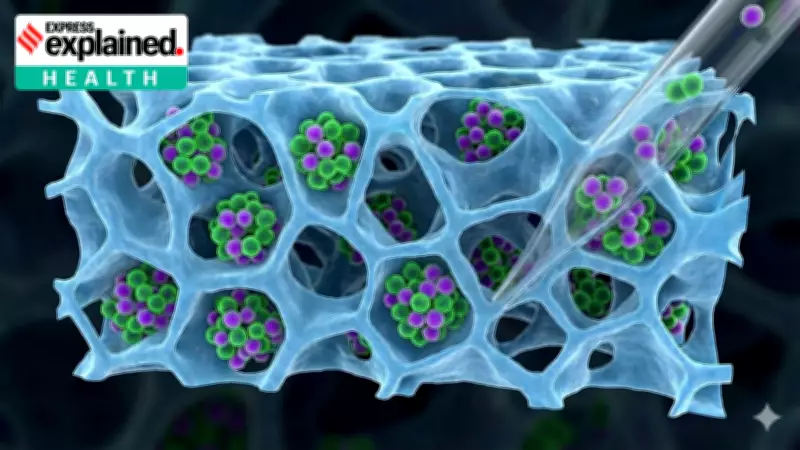
The difficulty arises during the recovery phase. Traditionally, T-cells are grown on flat plastic dishes, but to better mimic natural conditions, researchers use three-dimensional fibrous scaffolds. These scaffolds, resembling dense fishing nets, promote faster cell growth and multiplication. However, cells burrow deeply into the fibers and adhere tightly, making extraction challenging. Professor Prakriti Tayalia, who led the IIT Bombay study, emphasized, "Cell recovery sounds simple on paper, but in practice, it turns out to be one of the biggest challenges. Without enough healthy cells, you cannot test them properly or use them for therapy."

Innovative Recovery Methods Tested
The research team, including first author Dr. Jaydeep Das, evaluated three recovery approaches: manual flushing with a growth medium, using TrypLE (a harsh enzyme), and employing Accutase (a gentler enzyme solution developed in the 1990s). They assessed cell yield, survival rates, and immune functionality. The findings, published in Biomaterials Science and featured in the European Society for Biomaterials conference collection, revealed that while cell yield was similar across methods, viability and function differed markedly.
Cells treated with TrypLE exhibited higher death rates and impaired immune functionality. In contrast, Accutase-treated cells demonstrated better survival and maintained normal immune behavior, including cluster formation essential for division. Professor Tayalia explained, "Harsh treatments using enzymes like trypsin can damage key surface proteins needed for immune signaling and activation, reducing the cell's therapeutic usefulness. Accutase appears mild enough to avoid this problem."
Implications for Cancer Therapy and Future Research
This breakthrough suggests that Accutase-based recovery could improve the reliability of T-cell preparation for therapies like CAR T-cell treatment and broader adoptive T-cell transfer (ACT) approaches. Additionally, the study found that T-cells grown on scaffolds were more effective at killing cancer cells compared to those on flat dishes, highlighting a dual benefit of scaffold growth and gentle recovery.
Looking ahead, the researchers plan to test their findings in animal models and explore the potential of implanting T-cell-loaded scaffolds directly into the body. This could open new avenues for cancer treatment, where immune cells are not only prepared externally but also delivered innovatively.
Significance for India's Healthcare Landscape
India is making strides in CAR T-cell therapy, with collaborations between IIT Bombay and Tata Memorial Center leading to early trials and spin-offs like ImmunoACT aiming to reduce costs. While international treatments can cost crores, Indian efforts seek to make therapies more accessible. This research underscores how technical refinements, such as gentler cell recovery, can have profound clinical impacts, potentially bringing effective cancer treatments within reach for more patients.






