

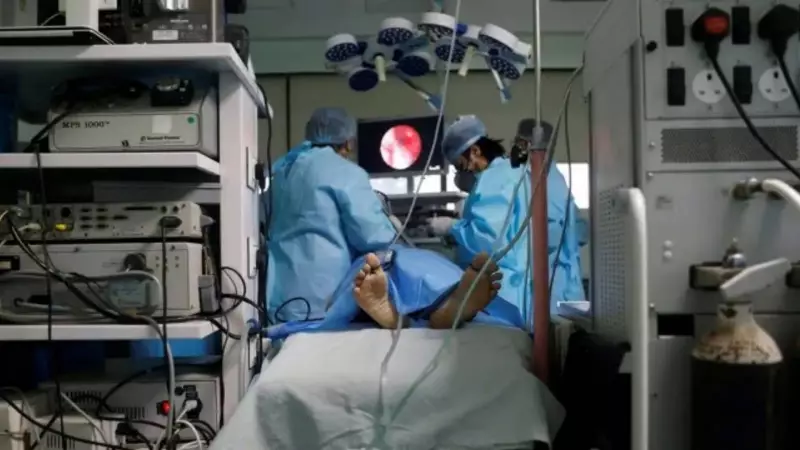
In a remarkable feat for India's healthcare sector, the Institute of Kidney Diseases and Research Centre (IKDRC) located within Ahmedabad's Medicity campus has set a new national benchmark. The institute successfully performed 500 kidney transplants in the year 2025, as officially confirmed by the state health department on Tuesday, December 31.
A Landmark Achievement in Renal Care
This achievement establishes IKDRC as the only hospital in the country to reach this transplant volume in a single calendar year. The institute crossed the 500-transplant mark on December 30, 2025. This represents a significant increase from its previous year's performance, where it conducted 443 kidney transplants in 2024.
The patient profile for these 500 transplants reveals a diverse demographic. The recipients included 367 men and 133 women. While a majority, 330 patients, were residents of Gujarat, the institute's reputation attracted 170 patients from various other states across India, highlighting its role as a national centre of excellence.

Breakdown of Transplant Types and Schemes
The medical team at IKDRC utilized multiple advanced transplant methodologies to achieve this number. The procedures included:
- 157 cadaver transplants
- 90 swap transplants
- 49 pediatric transplants for children
- 43 robotic-assisted transplants
A pivotal aspect of this achievement is the substantial number of transplants facilitated by government health schemes, making critical care accessible. The flagship Ayushman Bharat Pradhan Mantri Jan Arogya Yojana (PMJAY) supported 318 of these 500 transplants.
Beyond PMJAY, several other government initiatives contributed to patient access:
- 29 transplants under the School Health Programme
- 24 for patients from the Scheduled Caste (SC) category
- 7 for the Scheduled Tribe (ST) category
- 4 for Central Armed Police Forces (CAPF) personnel
- 5 under the Central Government Health Scheme (CGHS)
Implications for Public Healthcare
This record-setting year at IKDRC underscores a significant advancement in specialized tertiary care in India. The high volume of transplants conducted under public health insurance schemes like PMJAY demonstrates a successful model for providing high-cost, life-saving procedures to a wider population. It reflects the growing capacity and expertise within India's public and publicly-funded healthcare institutions to handle complex surgeries at scale.
The data from Ahmedabad's premier institute sets a new standard for renal transplant programs nationwide and offers hope to thousands of patients awaiting similar procedures.






